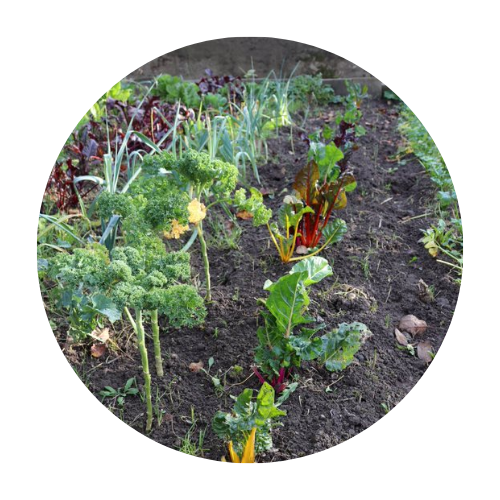
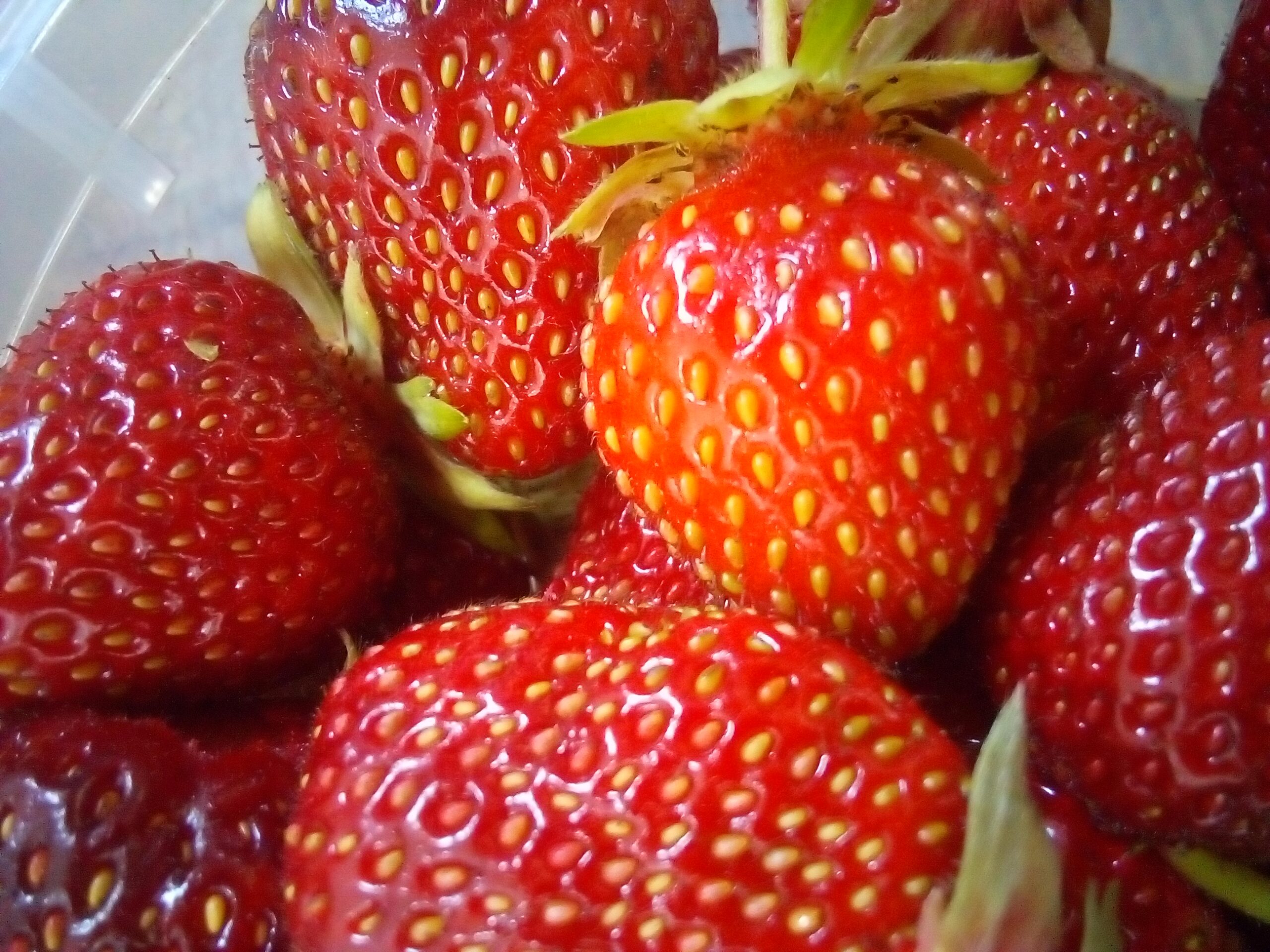
Washing garden fruit sounds almost unnecessary when the berries come from your own bushes or the apple was picked from your own tree. I know where it grew. I know what I sprayed on it — or, more often, what I did not spray on it. So how dirty can it really be?
That was my first thought.
Then I started looking more closely at the research.
In my article about the apple microbiome, I explored the positive side of natural microbial exposure: fruit is not sterile, plants carry their own microbial communities, and contact with biodiverse environments may even influence our own microbiota.
Apple Microbiome: What Natural Microbes on Apples May Mean for Us
But there is another side.
Natural does not automatically mean harmless.
Fruit can come into contact with soil, irrigation water, animals, insects, our hands and storage surfaces. Most of the microorganisms we meet in the nature will never make us ill. Some may even be interesting from a microbiome perspective.
But occasionally, fresh produce can also carry microorganisms we would rather not eat.
So the useful question is not:
“Are microbes on garden fruit good or bad?”
It is:
“When does washing garden fruit actually reduce a meaningful risk?”
Why Washing Garden Fruit Can Make Sense
The simplest answer is that washing can reduce microbial contamination on the fruit surface.
A 2006 study tested household washing methods on fresh produce that had been experimentally contaminated with Listeria innocua. On apples, the different washing methods reduced bacterial counts by approximately 2.0 to 2.9 log CFU per gram.[1]
That sounds rather technical.
In practical terms, it means the bacterial load on the apple surface was reduced very substantially.
The study does have an important limitation: the apples were deliberately contaminated under laboratory conditions. This was not a study of naturally growing garden apples, and Listeria innocua was used rather than a naturally occurring apple microbiome.[1]
So we should not translate the result into:
“An unwashed garden apple is dangerous.”
But we can say:
Washing has a measurable hygiene effect.
Current FDA guidance follows the same basic principle. Fresh fruits and vegetables — including home-grown produce — should be rinsed thoroughly under running water. Washing can reduce bacteria, although it cannot eliminate all of them.[7]
And no, this does not means we need soap.
The FDA specifically advises against using soap, detergents or commercial produce washes on fruits and vegetables.[7]
Plain running water is enough for normal household washing.
Where Can Microbes on Fruit Come From?
An apple or berry does not live inside a protective bubble until we harvest it.
During growing and harvesting, produce may come into contact with microorganisms from several sources:
soil, water, animals, insects, compost, human hands and equipment.
After harvest, handling and storage create additional opportunities for microorganisms to reach the fruit.
The FDA specifically notes that contamination of produce can occur through animals, soil, water and poor hygiene during production, as well as through handling after harvest.[8]
This is one reason why the history of the fruit matters.
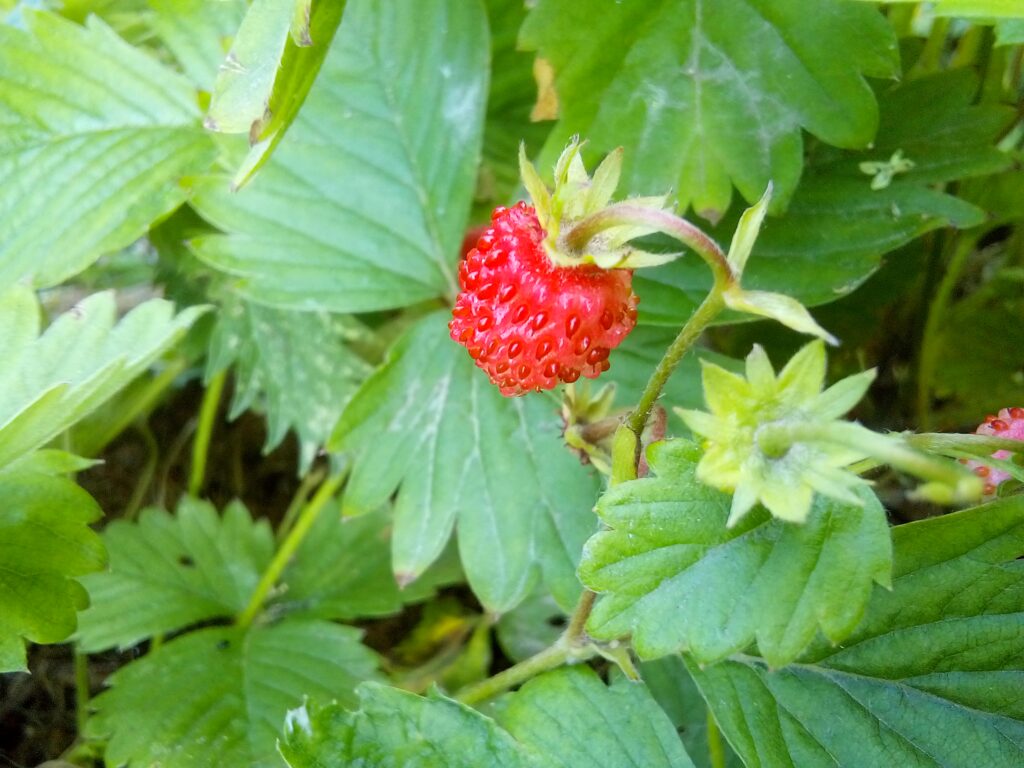
A raspberry I pick directly from a clean bush is not exactly the same situation as a strawberry lying on wet soil.
And an apple hanging cleanly in the tree is not identical to an apple that has spent two days underneath it.
For me, this is where garden common sense becomes very useful.
Freshly Picked Fruit Is Not Sterile Either
One study followed the microbial quality of commercial Golden Delicious apples through harvest, storage, packing and retail.[2]
Researchers examined 216 samples:
36 immediately after harvest, 36 after storage and packing, and 144 from retail shops.[2]
Thermotolerant coliforms were detected in 16.6% of samples after harvest, 22.2% after packing and 10.4% at retail.[2]
The genus Pantoea was also common.
This does not tell us that those apples were dangerous.
The study did not investigate illness in humans, and it did not compare washed versus unwashed apples.[2]
But it shows something quite useful:
Freshly harvested apples already carry microorganisms, and their microbial communities can continue to change during handling and storage.
The microbial story therefore starts before the supermarket.
And it does not end at harvest.
Berries Can Have a Different Risk Profile
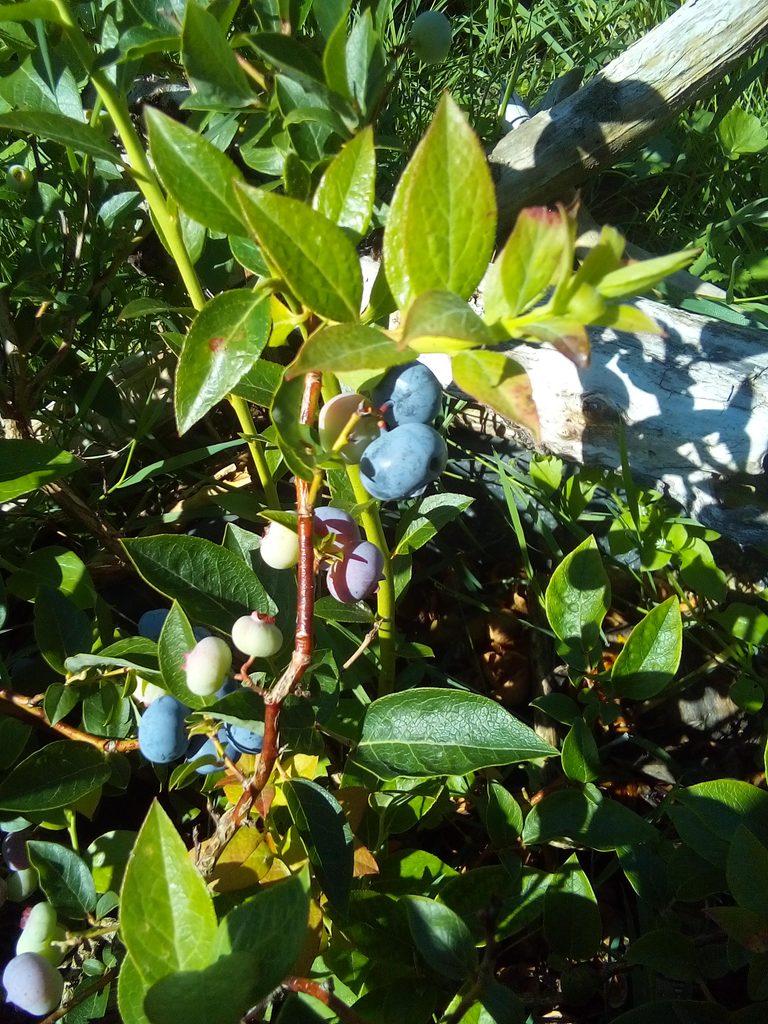
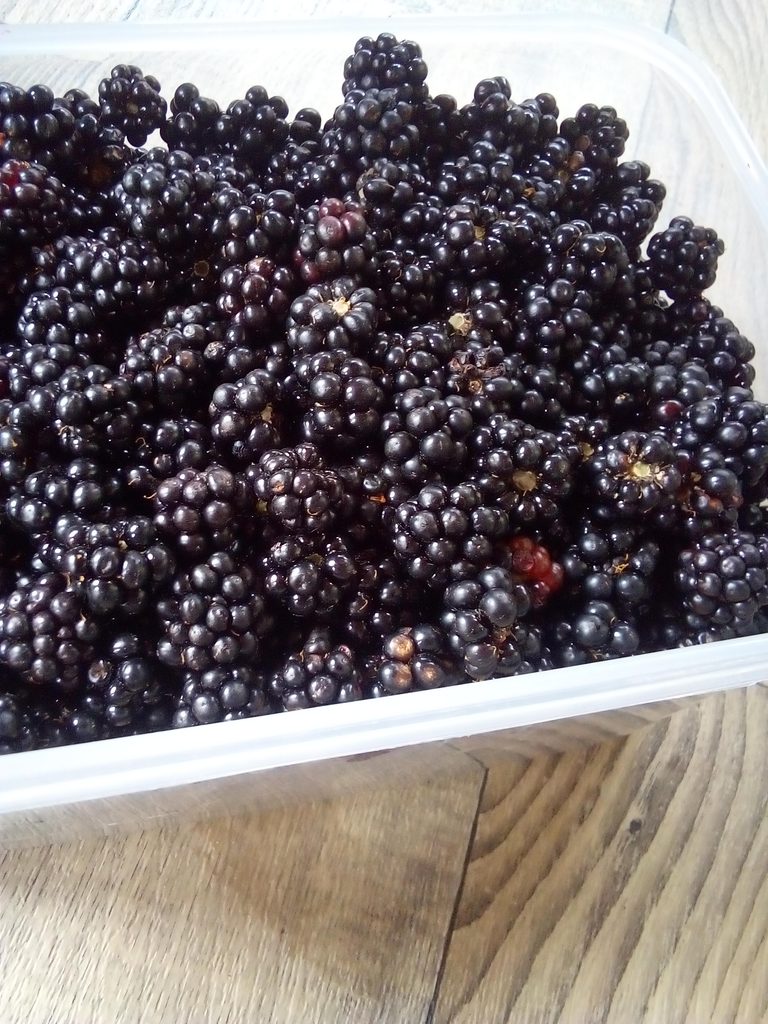
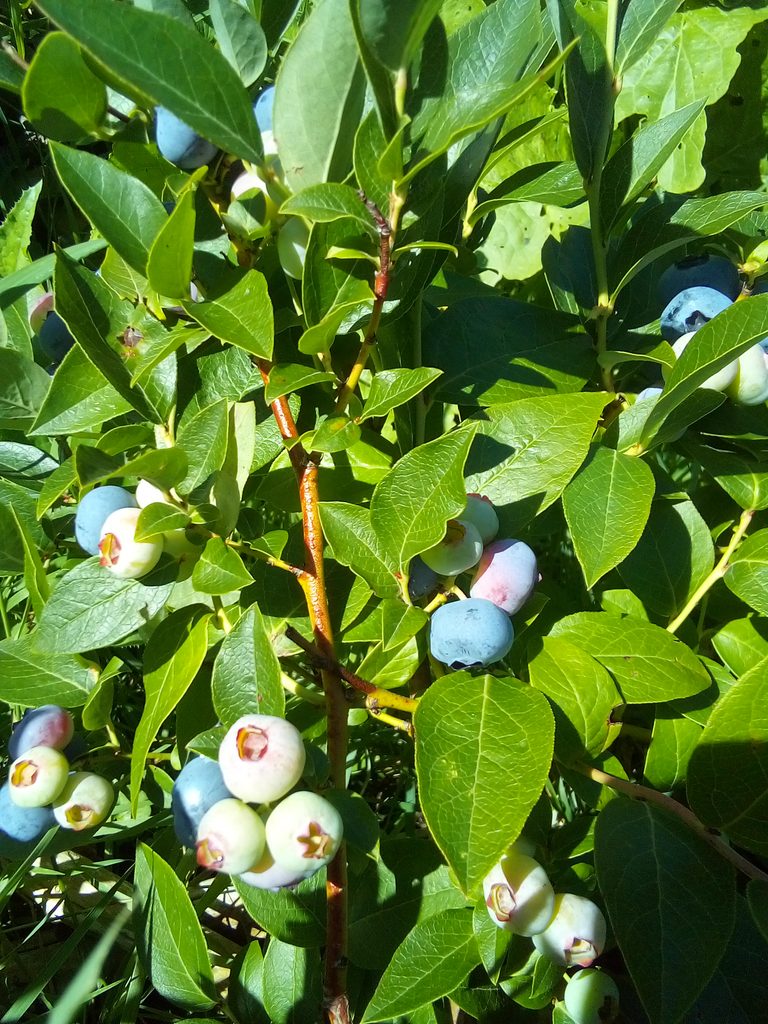
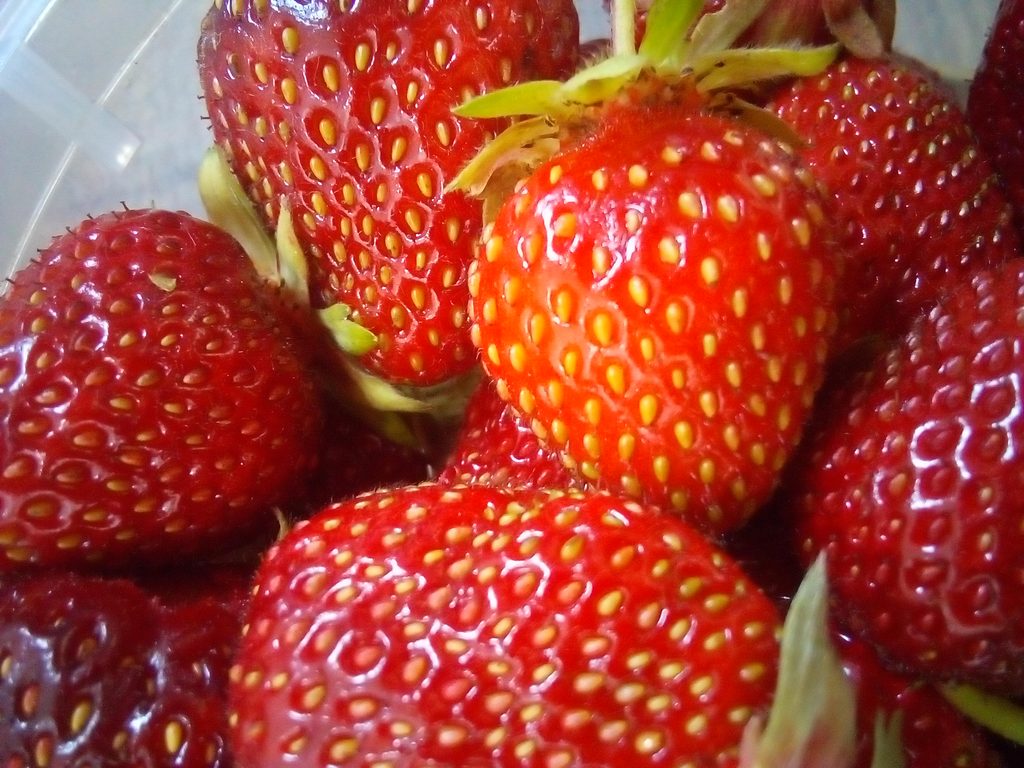
Berries are interesting because many of them grow close to the soil.
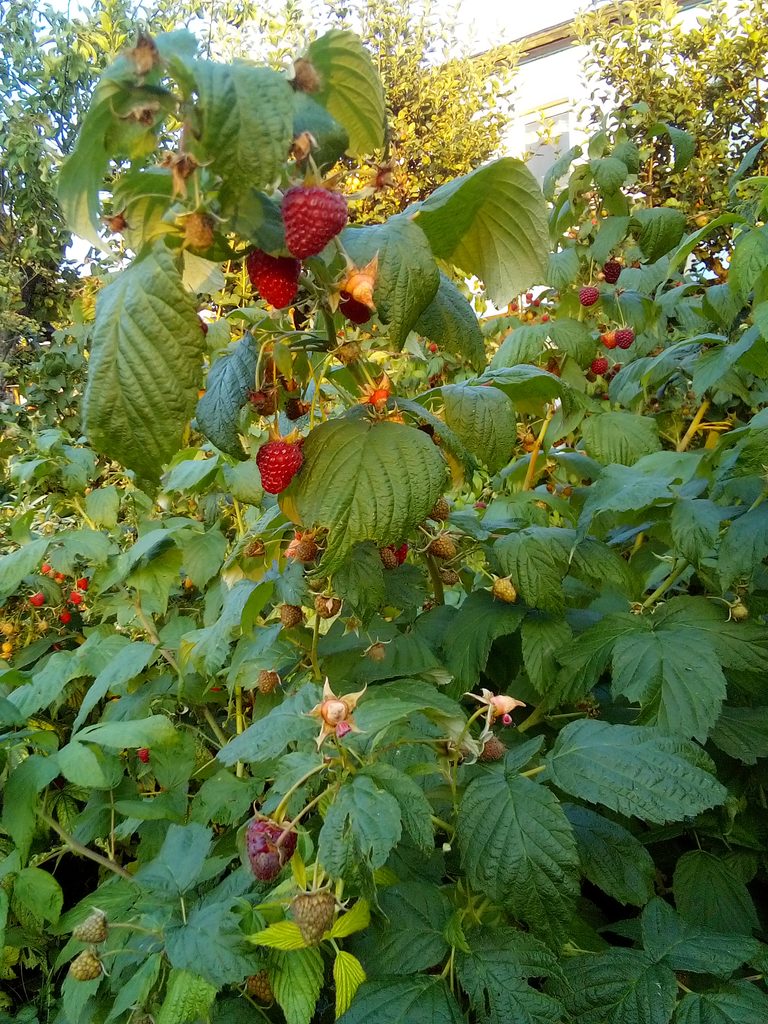
Strawberries, for example, may touch soil directly. Raspberries and blackberries have delicate surfaces and are usually eaten raw. Their structure also makes them difficult to scrub without turning breakfast into jam.
This is why I would not apply exactly the same garden logic to every fruit.
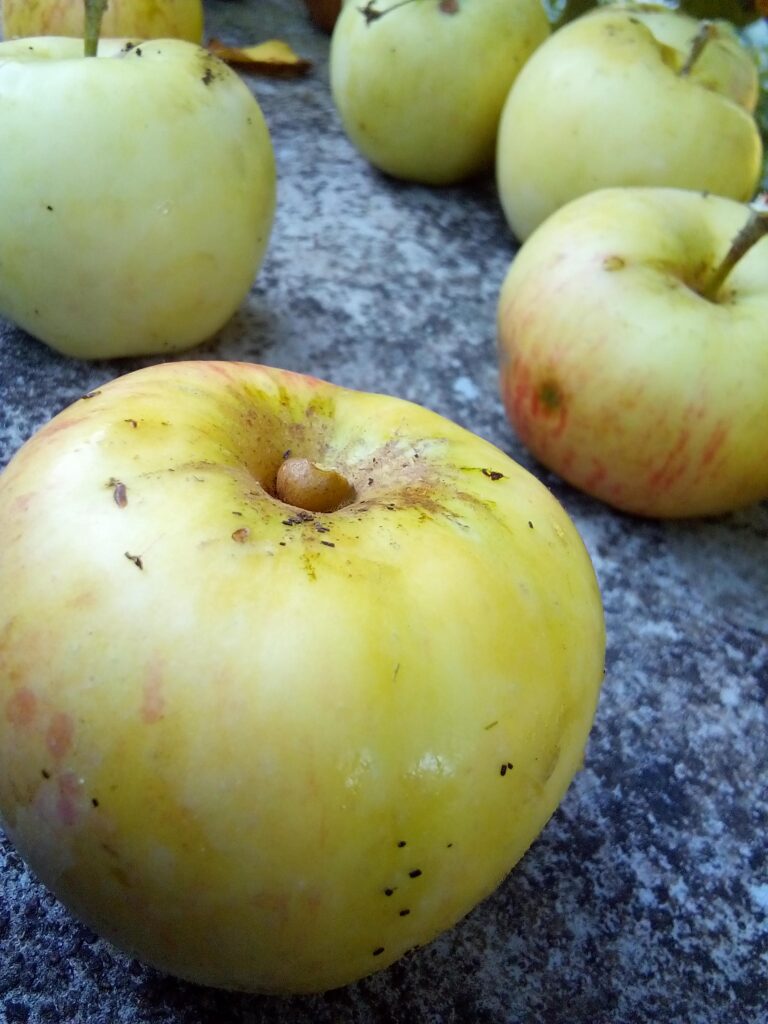
A firm apple picked from a clean branch can be rinsed easily.
A strawberry with soil between its seeds deserves a bit more attention.
A 2023 Spanish study looked for protozoan parasites and free-living amoebae on 110 samples of organic fresh produce, including 22 strawberry samples.[3]
Among the strawberries, researchers detected DNA associated with Acanthamoeba in 68.2% and Toxoplasma gondii in 31.8% of samples.[3]
Those numbers look alarming on the first look.
But here the methodology is extremely important.
The researchers mainly used molecular detection methods such as qPCR.
Detection of DNA does not automatically mean that a viable infectious organism was present.
And it certainly does not mean that everyone eating these strawberries would become ill.[3]
No illnesses were measured in the study.
The fruit came from retail markets in Spain, not from private gardens.
And there were no apples in this particular study.[3]
So the correct conclusion is not:
“Organic strawberries are full of dangerous parasites.”
The useful conclusion is:
Raw produce can sometimes carry microorganisms or microbial DNA that we do not necessarily want to ingest, which is one reason sensible food hygiene has a place even in natural gardening.
Detection Does Not Equal Infection
This is probably the most important sentence in this whole article:
Detection ≠ infection ≠ disease.
When a research paper reports that it found a bacterium, parasite, amoeba or resistance gene on produce, there are several steps between that finding and somebody becoming sick.
The organism or its DNA has to be present.
If we are talking about infection, the microorganism generally needs to be viable and capable of causing infection.
A person needs to be exposed to a sufficient amount.
And many other biological factors influence whether illness develops.
That means dramatic percentages in microbiology studies need context.
This is something I sometimes miss when reading headlines about food. A result can be scientifically important without being an immediate reason to panic.
What About Amoebae on Organic Produce?
Another Spanish study from 2023 examined 40 samples of organic produce and found free-living amoebae in all samples tested.[4]
Acanthamoeba was detected in 65% of the samples, while Vermamoeba vermiformis was detected in 25%.[4]
Free-living amoebae are interesting because they can interact with and sometimes harbor bacteria.
But again, this was a small exploratory study, primarily involving vegetables from retail settings rather than home-grown fruit.[4]
Finding an amoeba does not automatically equal a food-safety hazard.
The researchers themselves framed the issue as something requiring further investigation.[4]
For us as gardeners, the message is simpler:
There is a surprisingly complex microbial ecosystem sitting on raw produce.
Most of the time we never notice it.
Sometimes washing is simply a sensible way to reduce what we bring to the plate.
Can Fruit Carry Antibiotic-Resistant Bacteria?
This part sounds scary very quickly.
So here we have to be especially precise.
A 2023 Spanish study investigated antibiotic-resistant bacteria isolated from organic fresh vegetables sold in eastern Spain.[5]
Researchers tested 161 bacterial isolates. Among those isolates, 33.5% were multidrug resistant, 16.8% were resistant to all tested beta-lactam antibiotics, and 18% showed resistance to imipenem.[5]
But there is a huge methodological detail:
The researchers used selective culture media containing antibiotics.
In other words, the experimental method was designed to enrich resistant bacteria.
So the finding does not mean:
“33.5% of all bacteria on organic vegetables are multidrug resistant.”
It means that 33.5% of the bacterial isolates selected and tested within this experimental setup met the study’s definition of multidrug resistance.[5]
Those are very different statements.
And the study did not demonstrate transfer of resistance from the vegetables to humans.
Apples Have a Resistome Too
Antibiotic resistance is not limited to hospitals, farms or processed foods.
Microbial communities naturally contain resistance genes.
Scientists sometimes call the collection of these genes within a microbial community the resistome.
A 2022 apple study detected 132 antibiotic-resistance genes representing 19 antibiotic classes in apple-associated microbial communities.[6]
At first, that number sounds impressive.
But their relative abundance was extremely low — at or below approximately 0.03% of the metagenome.[6]
The researchers also observed that the microbiome and resistome changed after post-harvest storage and transportation.[6]
This gives us two interesting pieces of information.
First, apple microbial communities are not made exclusively from organisms we might label “good.”
Second, storage and transport can change those microbial communities.
But finding a resistance gene does not prove that the gene is expressed.
It does not prove that it will transfer to a human-associated bacterium.
And it does not prove that the apple presents a clinical health risk.[6]
That is the difference between detecting a biological feature and demonstrating harm.
A 2026 Study Looked Directly at Apple Bacteria and Resistance
A newer study published in 2026 makes this question even more interesting.
Researchers collected bacteria associated with apples from four orchards in Spain and screened 516 culturable bacterial isolates.[9]
Of these, 306 were epiphytic bacteria — organisms associated with the surface — and 210 were endophytic bacteria from within apple tissues.[9]
Among the 516 isolates tested, 272, or 52.7%, were resistant to at least one of the antibiotics used in the screening.[9]
Eighty isolates showed resistance to more than three antibiotic classes.
No isolate was resistant to imipenem.[9]
Again, context matters enormously.
This does not mean that 52.7% of all bacteria inside an apple are antibiotic resistant.
The study looked at selected culturable isolates.
Only organisms that could be cultured under the study conditions became part of this analysis.
Whole-genome sequencing was performed on 18 selected isolates, and only 10 genomes passed the researchers’ quality-control criteria for the final resistome analysis.[9]
The study therefore gives valuable information about resistance traits within cultivable apple-associated bacteria.
It does not establish how much health risk an apple creates for the person eating it.
Can Washing Remove Antibiotic-Resistant Bacteria?
Here the answer gets a little more complicated.
Washing can reduce microorganisms on the surface of fruit.[1][7]
That means it can also reduce exposure to some surface-associated bacteria, independent from whether those bacteria happen to carry resistance genes.
But washing cannot reach everything.
The 2026 apple study included both epiphytic bacteria on the outside and endophytic bacteria inside apple tissues.[9]
Those internal microorganisms cannot simply be washed away.
This matches what we already learned about the apple microbiome: part of the microbial community lives inside the fruit.
So washing is useful, but it is not sterilization.
And I don’t think sterilization should be our goal anyway.
Washing Garden Fruit: What Does Washing Actually Do?
For me, the useful distinction is very simple.
Washing can:
reduce dirt,
reduce some microorganisms on the fruit surface,
and lower surface contamination.
It cannot:
make fruit sterile,
remove every microorganism,
remove microorganisms living inside fruit tissues,
or guarantee that a food can never cause illness.
The FDA recommends washing fresh produce thoroughly under running water before eating or preparing it, including home-grown produce.[7]
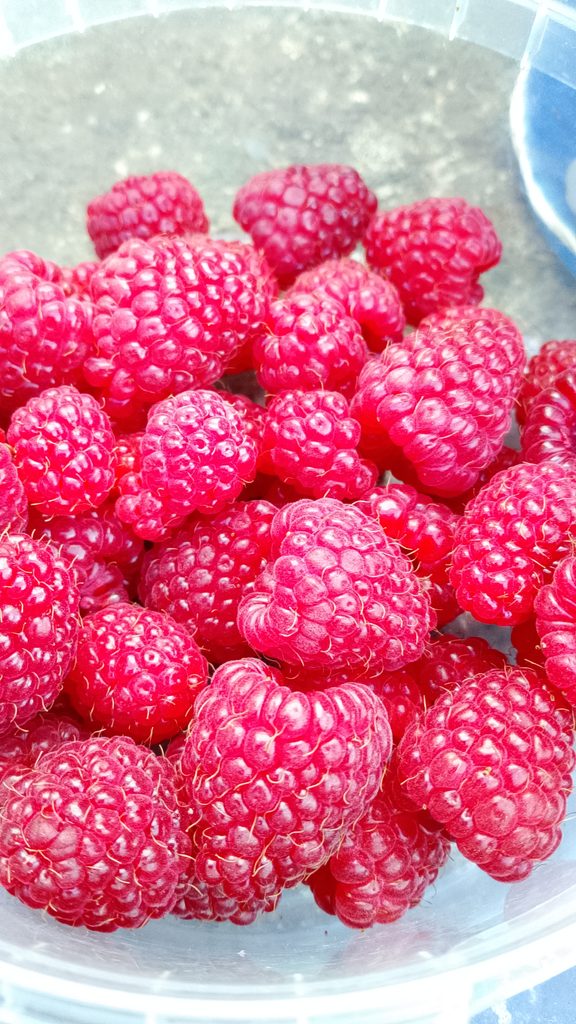
For delicate berries, this usually means gently rinsing them under clean running water rather than scrubbing them.
For firm fruit such as apples, gently rubbing the surface while rinsing can help.[7]
And soap is not needed.
Actually, washing fruit with soap or household detergent is specifically not recommended by the FDA because produce is porous and detergent residues can be absorbed.[7]
Which Garden Fruit Would I Wash?
I no longer think about this as a strict rule where every berry or apple must fit into the same category.
I look at where the fruit has been.
Fruit picked cleanly from the plant
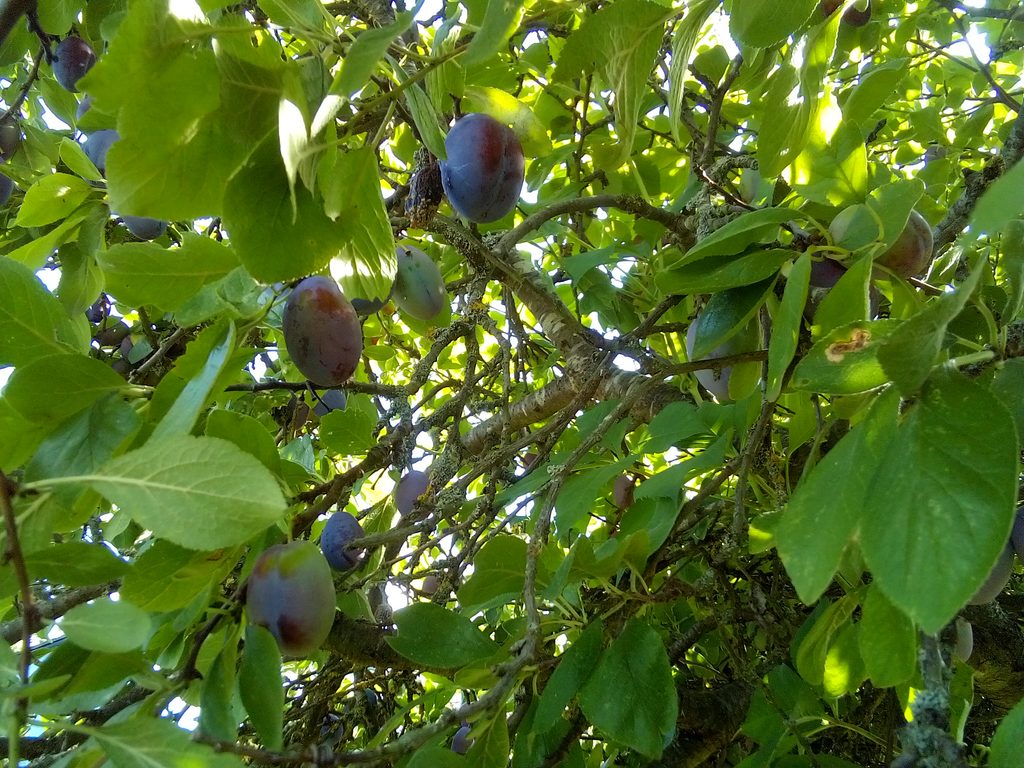
An apple picked directly from a healthy tree has had a different exposure than fruit lying on the soil.
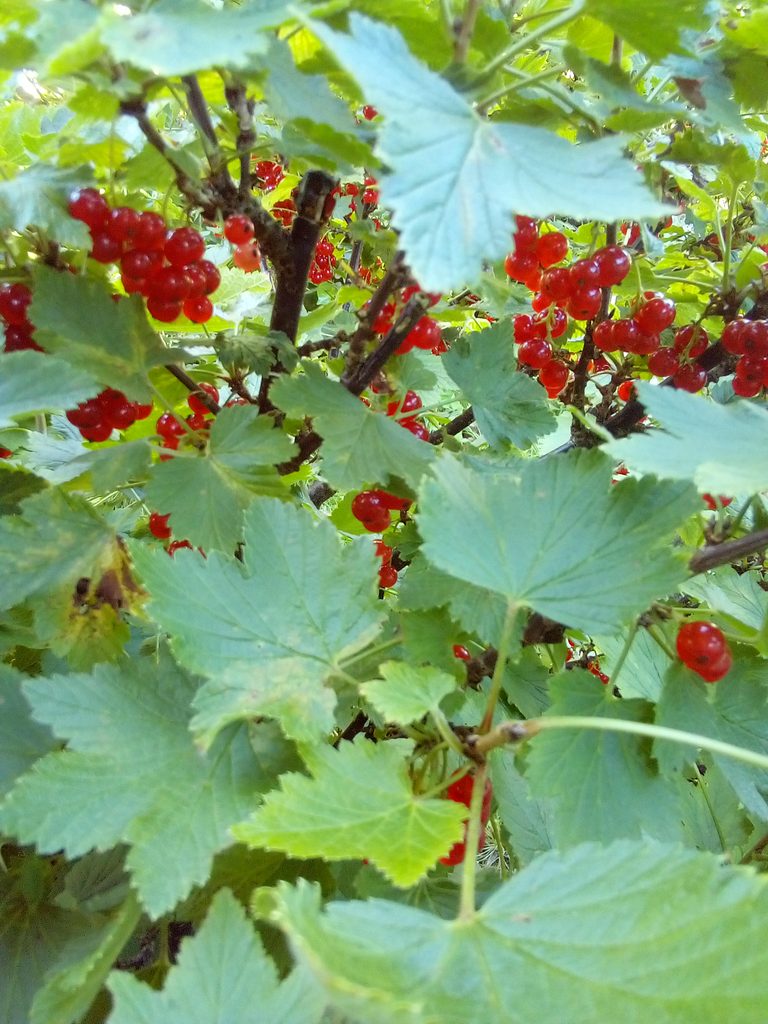
The same is true for raspberries or currants hanging cleanly on their branches.
Official food-safety guidance still recommends rinsing fresh produce before eating it.[7]
But from a practical garden perspective, this is the lowest-concern situation for me.
Windfall fruit
Here I become more careful.
Fruit lying on the ground can come into contact with soil, water, insects, wild animals and animal feces.
I wash it.
If it is damaged, rotten or badly bruised, I do not simply assume washing will fix the problem.
FDA guidance recommends cutting away damaged or bruised areas and discarding produce that looks rotten.[7]
Berries touching soil
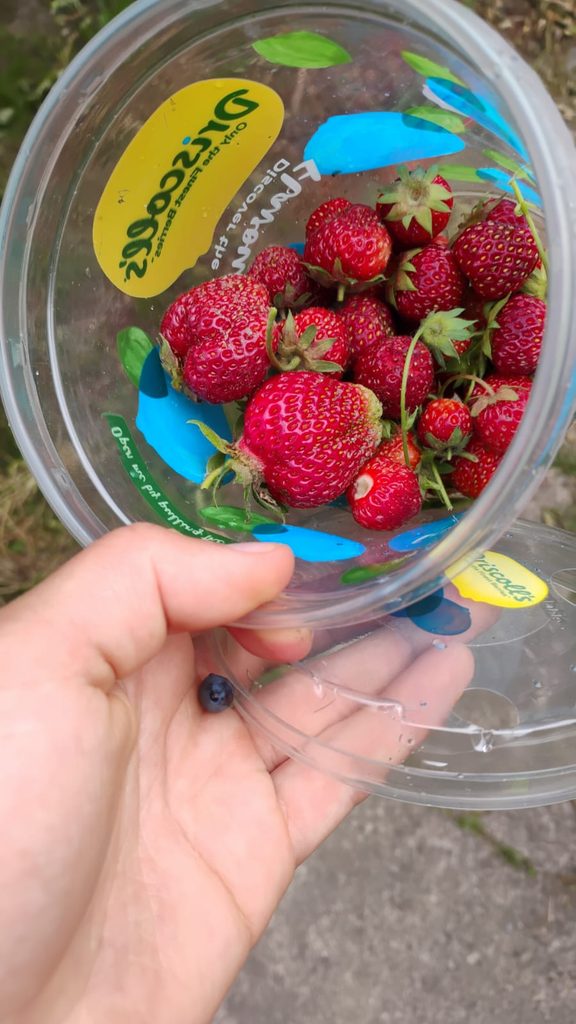
Strawberries are the obvious example.
If they have soil attached, I rinse them carefully under running water.
Delicate berries need a gentle hand, but “delicate” does not mean they cannot be washed.
Fruit with visible animal contact
Bird droppings are a very easy decision for me.
I am not looking for biodiversity at this point.
I wash the fruit thoroughly — or discard it if contamination is extensive or the fruit is damaged.
Fruit with unknown history
Fruit from a shop, roadside stand or another garden has passed through steps I did not see. Washing becomes the easy choice.
This depends from the situation, not from whether I believe nature is good or bad.
Who Should Be More Careful With Unwashed Produce?
Anyone can get foodborne illness, but some people are more likely to become seriously ill.
The CDC identifies four main higher-risk groups: adults aged 65 and older, children under five, pregnant people, and people with weakened immune systems.[10]
For these groups, being more consistent about food hygiene makes especially sense.
The CDC specifically lists washed produce as a safer choice and unwashed fruits and vegetables among foods more likely to spread harmful germs.[10]
So if I were preparing berries for a very young child, an elderly relative, someone who is pregnant or someone with a weakened immune system, I would not experiment with the idea that “a little dirt is healthy.”
I would wash them.
Does Washing Remove the Benefits of Natural Microbial Exposure?
This is where Blog 1 and Blog 2 meet.
Fruit has a microbiome.
Natural microbial exposure is interesting.
Human studies suggest that biodiverse environments and gardening can influence our own microbiota.
Apple Microbiome: What Natural Microbes on Apples May Mean for Us
But washing a berry or apple does not remove nature from our life.
We still garden.
We still touch plants.
We still put our hands into soil.
We still harvest vegetables.
We still walk through grass, compost leaves and pick herbs.
And an apple itself still contains internal microorganisms that cannot simply be rinsed away.
This is why I don’t see washing as the enemy of microbial biodiversity.
It is just one small hygiene tool.
What Washing Garden Fruit Does — and Does Not — Tell Us
After reading these studies, I think three distinctions make the whole topic much easier.
Natural does not mean sterile.
Fruit naturally carries microorganisms.
Natural does not mean automatically harmless.
Fresh produce can occasionally carry bacteria, parasites, amoebae or resistance traits that are relevant to food-safety research.[3][4][5][6][9]
Detection does not mean disease.
Finding microbial DNA, a resistance gene or a resistant isolate does not automatically demonstrate viability, transmission, infection or illness.
That middle ground is important.
Otherwise, we end up with two equally unhelpful extremes:
“Natural microbes are all good.”
or
“Bacteria on food are dangerous.”
Neither reflects what the research actually shows.
My Practical Rule for Apples and Berries
I don’t want to be afraid of my own garden.
That would miss the whole point of growing food.
But I also don’t think ignoring basic hygiene makes garden food somehow more natural or more healthy.
So my rule has become quite simple:
Look at where the fruit has been.
A berry hanging cleanly from a bush is one situation.
A muddy strawberry is another.
An apple from the tree is different from an apple underneath the tree.
Visible dirt, animal contact, damaged fruit and an unknown history all make washing the more sensible choice.
And if I wash fruit, I use clean running water.
No soap.
No special produce detergent.
No attempt to make my garden sterile.
Frida probably would have understood this without reading one single microbiology paper.
She looked at the fruit first.
Then she decided what to do with it.
I think this is still a quite good system.
Washing Garden Fruit FAQs
Does washing fruit really remove bacteria?
Yes. Washing can substantially reduce bacteria and other surface contamination, although it does not remove every microorganism.
In an experimental study on apples, household washing methods reduced bacterial loads by approximately 2.0–2.9 log CFU/g.[1]
The FDA also states that washing fresh produce under running water can reduce bacteria that may be present, but cannot eliminate them completely.[7]
Should I wash berries from my own garden?
Current FDA guidance recommends washing fresh produce before eating it, including produce grown at home.[7]
From a practical garden perspective, washing becomes particularly important when berries have visible soil, have touched the ground, show animal contamination or have an uncertain history.
For delicate berries, rinse gently under clean running water rather than scrubbing them.
Should I use soap to wash apples or berries?
No.
The FDA advises against washing fruits and vegetables with soap, detergent or commercial produce wash.[7]
Plain running water is recommended. Produce is porous, and soap or detergent residues can remain on or be absorbed by the food.
Does finding antibiotic-resistant bacteria on fruit mean the fruit is dangerous?
No.
Research has identified antibiotic-resistant bacteria and antibiotic-resistance genes in fresh produce and apples.[5][6][9]
But resistance detection alone does not demonstrate that the organism is pathogenic, that resistance genes will transfer to humans or that eating the fruit will cause disease.
A particularly important example is the 2026 apple study: 272 of 516 selected culturable isolates were resistant to at least one antibiotic tested.[9] This does not mean that 52.7% of all bacteria in an apple are antibiotic resistant.
Who should be particularly careful with unwashed fruit?
Foodborne illness can affect anyone, but the CDC identifies people aged 65 or older, children younger than five, pregnant people and people with weakened immune systems as groups at higher risk of severe foodborne illness.[10]
For these groups, following standard produce-washing recommendations is particularly important.
Sources
1. Kilonzo-Nthenge, A., Chen, F.-C., & Godwin, S. L. (2006). Efficacy of home washing methods in controlling surface microbial contamination on fresh produce. Journal of Food Protection, 69(2), 330–334. https://doi.org/10.4315/0362-028X-69.2.330
2. Abadias, M., Cañamás, T. P., Asensio, A., Anguera, M., & Viñas, I. (2006). Microbial quality of commercial ‘Golden Delicious’ apples throughout production and shelf-life in Lleida (Catalonia, Spain). International Journal of Food Microbiology, 108(3), 404–409. https://doi.org/10.1016/j.ijfoodmicro.2005.12.011
3. Moreno-Mesonero, L., et al. (2023). Protozoan parasites and free-living amoebae contamination in organic leafy green vegetables and strawberries from Spain. Food and Waterborne Parasitology, 32, e00200. https://doi.org/10.1016/j.fawpar.2023.e00200
4. Soler, L., et al. (2023). Microbiome of free-living amoebae (FLA) isolated from fresh organic produce: Potential risk to consumers? Foods, 12(16), 3102. https://doi.org/10.3390/foods12163102
5. Jiménez-Belenguer, A. I., et al. (2023). Prevalence and characterization of beta-lactam and carbapenem-resistant bacteria isolated from organic fresh produce retailed in Eastern Spain. Antibiotics, 12(2), 387. https://doi.org/10.3390/antibiotics12020387
6. Wassermann, B., et al. (2022). The microbiome and resistome of apple fruits alter in the post-harvest period. Environmental Microbiome, 17(1), 10. https://doi.org/10.1186/s40793-022-00402-8
7. U.S. Food and Drug Administration. (2025). Selecting and serving produce safely. U.S. Food and Drug Administration.
8. U.S. Food and Drug Administration. (2023). 7 tips for cleaning fruits, vegetables. U.S. Food and Drug Administration.
9. Kiplimo, D., et al. (2026). Phenotypic resistance profiles and resistome variations between endophytic and epiphytic bacteria in apple fruits. Environmental Microbiome, 21(1), 50. https://doi.org/10.1186/s40793-026-00880-0
10. Centers for Disease Control and Prevention. (2025). People at increased risk for food poisoning. Centers for Disease Control and Prevention.