How to grow leeks is actually pretty simple — at least the way I do it in my garden.
I really like growing leeks because once they are in the bed, they don’t need that much attention.
I start mine quite early in the year, usually around the end of March or beginning of April. It depends a little on the weather, of course.
Six steps, lots of waiting in between, and hopefully some really nice leeks at the en
1. Starting My Leeks Under Glass
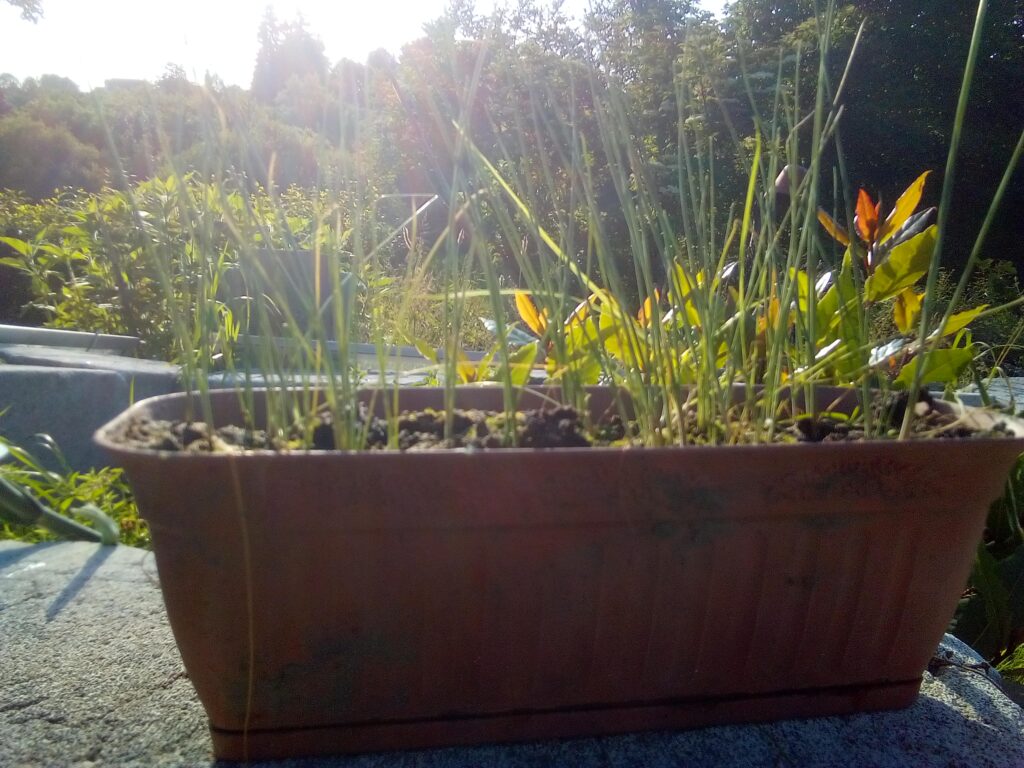
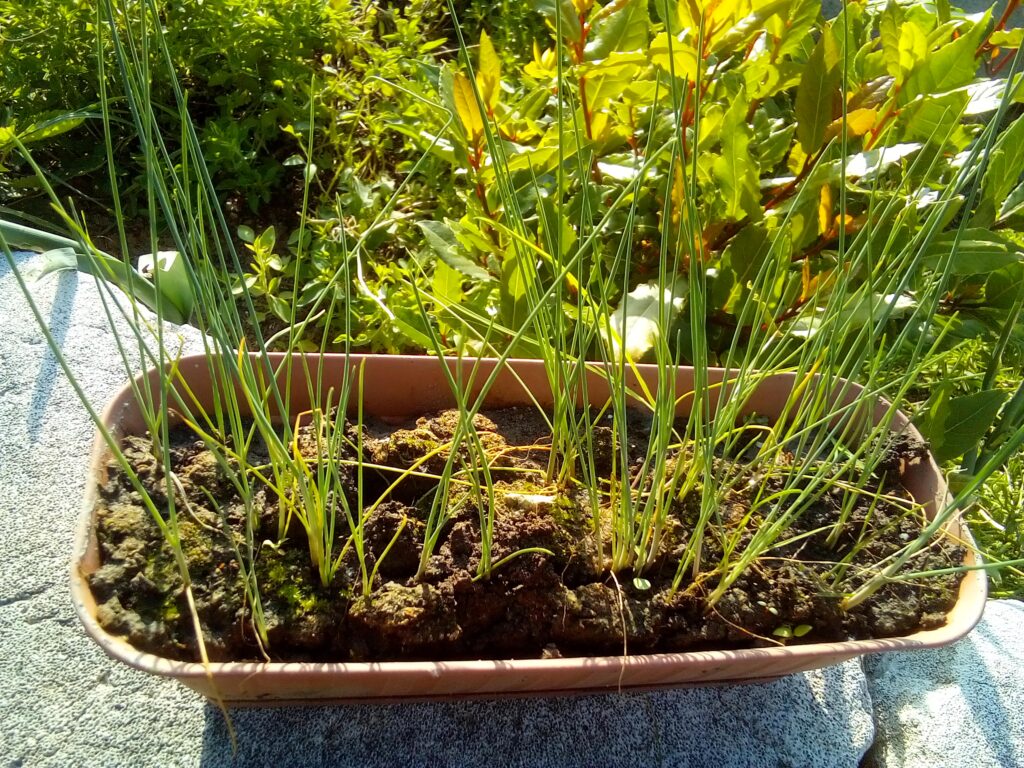
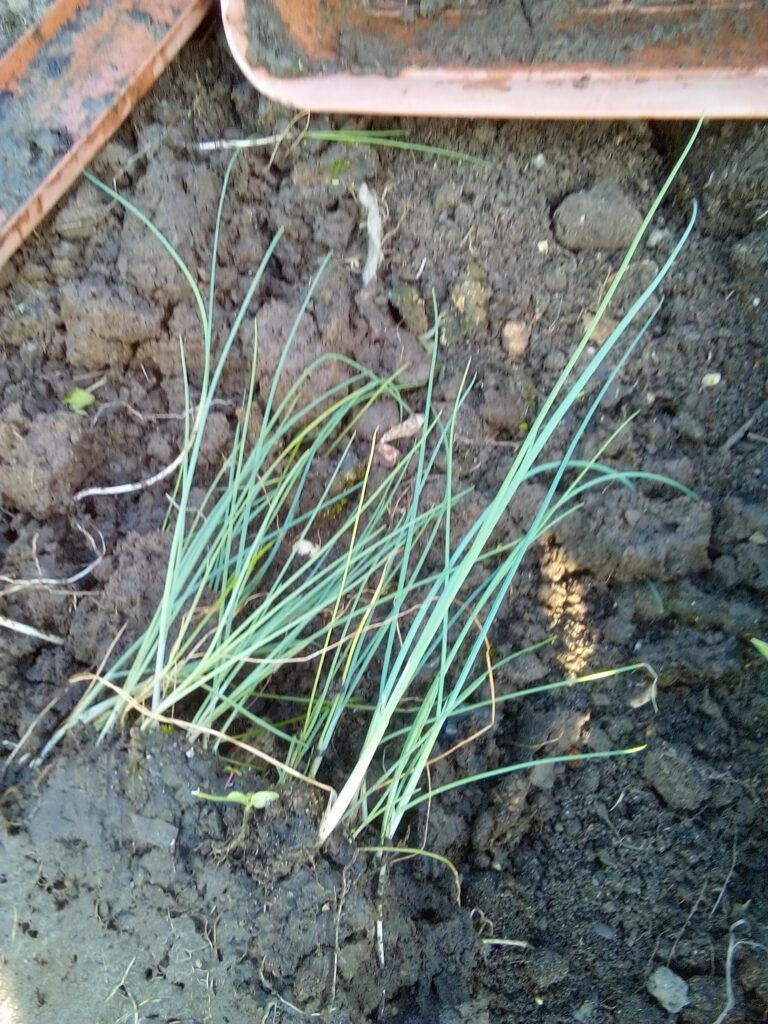
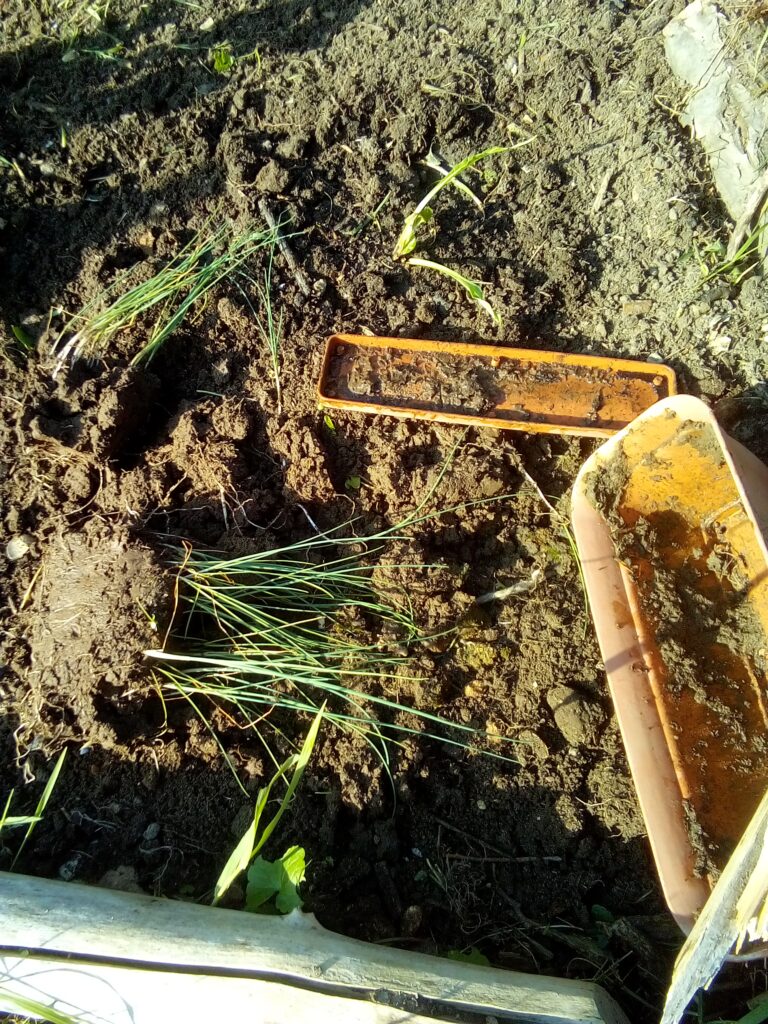
I usually start my leeks either under glass in my raised bed or in a bigger flower pot inside my garden house.
My garden house isn’t heated, so the conditions are actually quite similar to growing them under glass outside. They get some protection from the cold and wind, but it’s definitely not a warm greenhouse.
When I start them in the raised bed, I like to take a bigger flower pot and dig the whole pot into the soil. The little leek seedlings can grow together in there for a while.
Sometimes I simply keep that same pot in the garden house instead. It really depends on the weather and where I have space that year.
The main reason I use a pot is actually very simple: later I can just lift the whole thing out instead of trying to dig all those tiny plants out of the bed.
Much easier. And less mess with the roots.
2. A Little Bath Before Planting
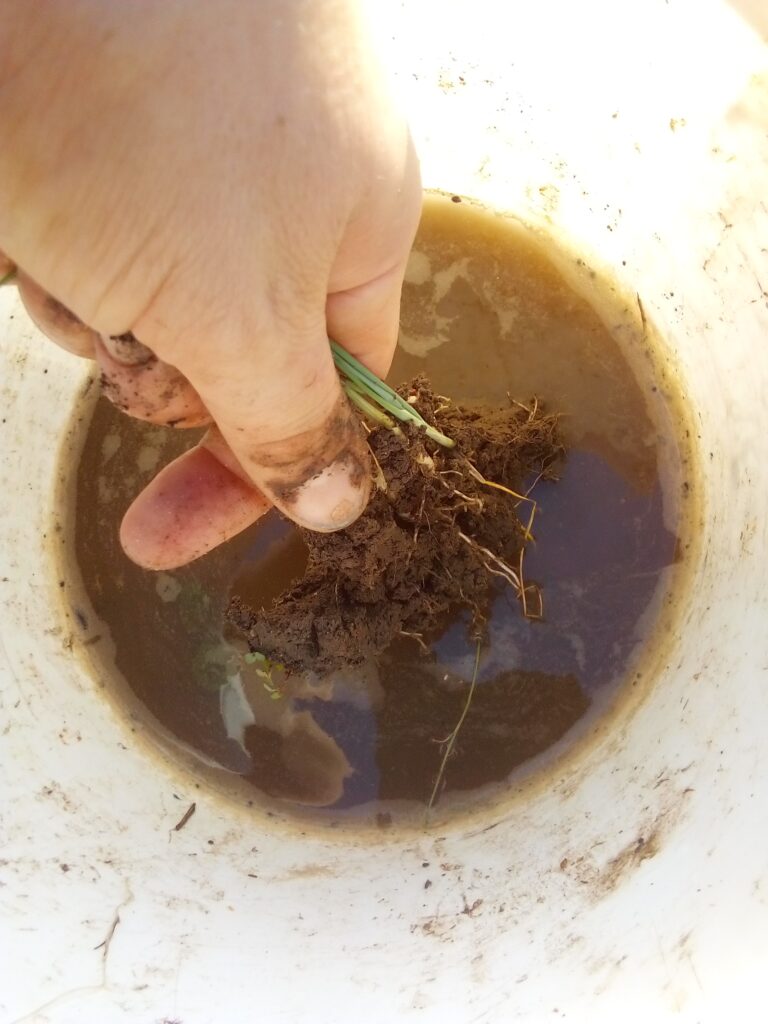
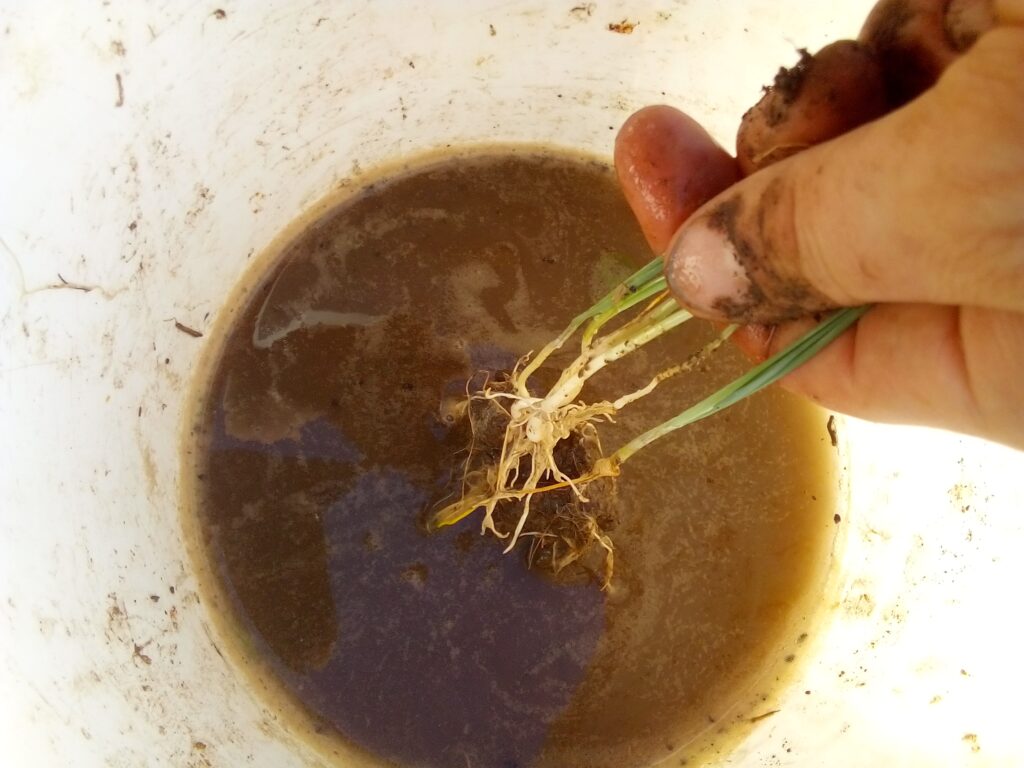
When it’s finally time to move the leeks, I take them out of their pot and put the roots into water.
I leave them there for a bit and gently move them around. Most of the soil comes off quite easily this way.
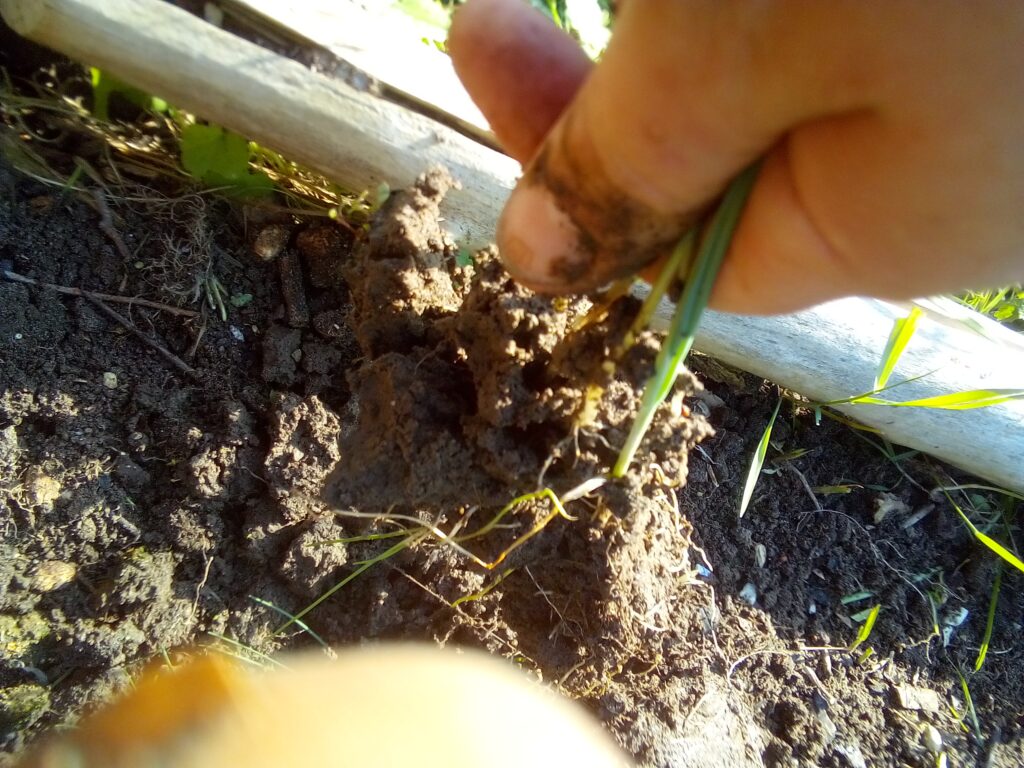
Then I seperate the plants one by one.
This part always looks a little chaotic at first because you suddenly have this wet bundle of skinny leeks in your hands. But after a few minutes they are all seperated and ready for the next step.
3. Cutting Back Roots and Leaves
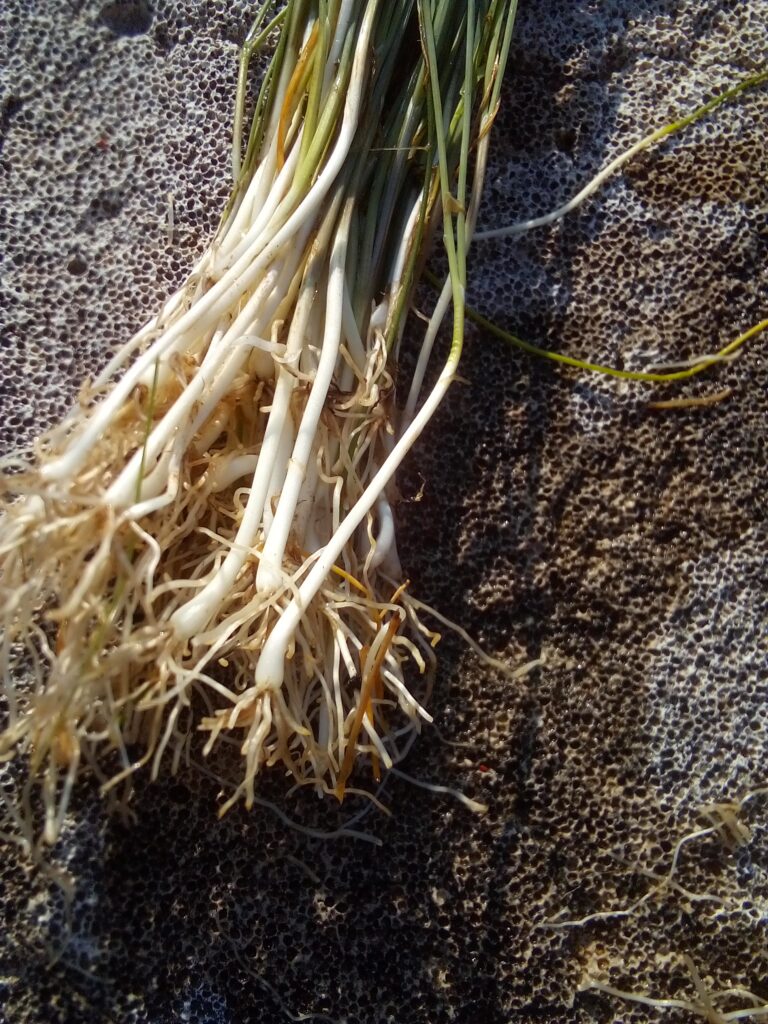
Now comes the part that always looks a bit brutal in photos.
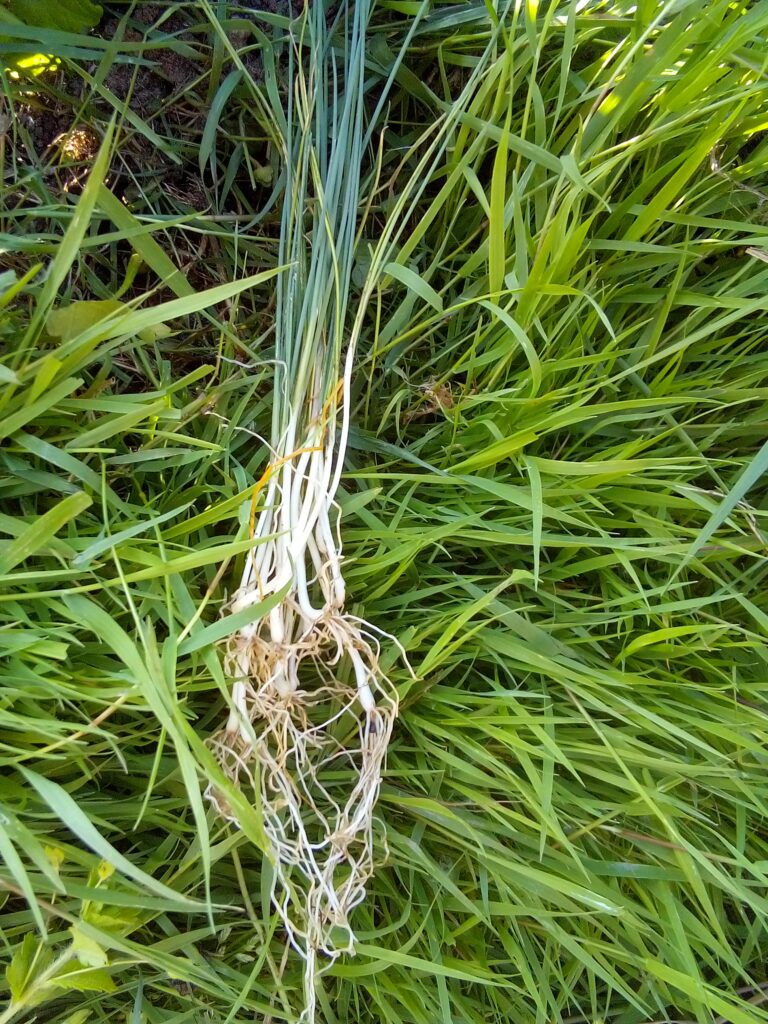
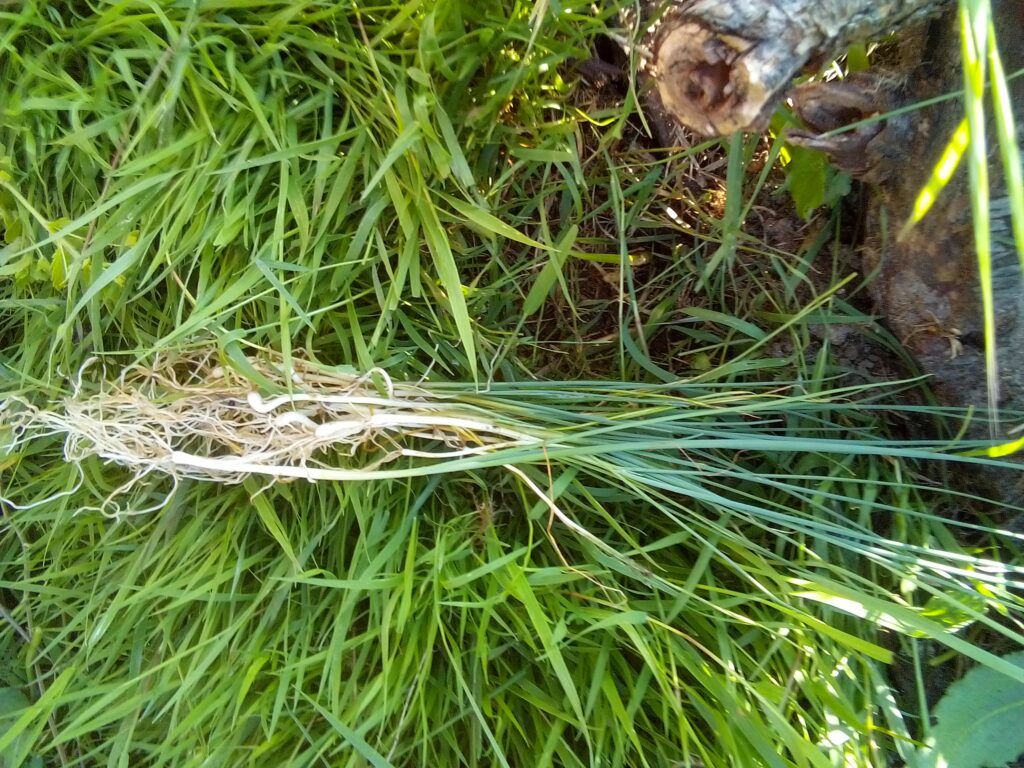
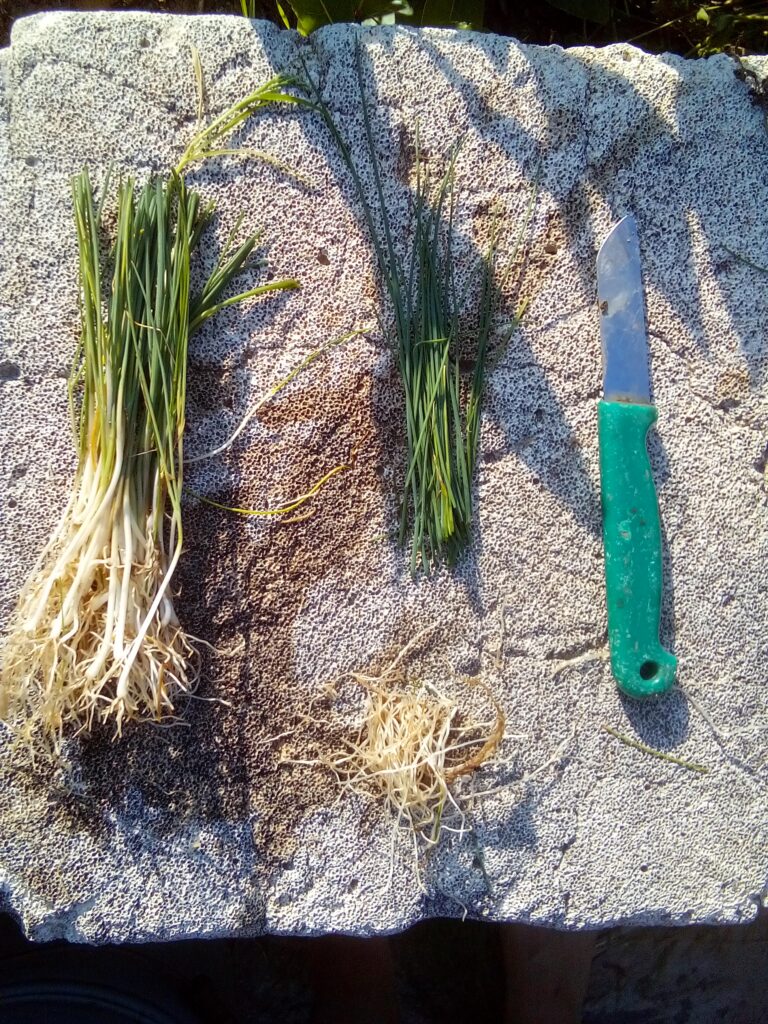
I put a few of the young leeks together in a small bundle and take a sharp knife. You can also use clean garden scissors.
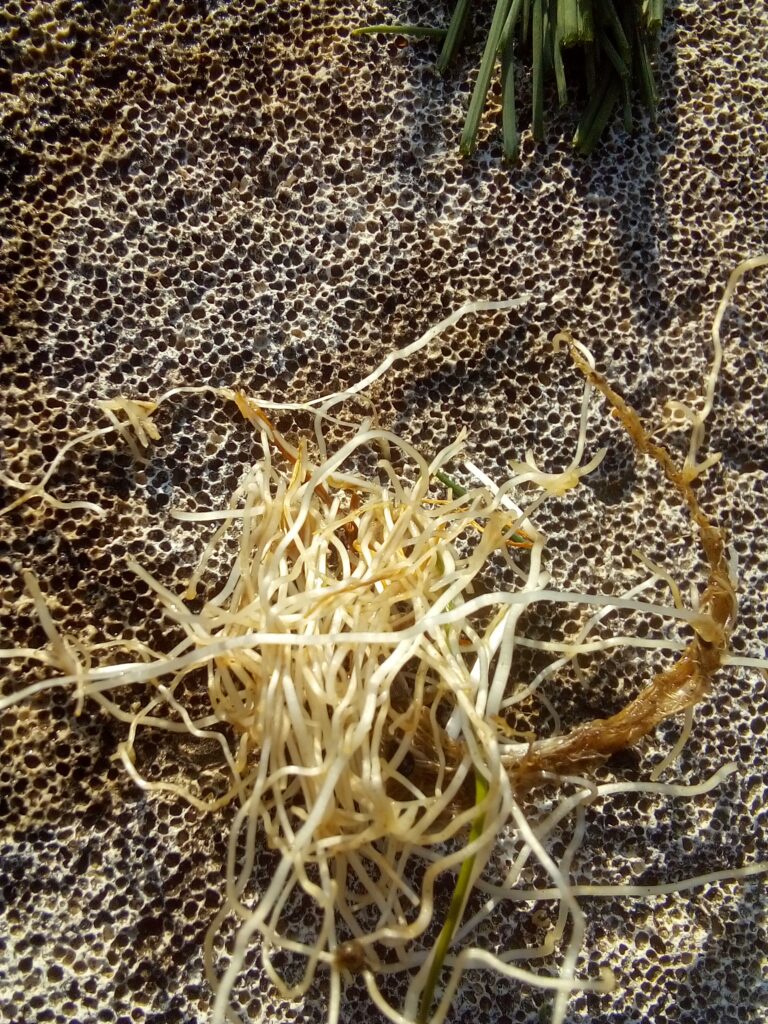
I cut off roughly one third of the roots.
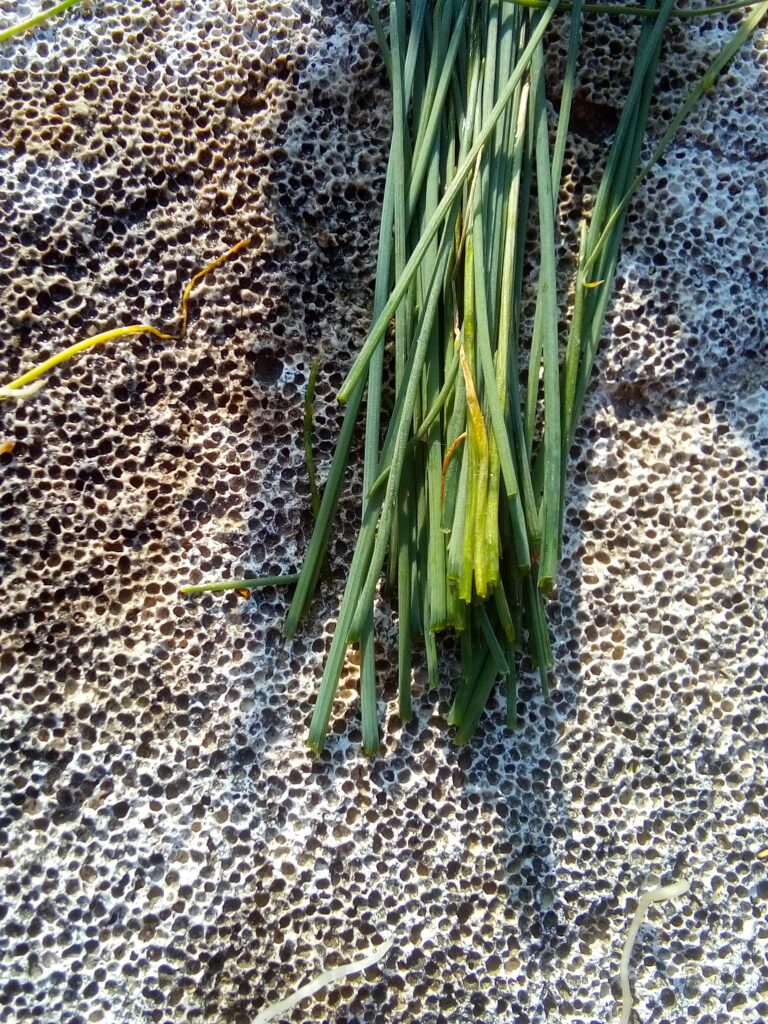
Then I shorten the green part as well, usually somewhere between one and two thirds depending on how big the plants are.
And yes, afterwards they look very small again.
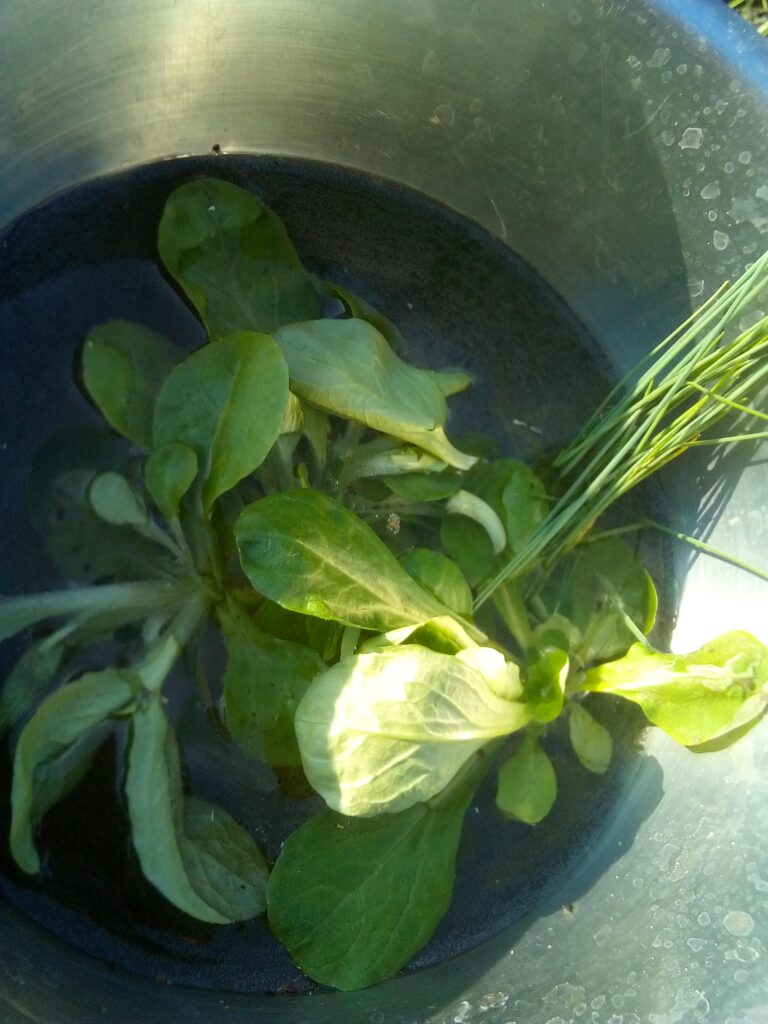
But now they’re ready for the bed. And of course, the green tops I just cut off don’t go to waste — they can go straight into the kitchen! I love using garden vegetables like these in recipes such as my Caldo de Res with Garden Vegetables, especially because it works with both fresh and frozen vegetables.
4. Into the Planting Holes
Before I start planting, I add compost to the bed.
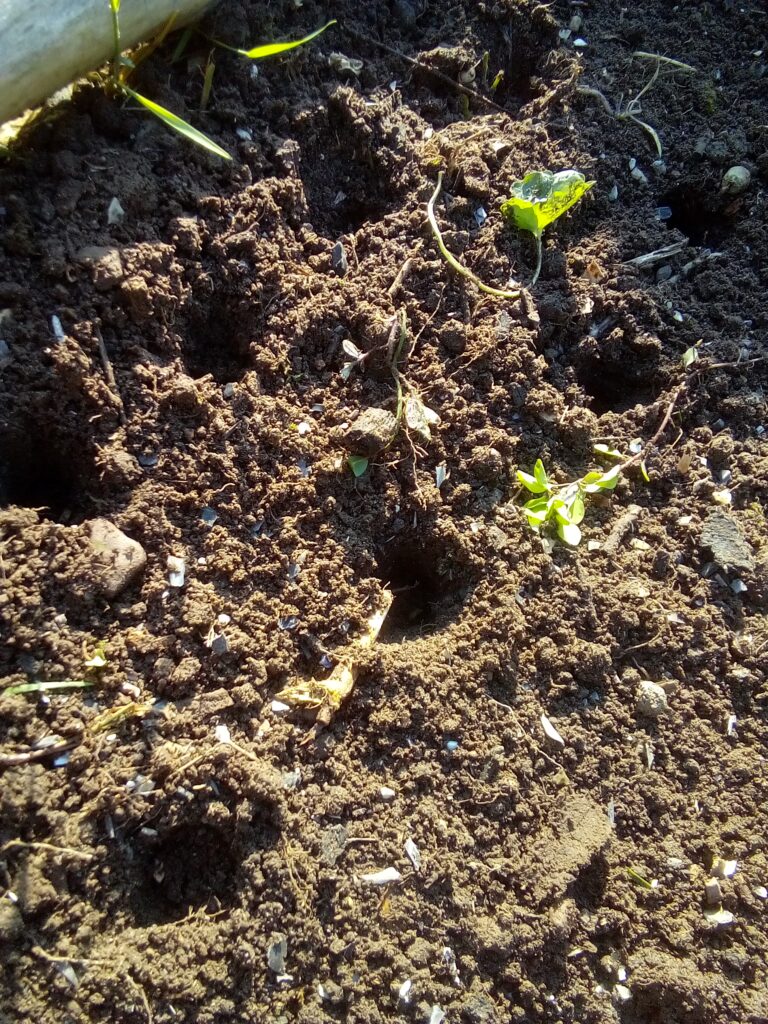
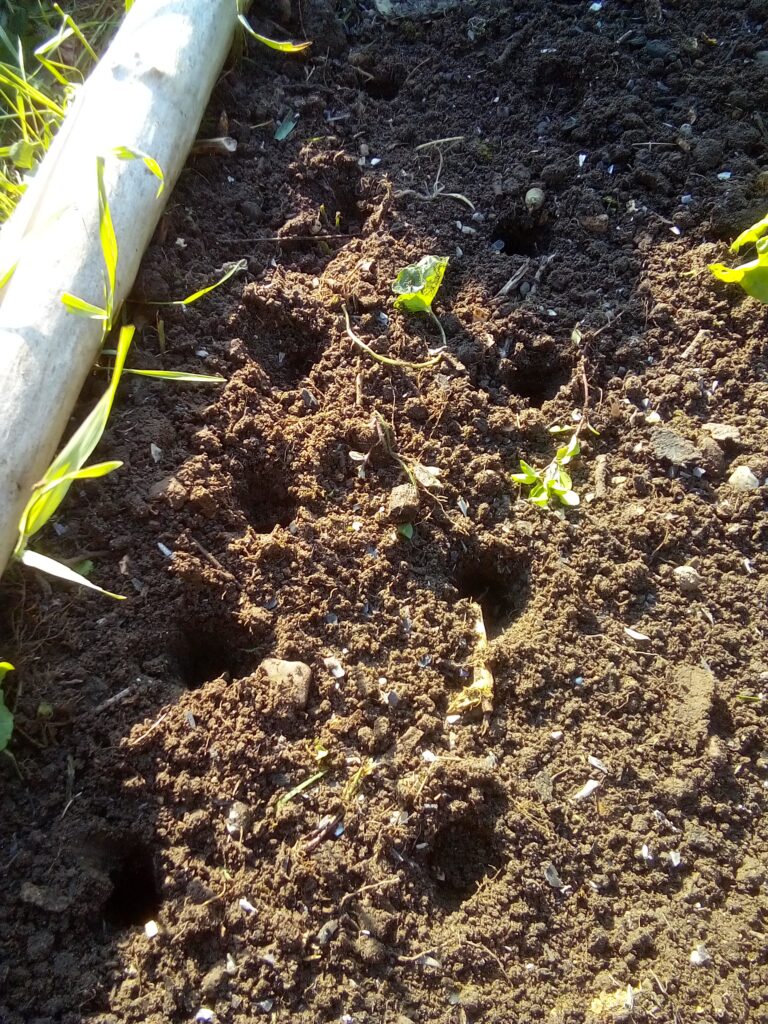
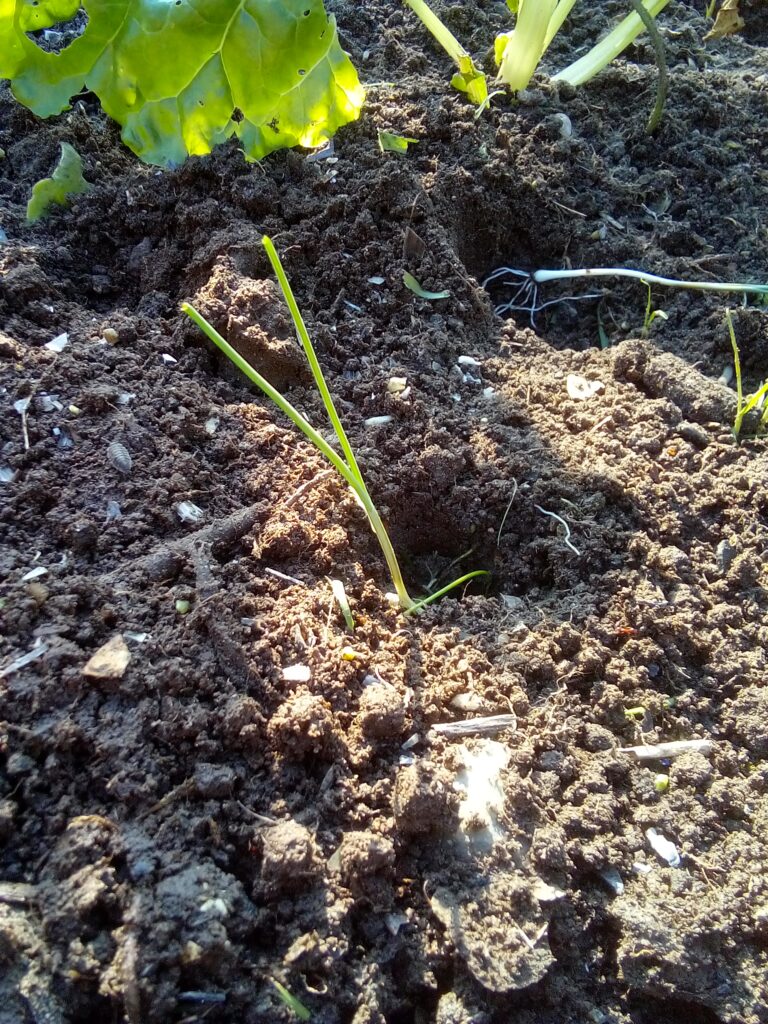
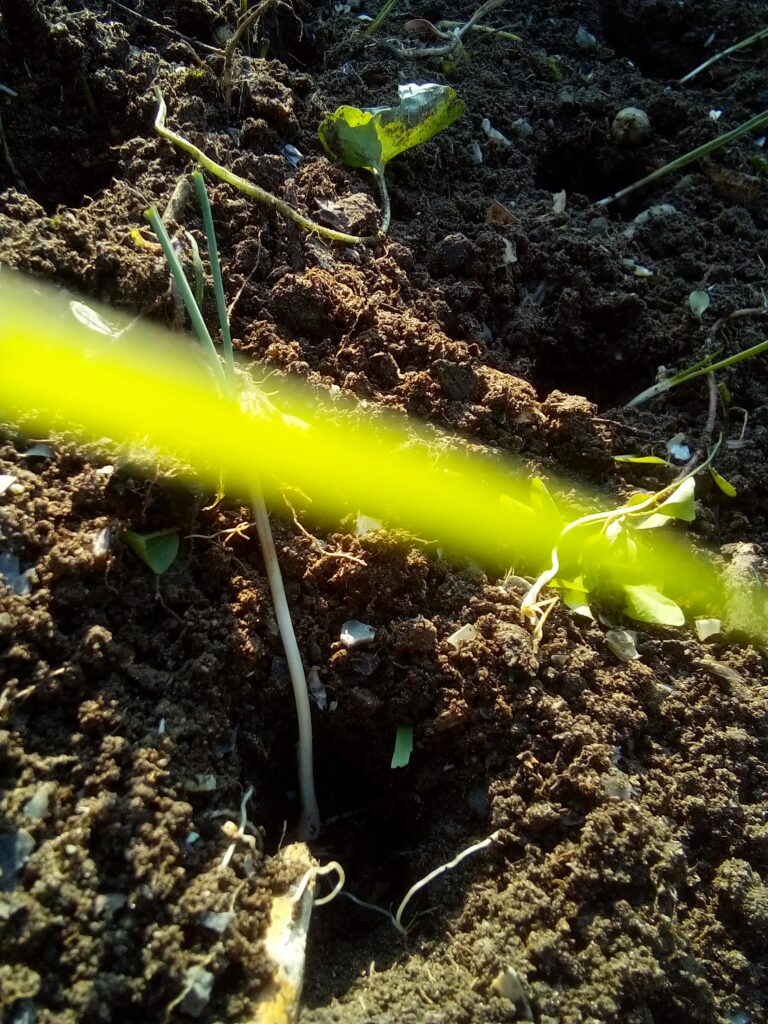
Then I make one deep hole for every leek. I add around 100 ml of horn shavings into each planting hole and put one leek into each hole.
I plant them quite deep.
And I don’t stand there filling every single hole back up with soil. I just leave them like this.
The water will do that job for me.
5. Water, That’s Basically It
Once all my leeks are sitting in their holes, I water the whole bed really well.
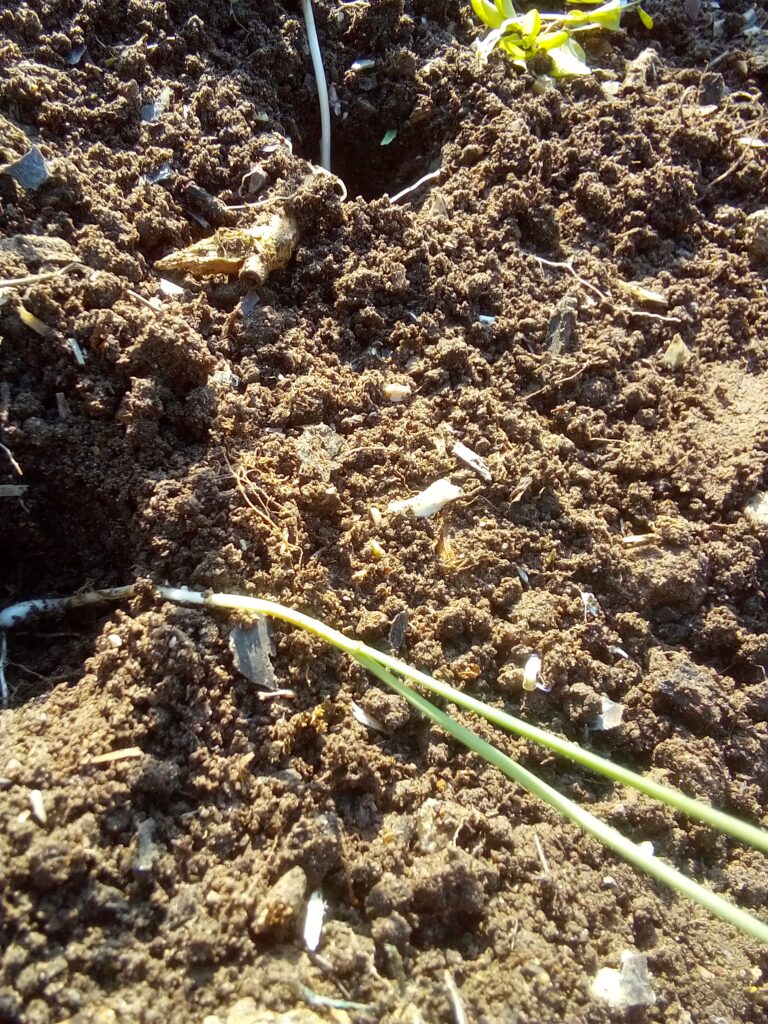
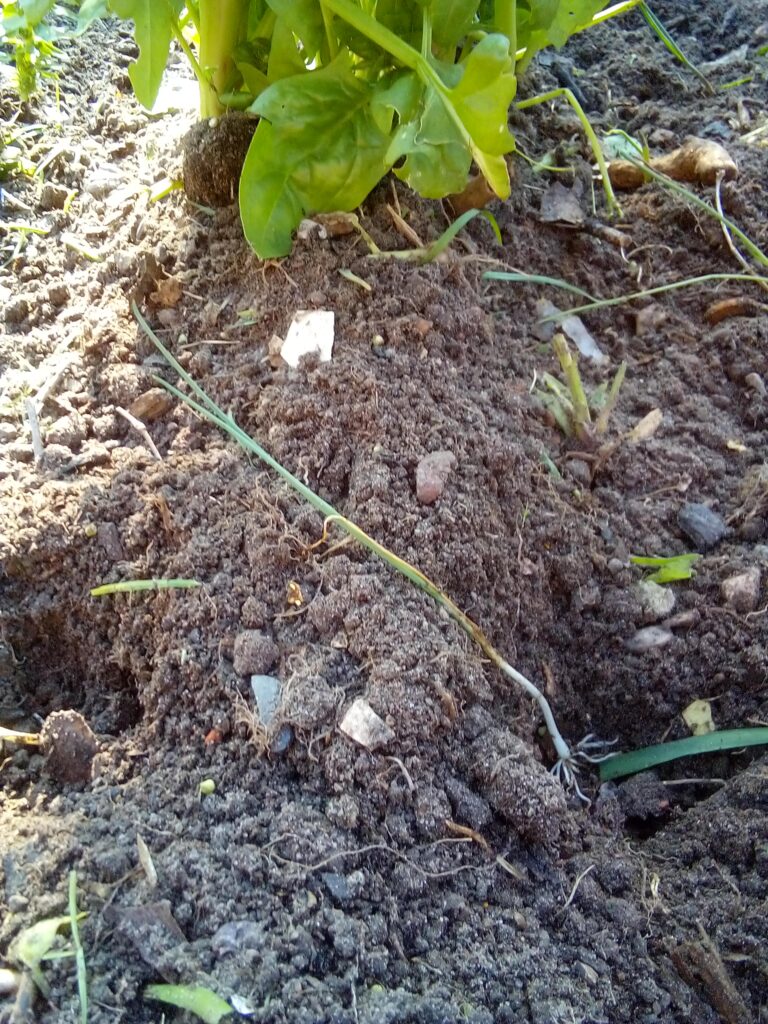
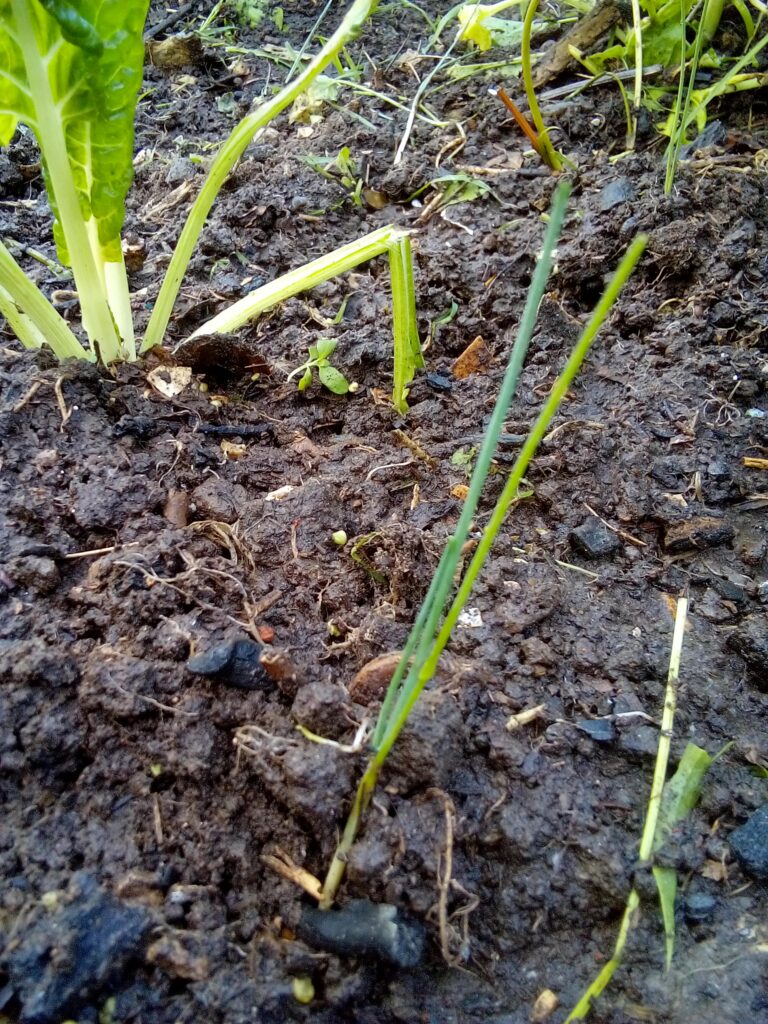
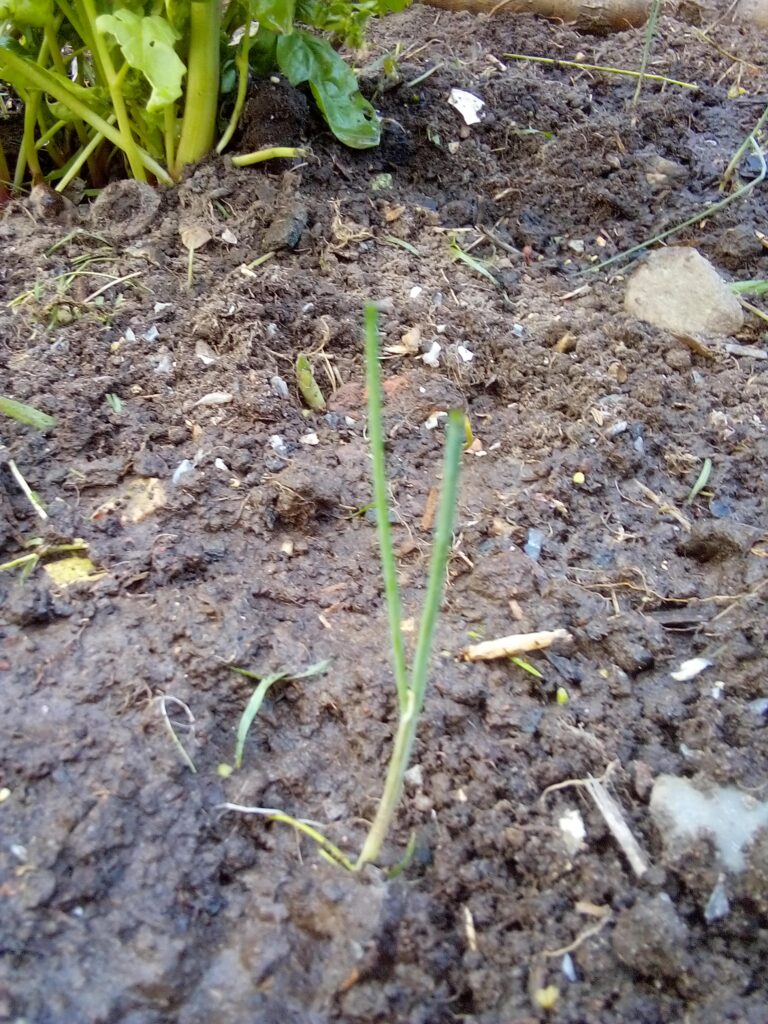
While watering, soil starts washing down into the planting holes by itself. So the holes slowly fill around the plants.
I love this part because after all the fiddly work with the little seedlings, it’s suddenly very simple.
Water them.
Done.
Well… almost.
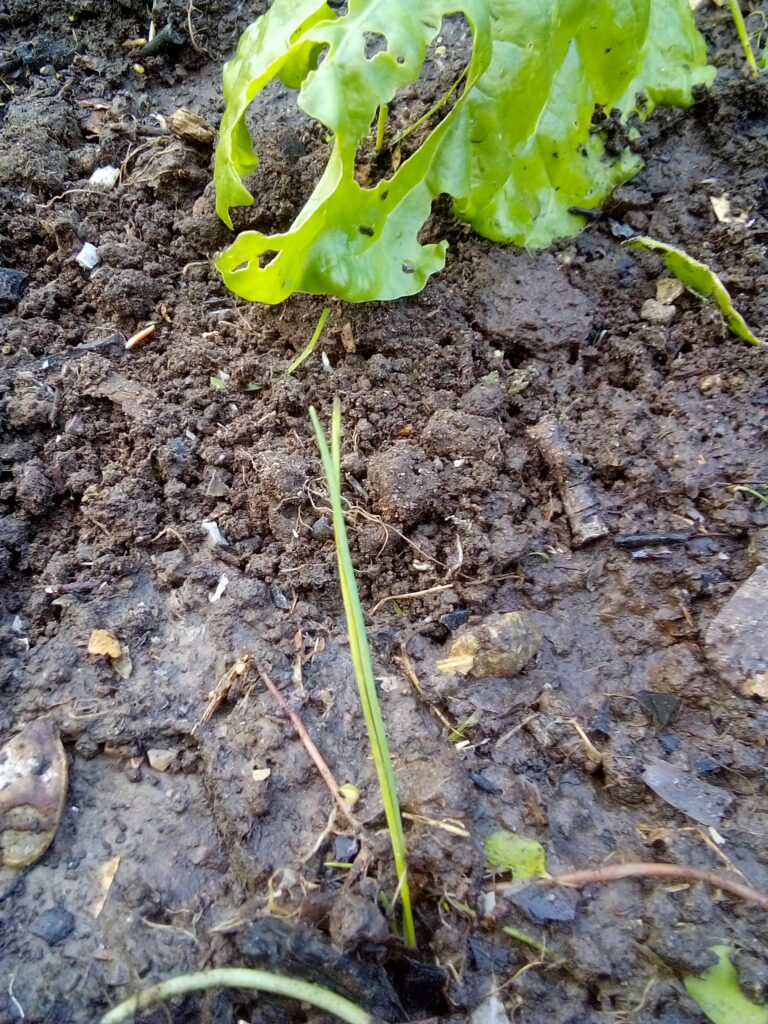
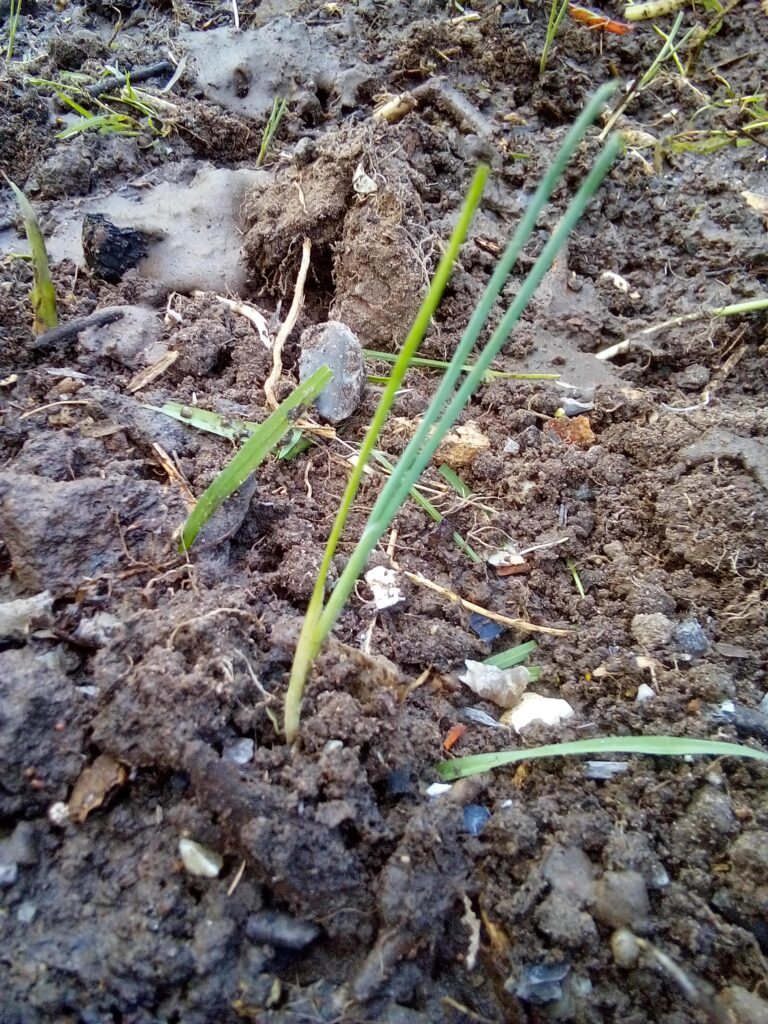
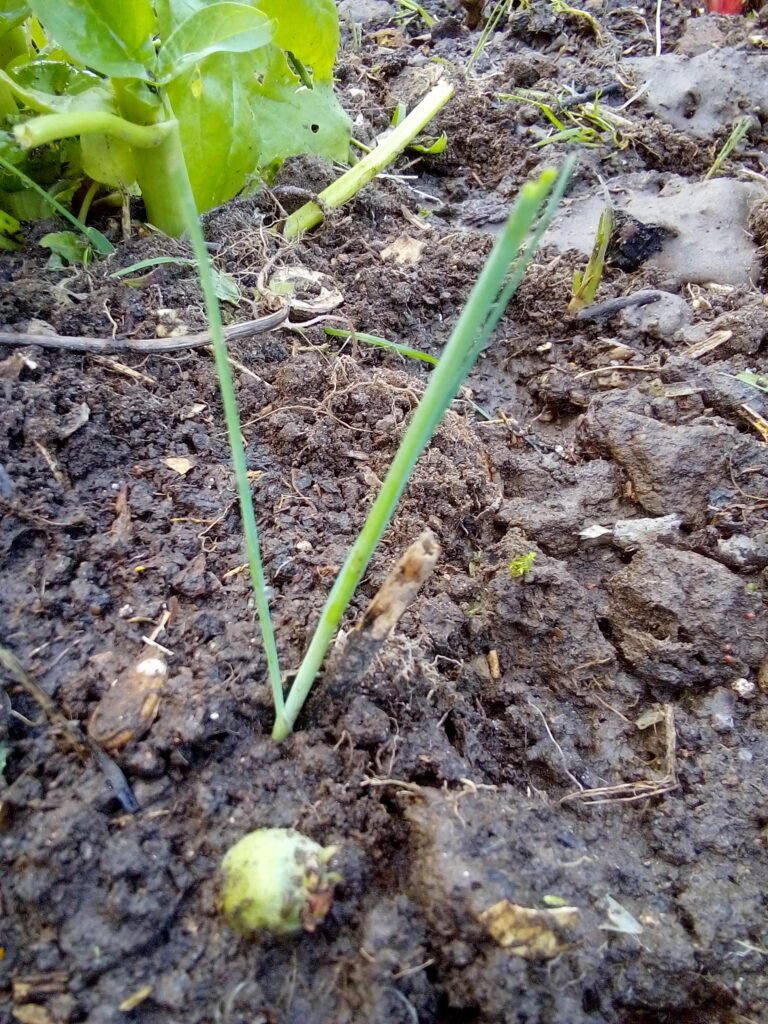
6. Mulch and Wait
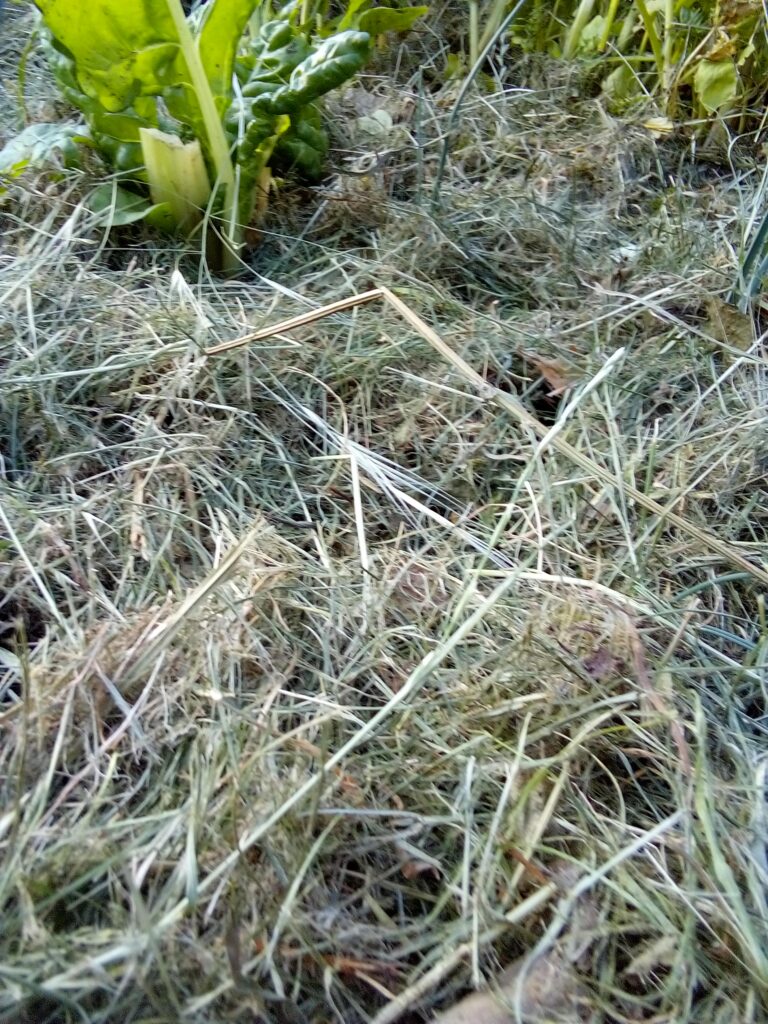
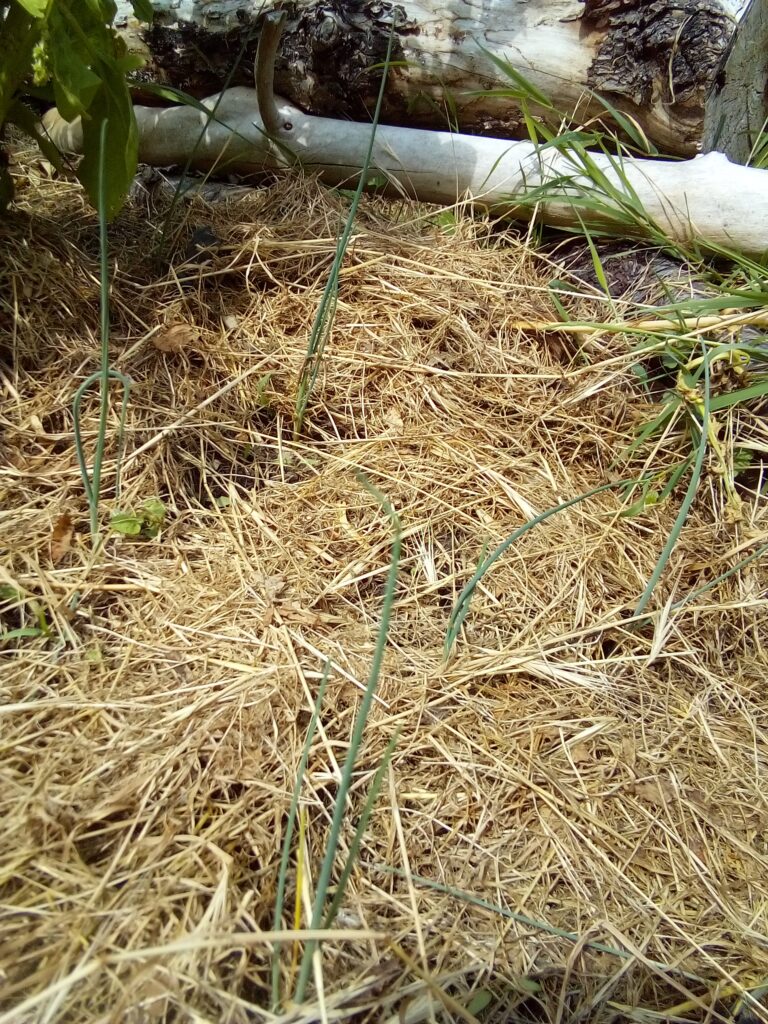
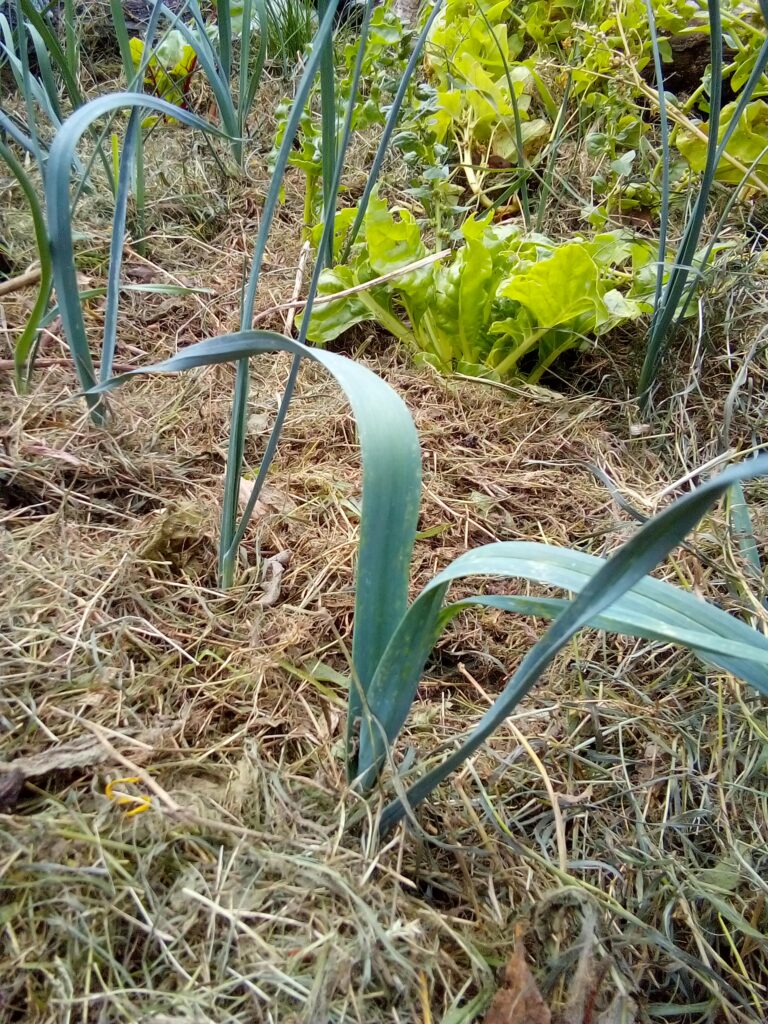
As always, I mulch the bed pretty soon afterwards.
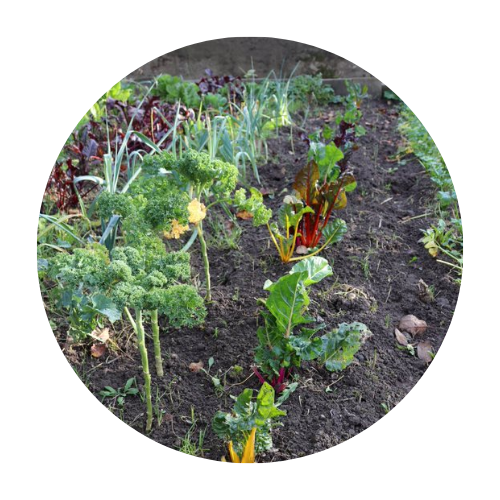
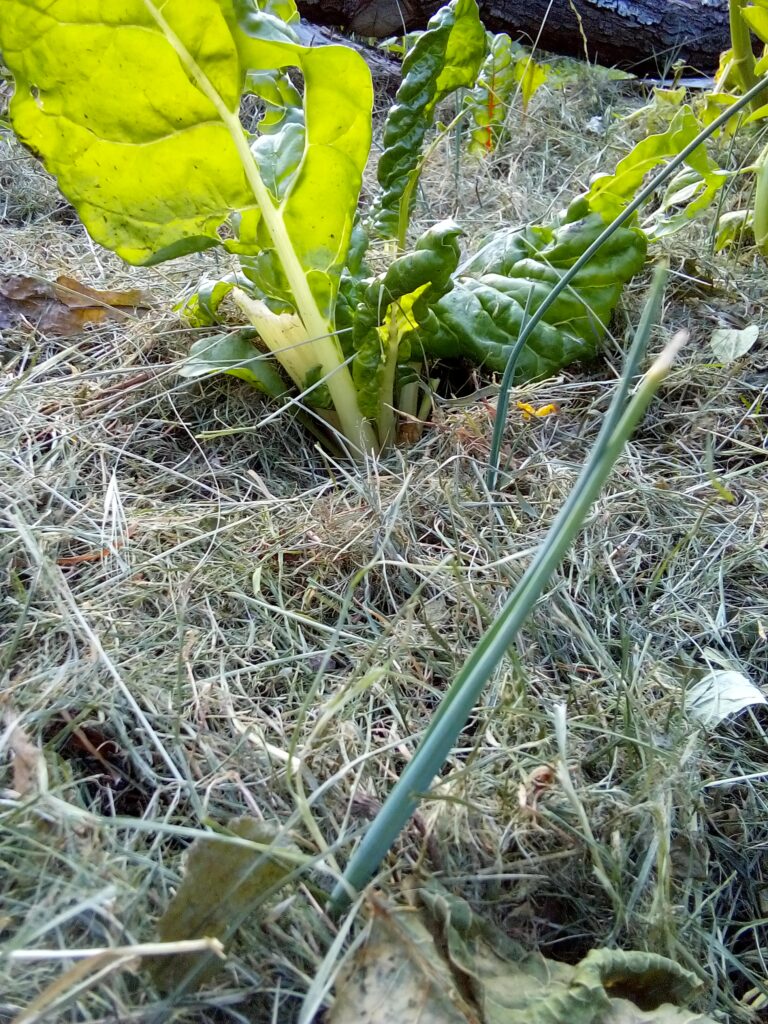
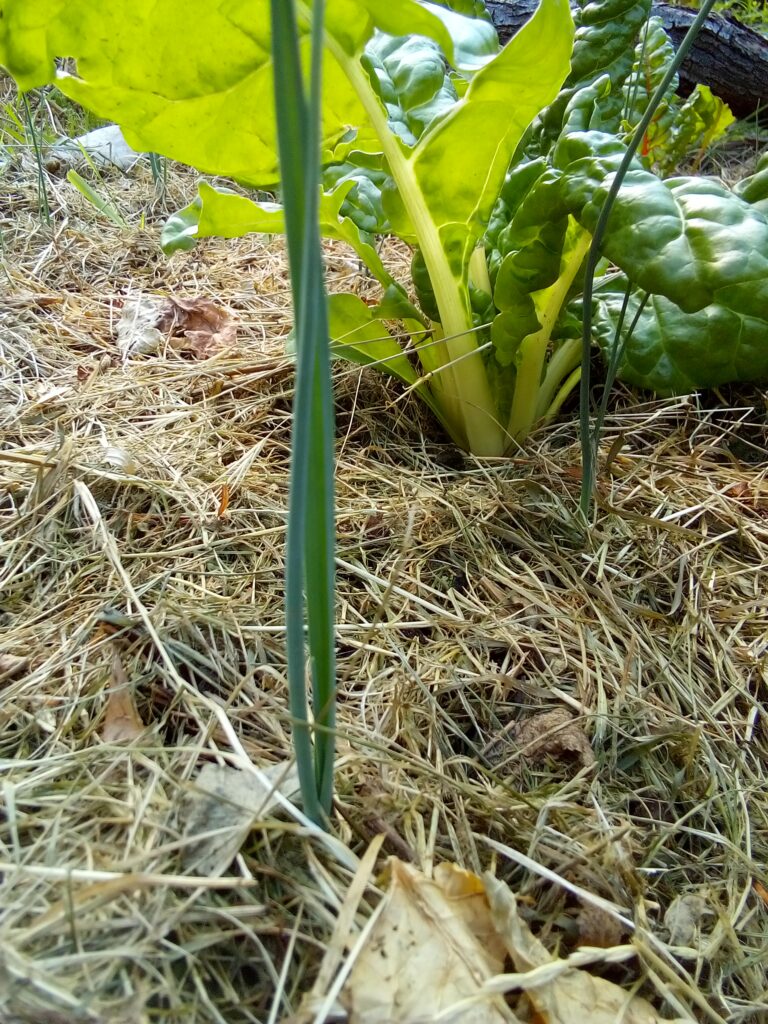
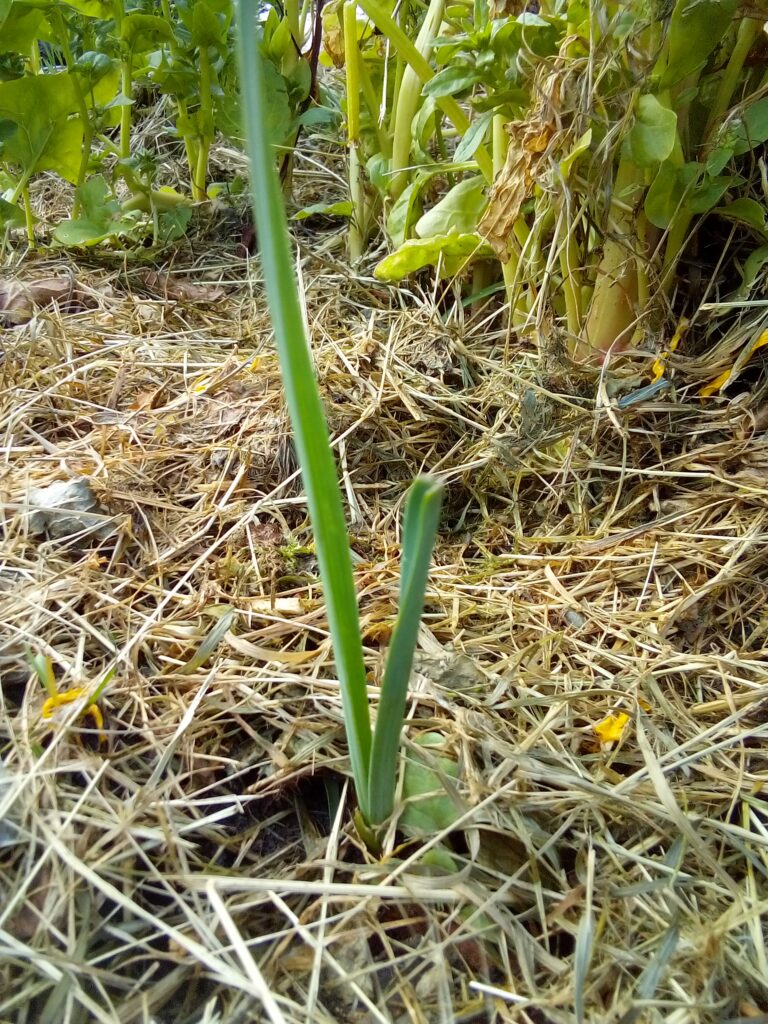
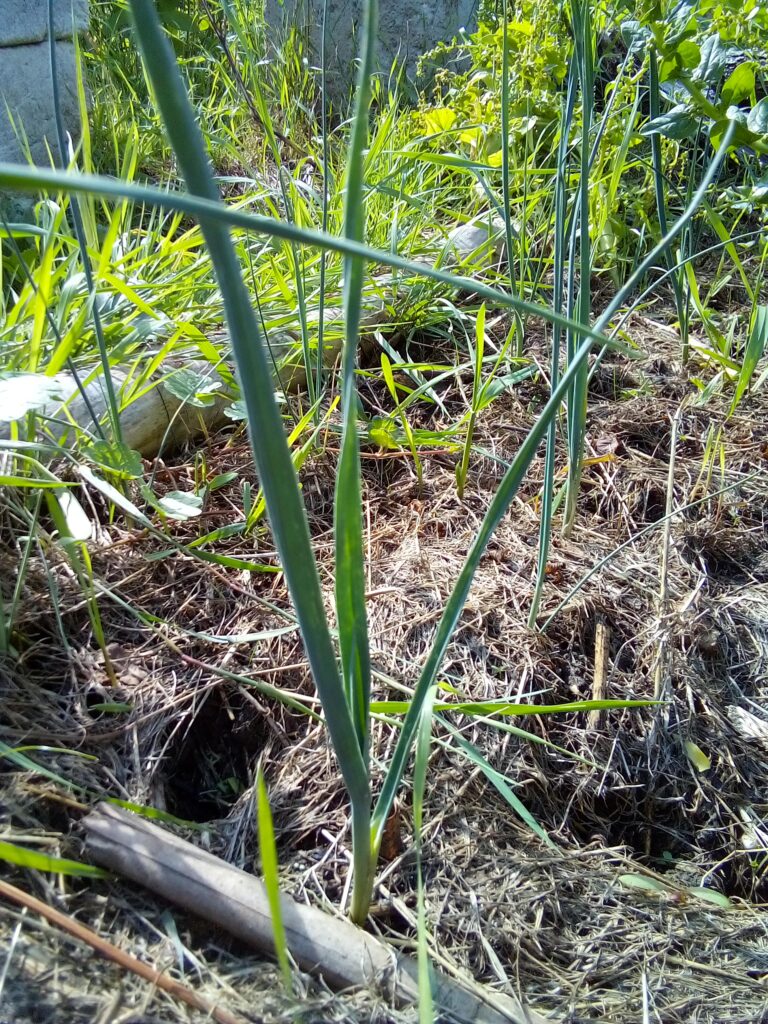
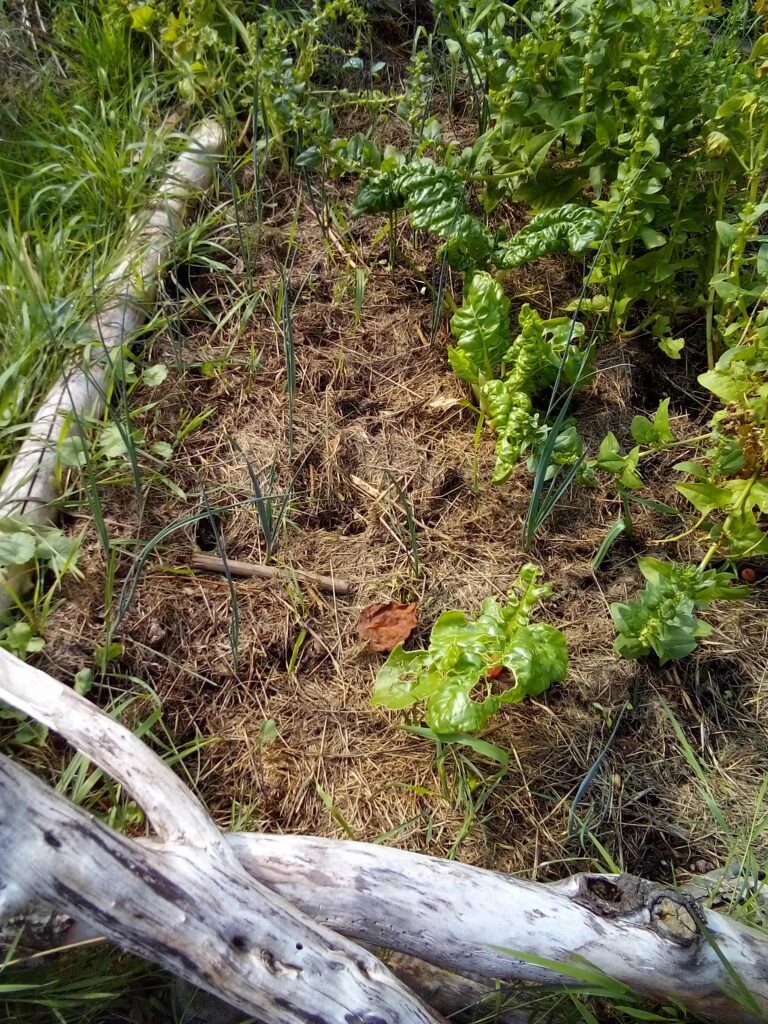
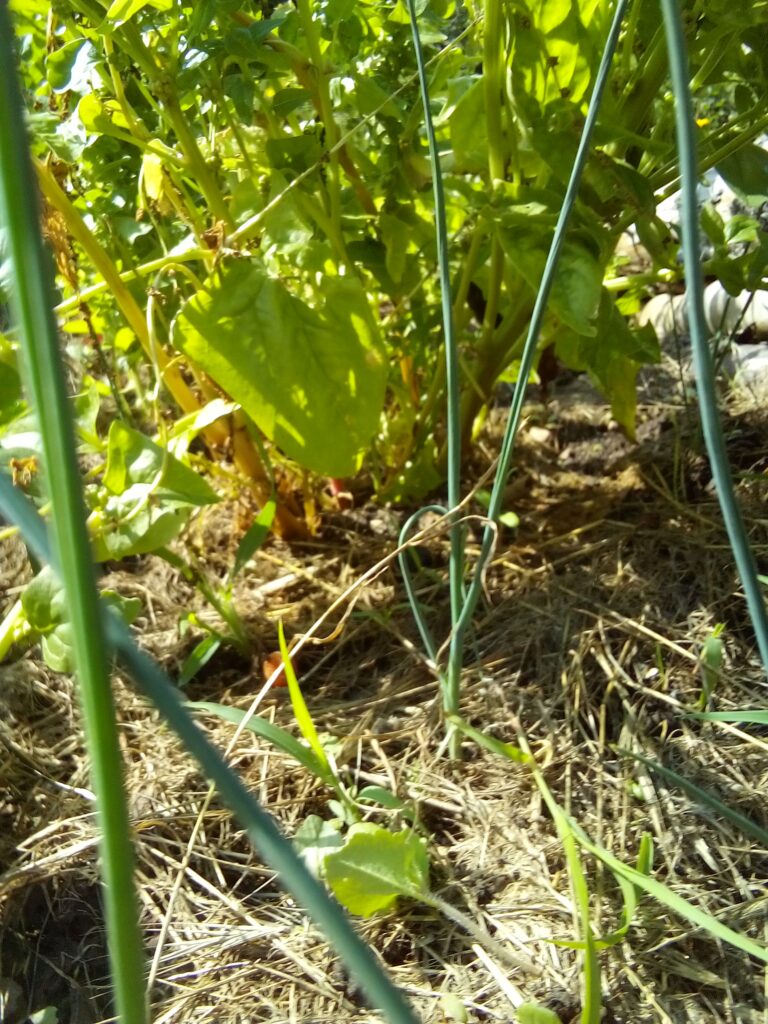
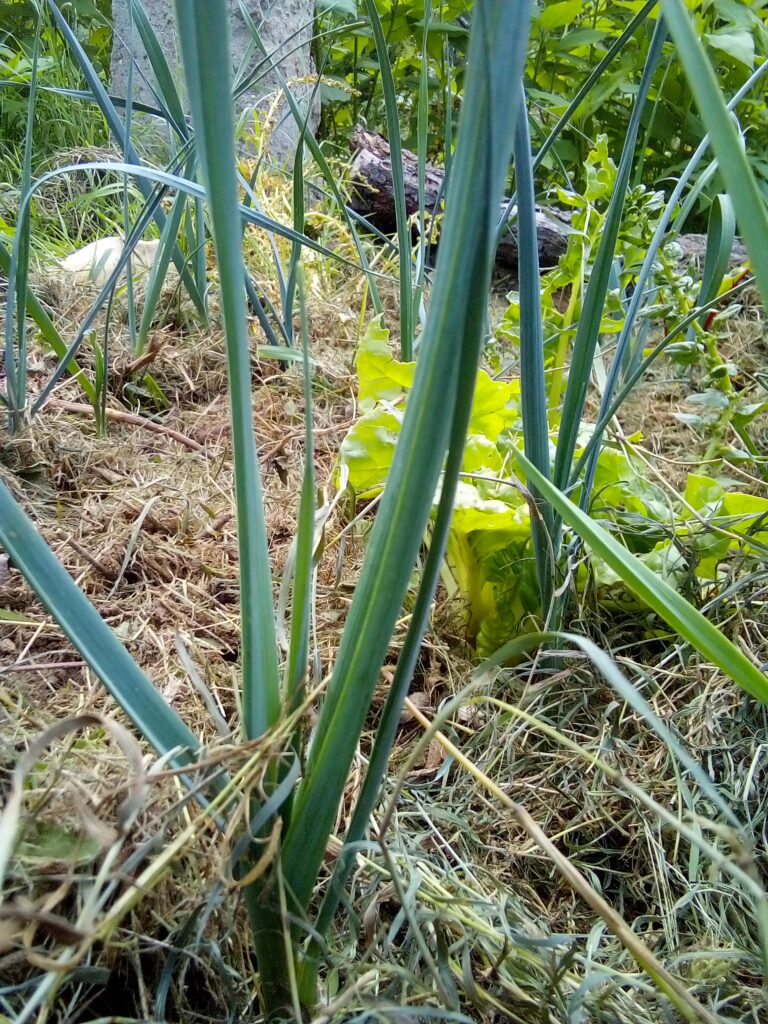
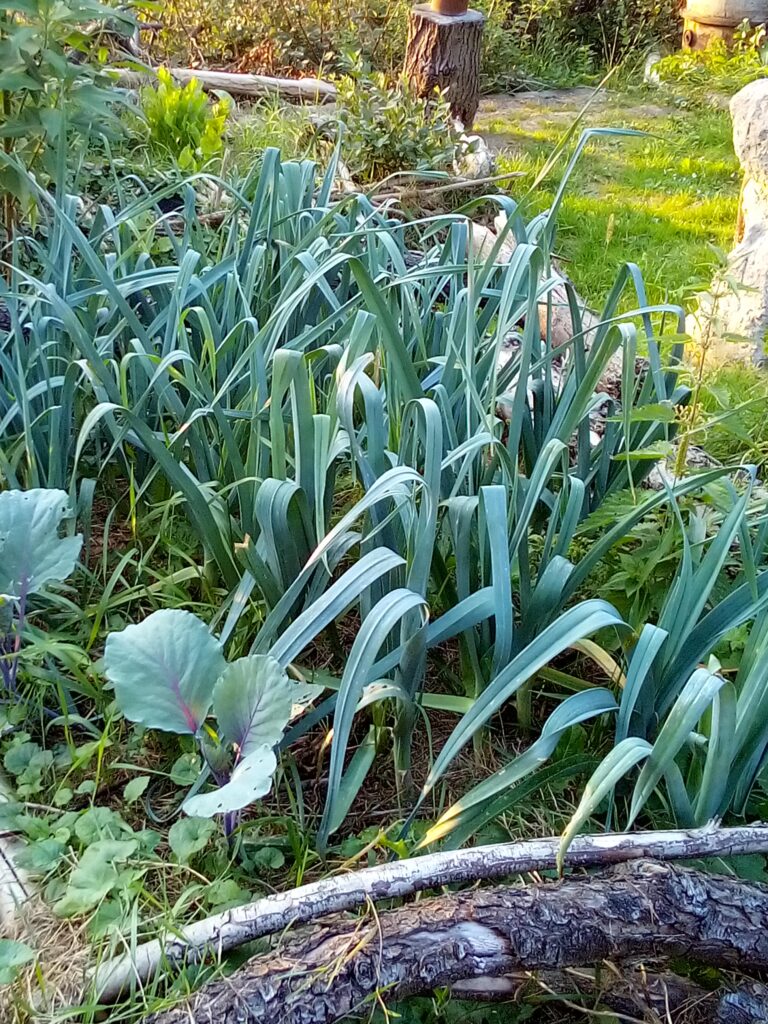
My leeks are growing together with chard this time, which makes the bed look much nicer while the leeks are still small.
And then there isn’t really much excitement for a while.
They grow.
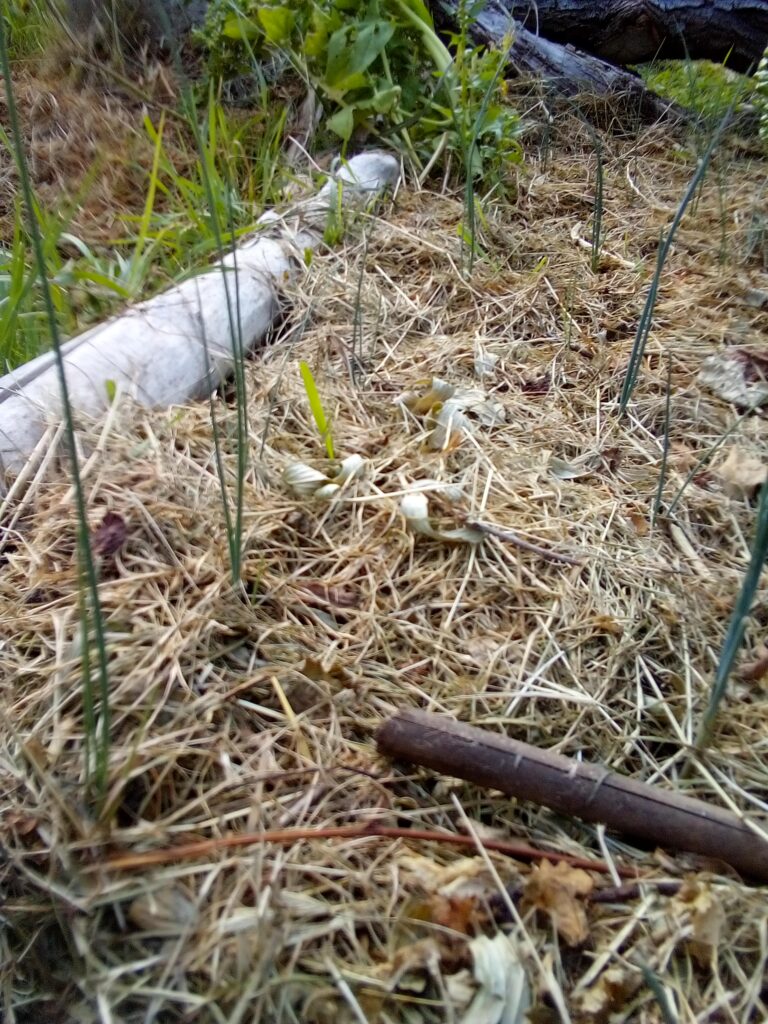
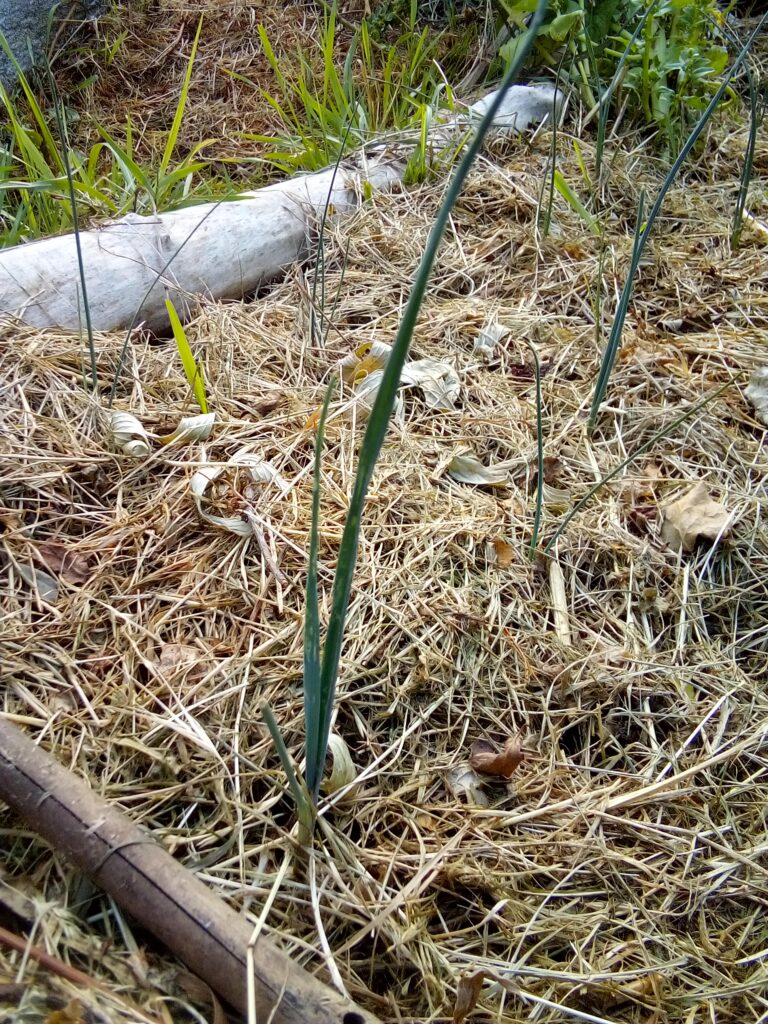
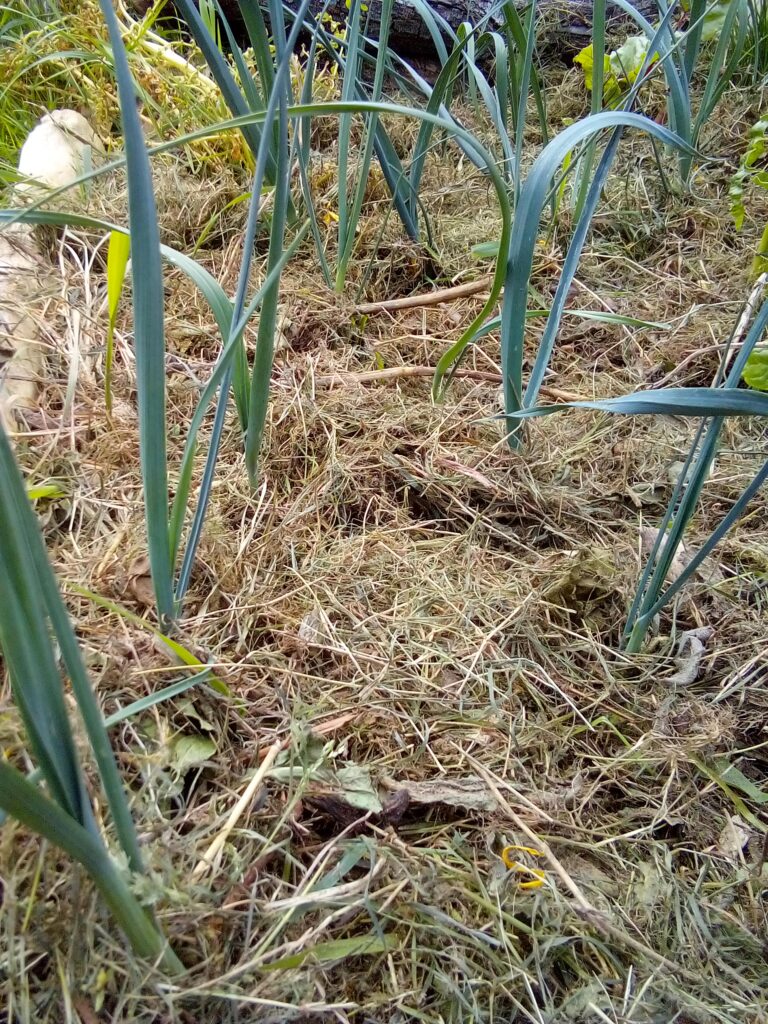
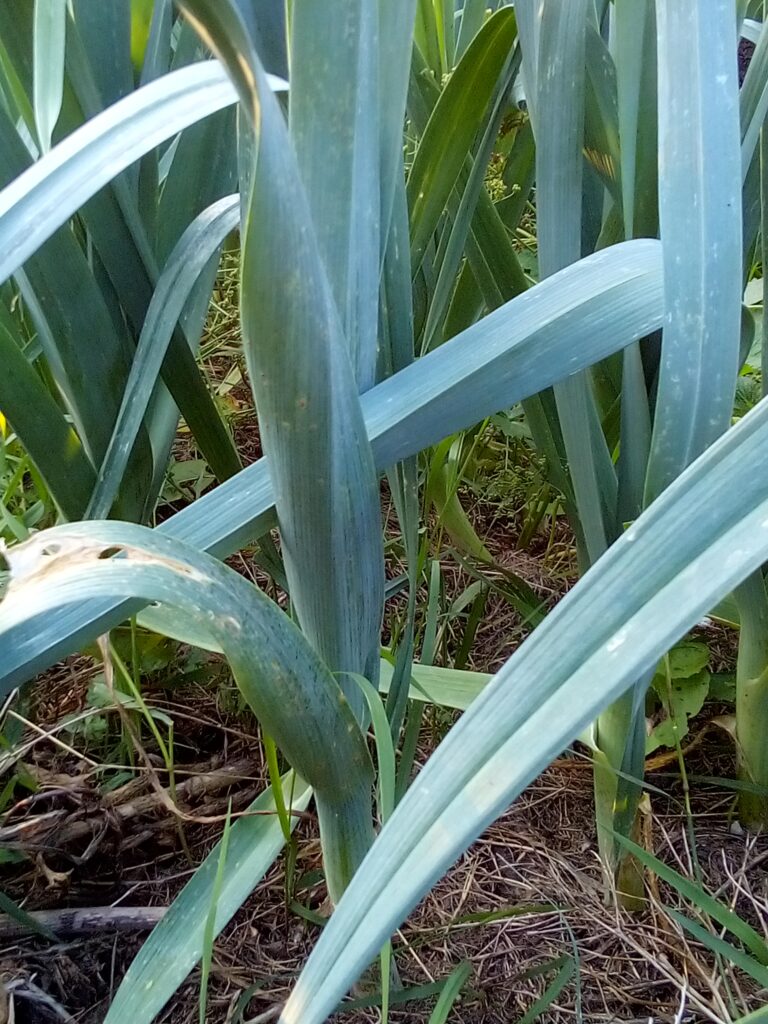
I take a photo every now and then for my little leek diary, pull something out here or there, check the mulch. That’s about it.
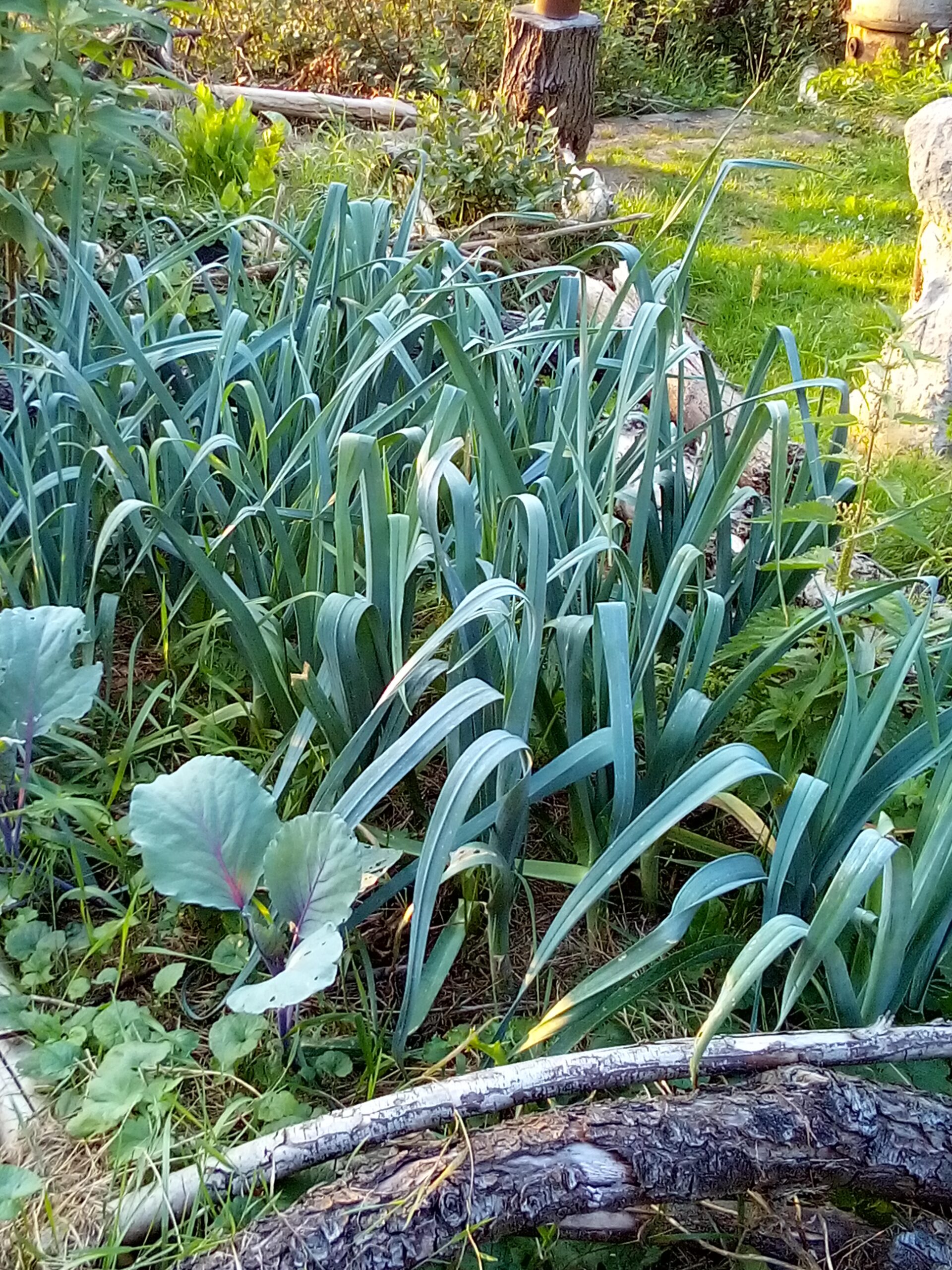
Months later those tiny, slightly ridiculous looking plants are suddenly proper leeks.
And if you ask me how to grow leeks without spending hours in the garden, this is probably the most important part: give them time.
A bit of work at the beginning, then mulch, wait and let them grow.
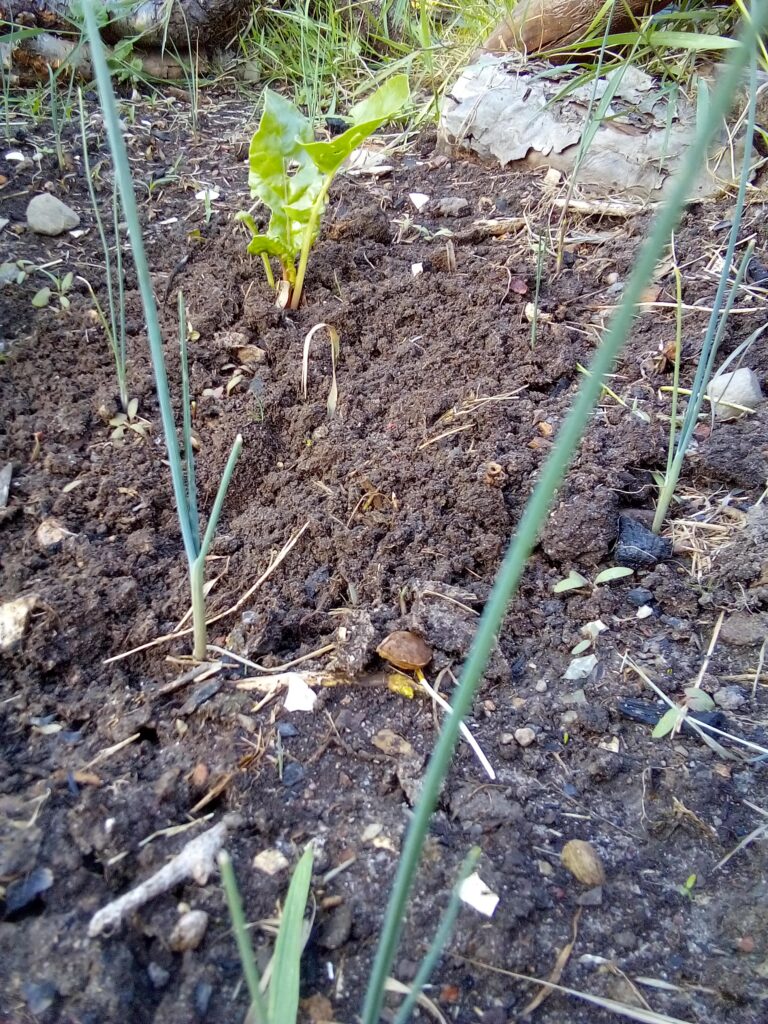
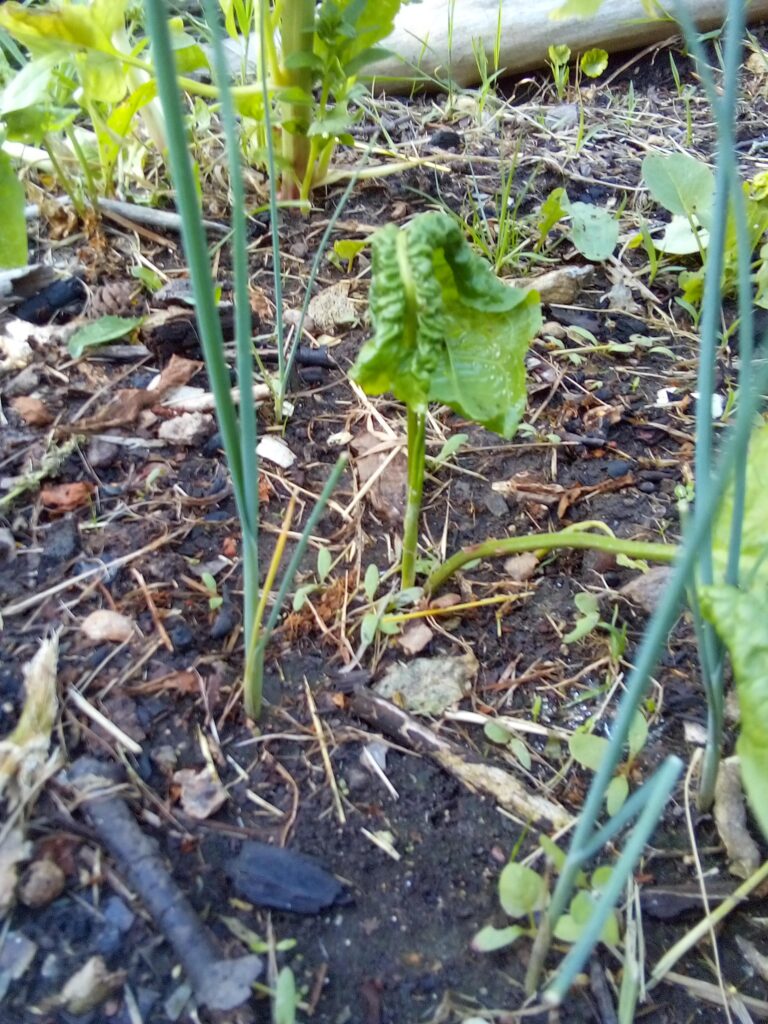
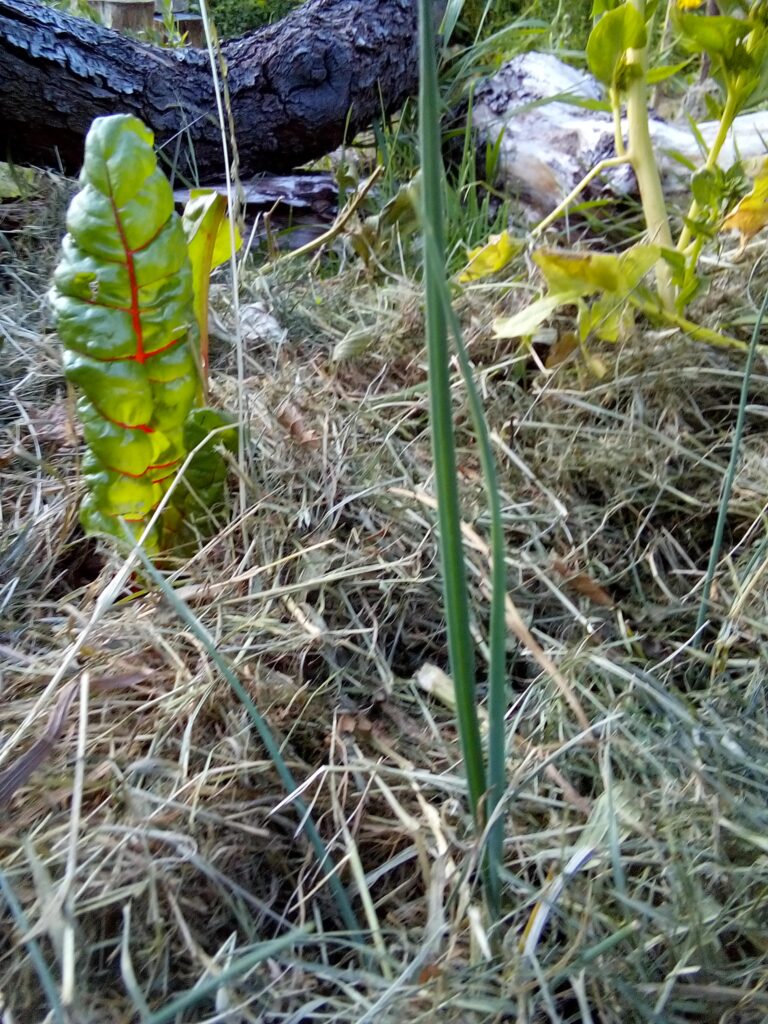
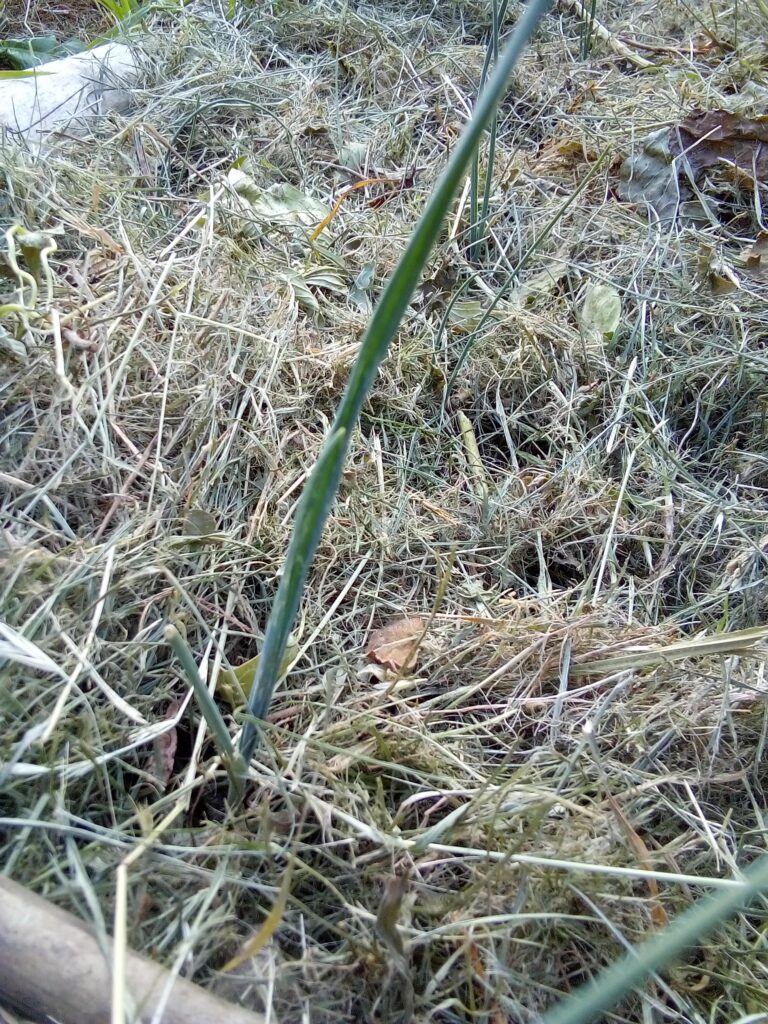
Two days later …
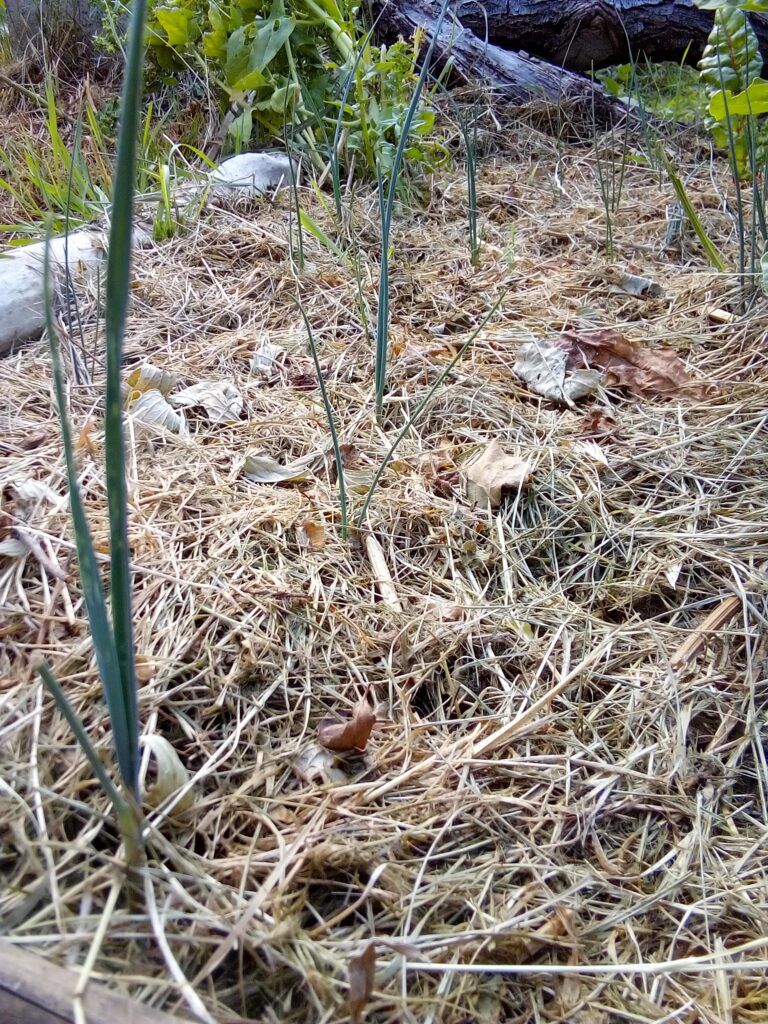
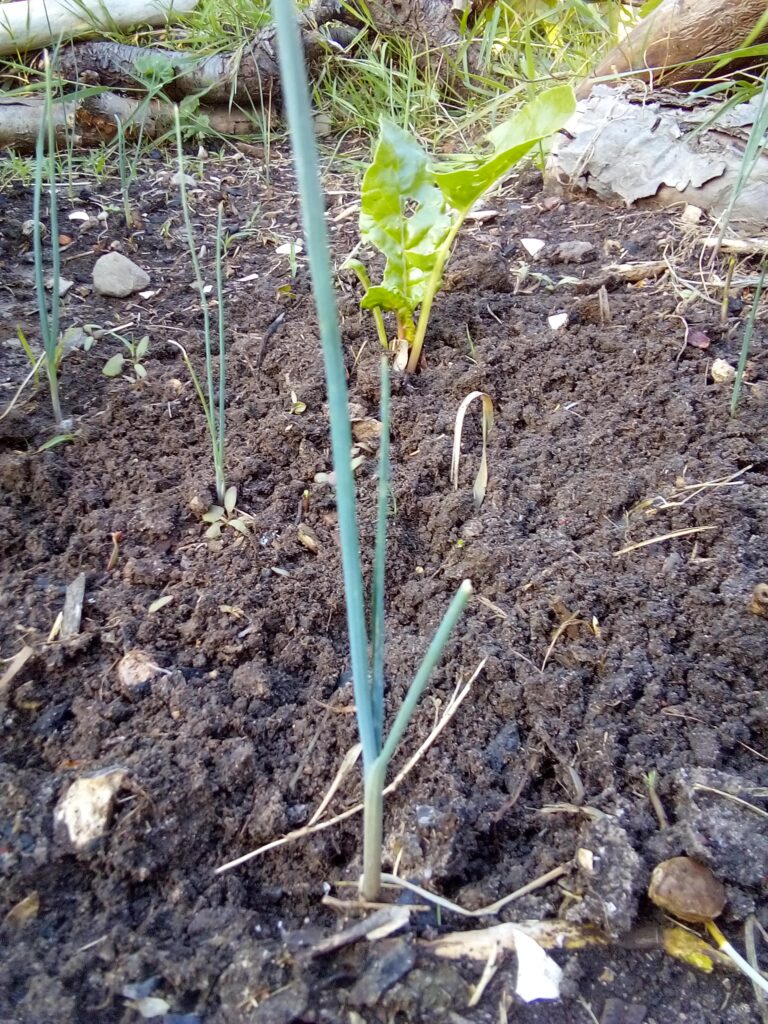
3 days later …
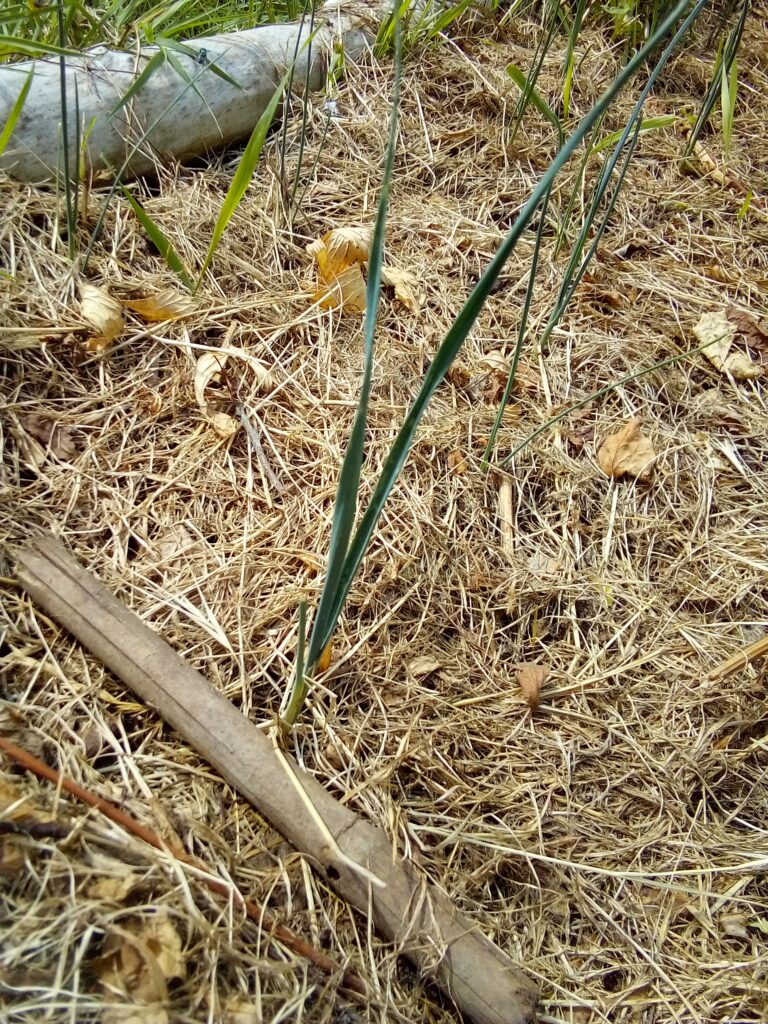
9 days later …
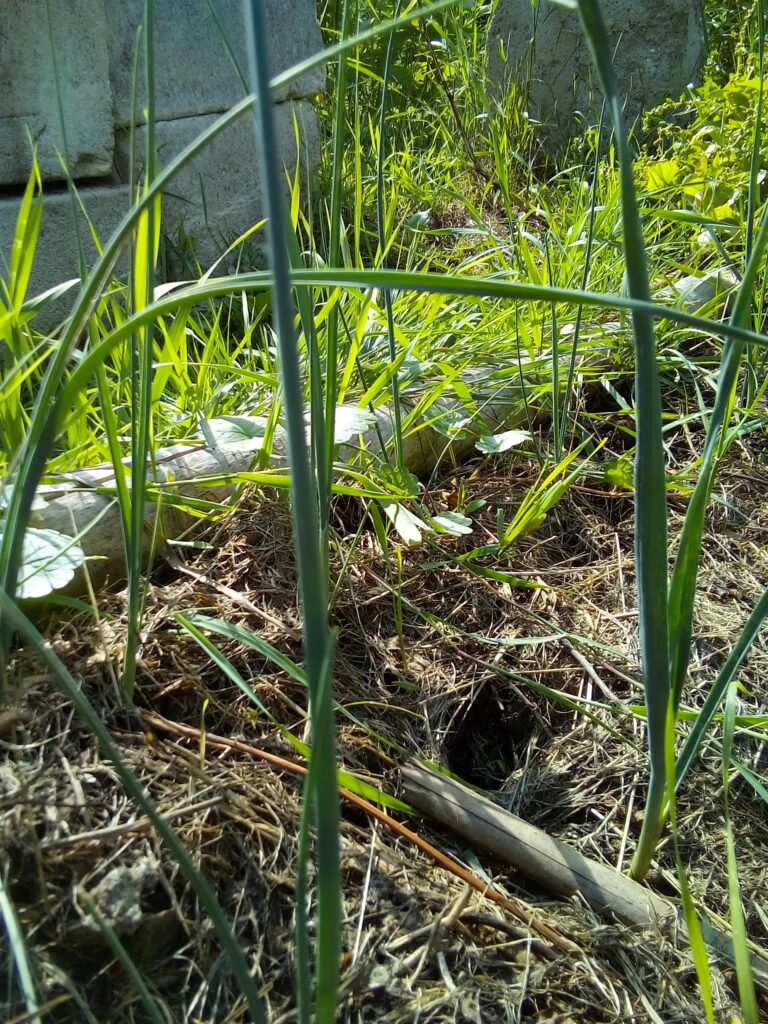
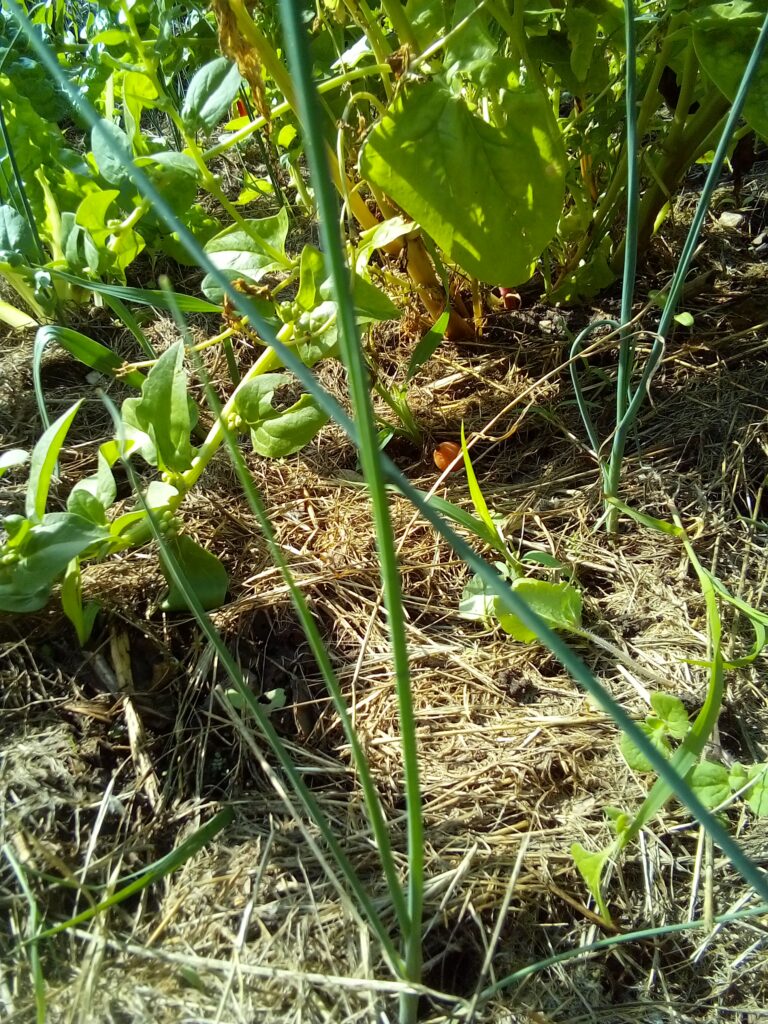
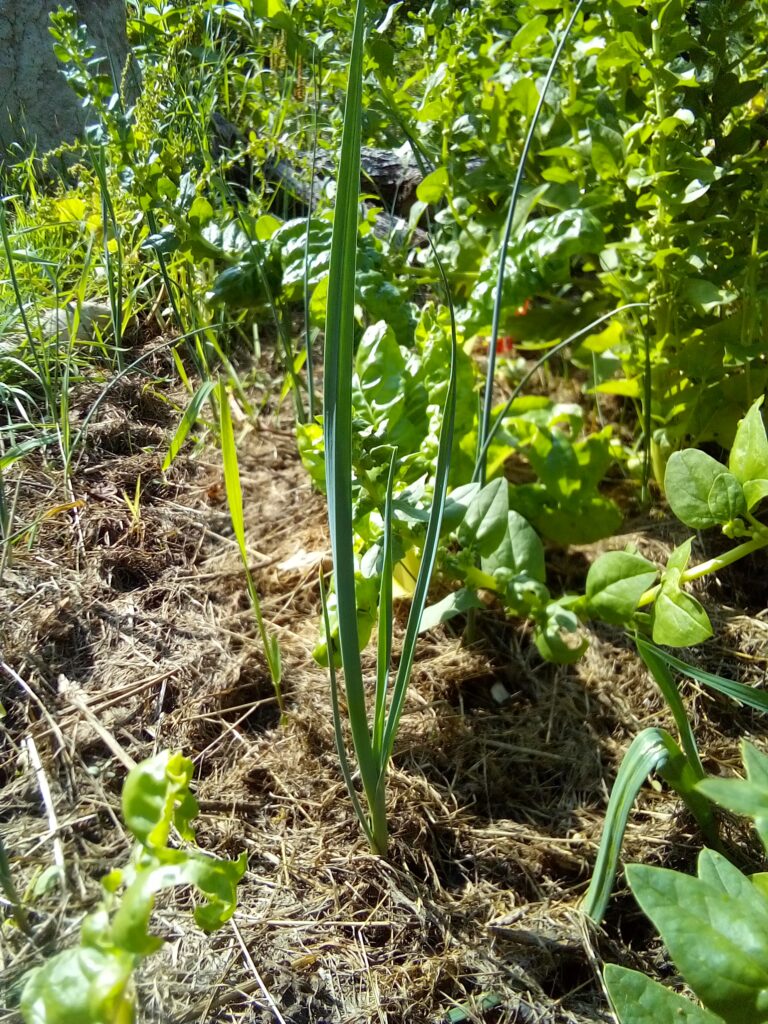
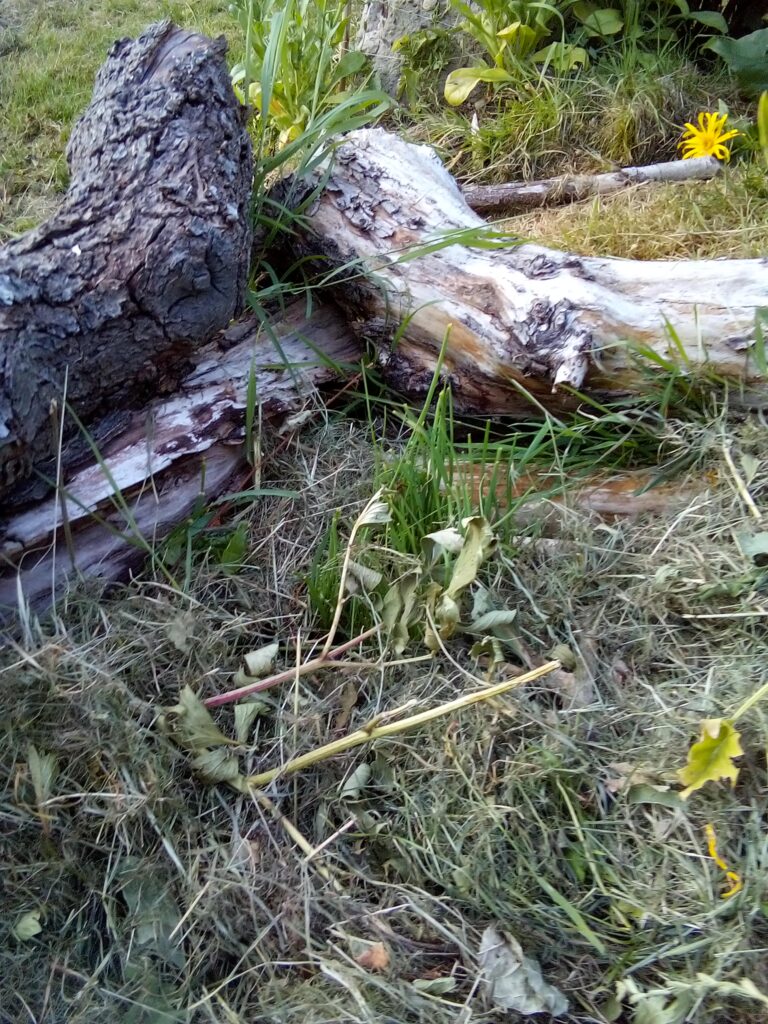
12 days later …
My 6 Steps in Short
- Start the leeks under glass around late March or early April.
- Put the roots into water and seperate the young plants.
- Cut back roughly one third of the roots and shorten the green leaves.
- Prepare the bed with compost and plant each leek into a deep hole.
- Water well and let the soil slowly wash into the planting holes.
- Mulch… and wait.
I probably got some of my love for keeping the garden going into the colder months years ago, when I read Eliot Coleman’s The Winter Harvest Handbook. I still love the idea behind it: growing and harvesting fresh vegetables far beyond the usual summer season, using simple protection and unheated growing spaces.
It’s one of those gardening books that stayed somewhere in the back of my mind — especially when I’m out there harvesting leeks while the rest of the garden is slowly getting quiet.
Curious? Take a look inside The Winter Harvest Handbook on Amazon.
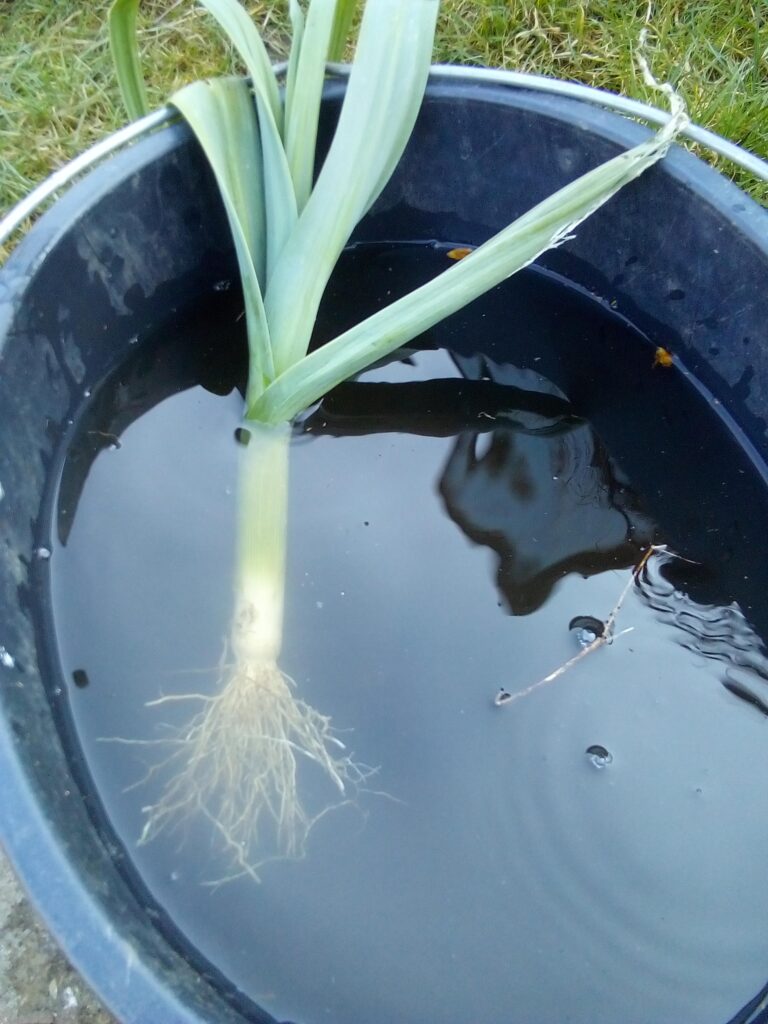
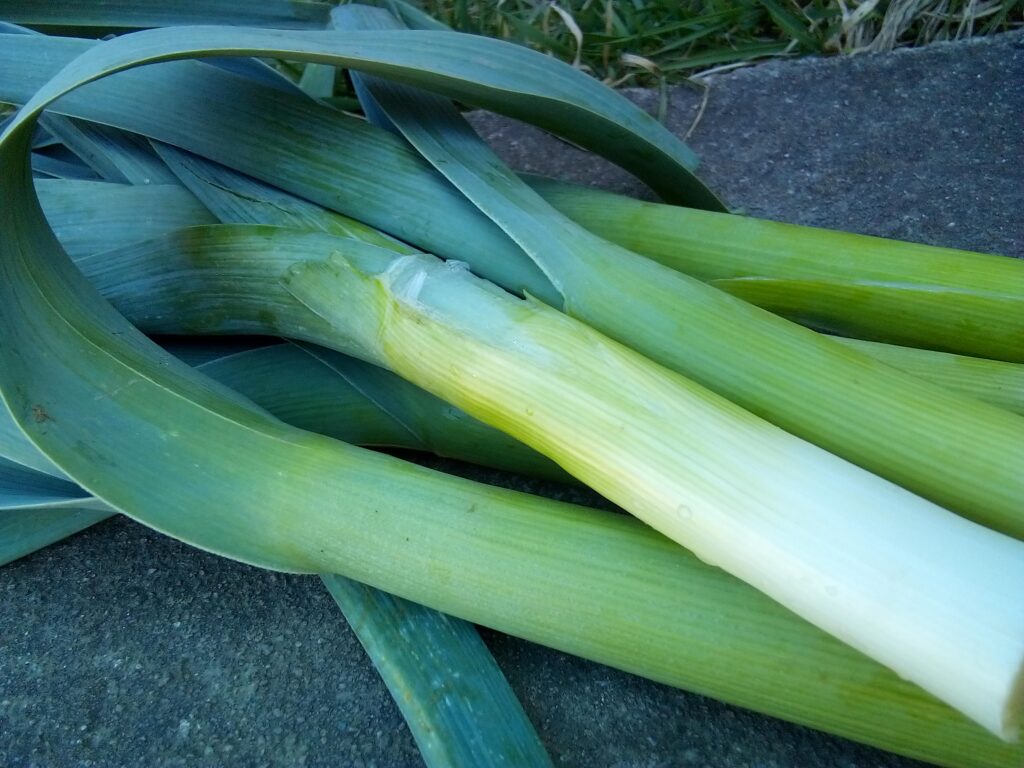
Leek Harvest …
And eventually, those tiny leek seedlings turn into something I can finally pull from the soil and take straight into the kitchen.
Leeks are also one of the vegetables that keep my garden useful much later in the year. If you’re curious what else is still growing and ready to pick when the season gets cold, have a look at my late autumn harvest and winter garden.
FAQs – How to grow Leeks
When do I start my leeks?
I usually start my leeks under glass around the end of March or beginning of April. I don’t stick to an exact date though. I always look at the weather first.
Why do I put leek seedlings in water before planting?
Mostly because it makes my life easier. The soil loosens around the roots and I can seperate the little leek plants without fighting with a big clump of soil.
Do I cut my leeks before planting them?
Yes. I cut off roughly one third of the roots and also shorten the green leaves, usually by about one to two thirds. I use either a sharp knife or clean garden scissors.
How deep do I plant leeks?
I make a fairly deep individual hole for every leek and put one plant into each. I don’t fill the hole completely with soil afterwards.
Do I need to fill the leek planting holes with soil?
I don’t. I simply water the bed well after planting. While I’m watering, soil slowly washes into the holes around the leeks anyway.
Do leeks need a lot of work after planting?
Mine really don’t. Once they’re planted, watered and mulched, I mostly leave them alone and watch them grow. And take way too many photos, apparently.