Washing garden produce seems like such a simple question until you start reading the research. Should I rinse the apple from my own tree? What about strawberries, lettuce, tomatoes or herbs that I grew myself? If natural microbial exposure may be interesting for our microbiome, are we washing something useful away?
This was exactly where my two earlier questions started to collide.
On one side, plants are full of microorganisms.
On the other side, washing can clearly reduce unwanted surface contamination.
At first this sounds like contradiction.
But actually, both can be true.
Frida probably would have looked at the apple in my hand and said something much simpler: “Look where it came from.”
Maybe that is not so far from what the science tells us.
Washing Garden Produce: What Are We Actually Trying to Remove?
The first important distinction is this:
We are not trying to remove every microorganism from our food.
That would be almost impossible anyway.
Plants naturally carry bacteria and other microorganisms. Research on apples has shown microbial communities not only on the peel but also within the pulp, seeds, stem and calyx.[1]
Studies of raw edible plants have also found substantial populations of microorganisms on vegetables and herbs.[2]
So when we wash a tomato, berry, apple or leaf of lettuce, we are not turning it into sterile food.
We are mainly reducing what is present on the surface.
And this difference changes the whole discussion.
Are Natural Microbes on Fruit and Vegetables Always Bad?
No.
Plants exist together with microorganisms.
A study by Patz and colleagues examined plants commonly eaten raw and found around 10⁵ to 10⁸ culturable bacteria CFU per gram as well as bacterial DNA from groups that include species studied for probiotic properties.[2]
Most of the plants studied were herbs and vegetables rather than apples.
This makes the study especially useful when we move the conversation from fruit toward fresh garden produce.
But the same scientific caution applies.
“Potentially probiotic” does not mean “proven to improve human health.”
And detection of bacterial DNA does not mean every organism detected was alive.[2]
So the sensible conclusion is:
Raw fruit, vegetables and herbs naturally bring us into contact with microorganisms.
That is different from saying that keeping every microorganism on them is desirable.
Does Washing Garden Produce Really Work?
Yes, at least for surface contamination.
One of the clearest studies in this series comes from Kilonzo-Nthenge and colleagues.[3]
Fresh produce was experimentally contaminated, and household washing methods substantially reduced bacterial loads.
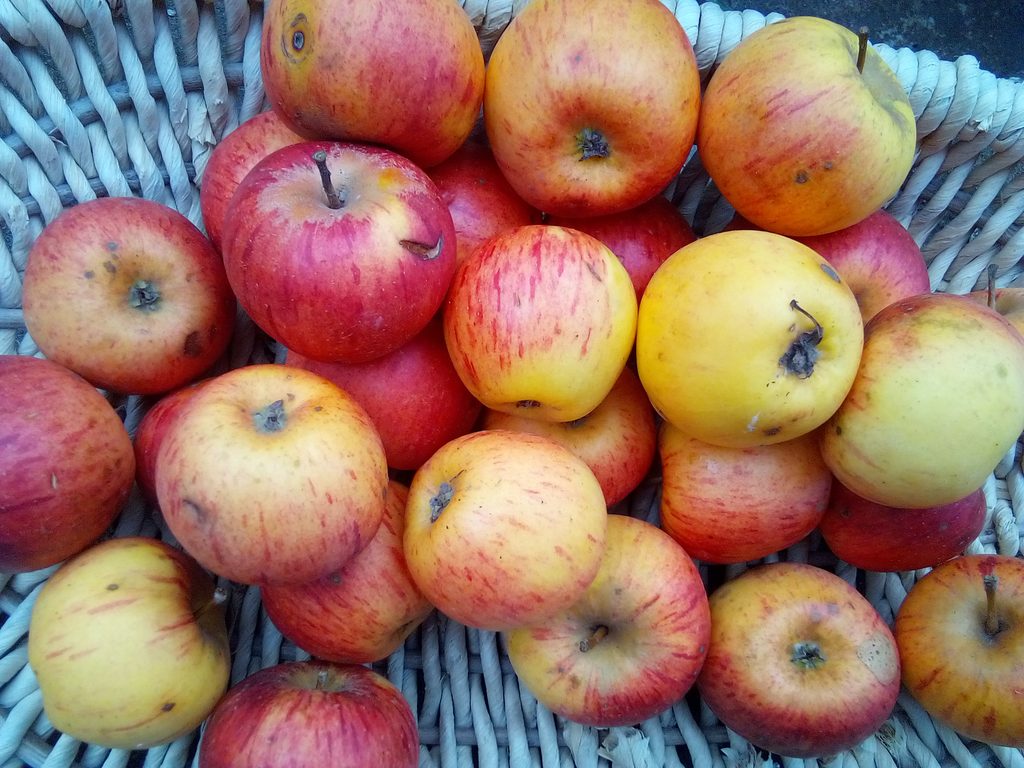
On apples, researchers measured reductions of approximately 2.0 to 2.9 log CFU per gram, depending on the washing method.[3]
For a normal reader, the important message is simpler:
Washing can strongly reduce bacteria present on the surface.
But this was a laboratory study.
The apples had been deliberately contaminated, and the researchers used Listeria innocua rather than studying ordinary microbes living naturally on a home-grown apple.[3]
So the study does not show that an apple from your garden is dangerous if you do not wash it.
It shows that when surface contamination is present, washing can reduce it.
That is a quite important difference.
A Washed Apple Still Has an Apple Microbiome
This was one of the findings that surprised me most when I started this series.
The apple microbiome is not only sitting on the peel.
Wassermann and colleagues found distinct microbial communities throughout several apple tissues.[1]
That means some microorganisms are inside the fruit.
You cannot rinse them away.
And I actually think this makes the hygiene question easier.
Washing an apple does not mean removing its entire natural microbial world.
It means reducing part of the microbial load on its surface.
The internal microbiome remains.
So perhaps we do not have to think in extremes:
washed = sterile
and
unwashed = natural.
Neither is correct.
What About Vegetables From the Garden?
Vegetables make the question even more interesting because they grow in very different ways.
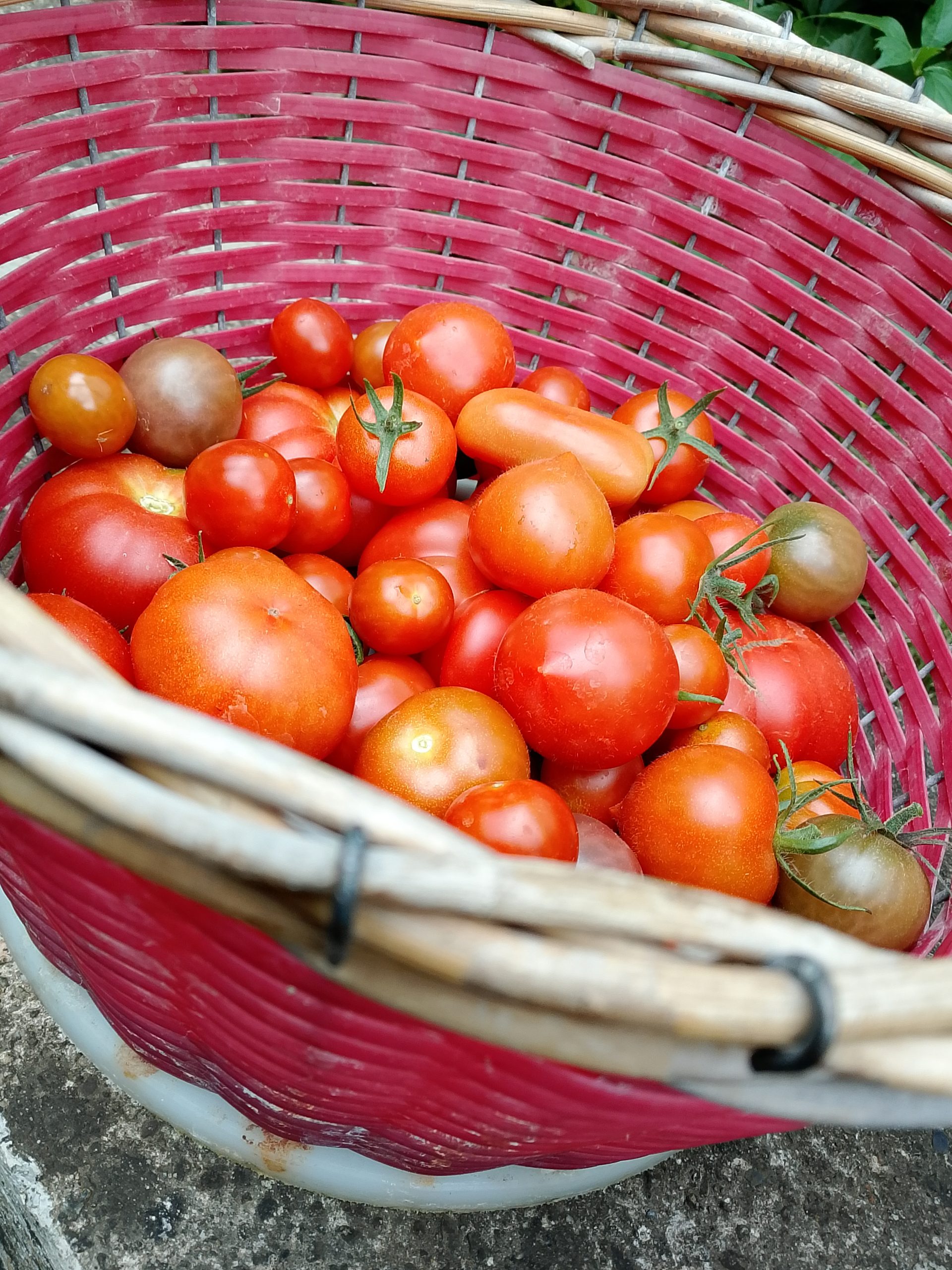
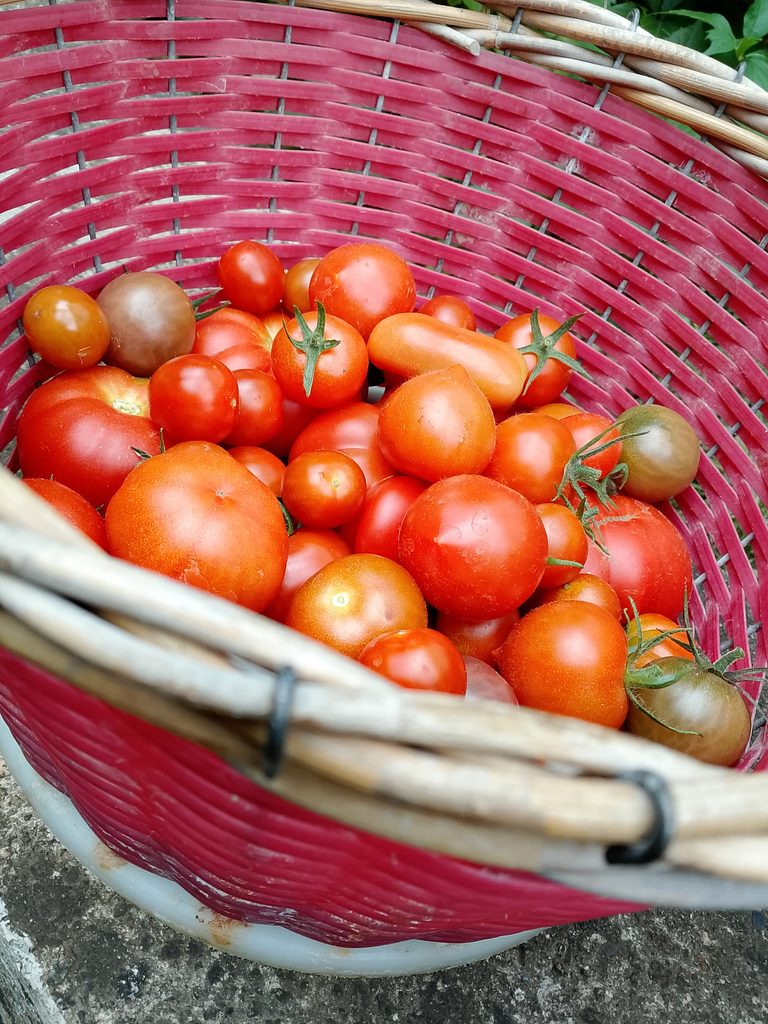
A tomato hangs above the soil.
A cucumber may rest on the ground.
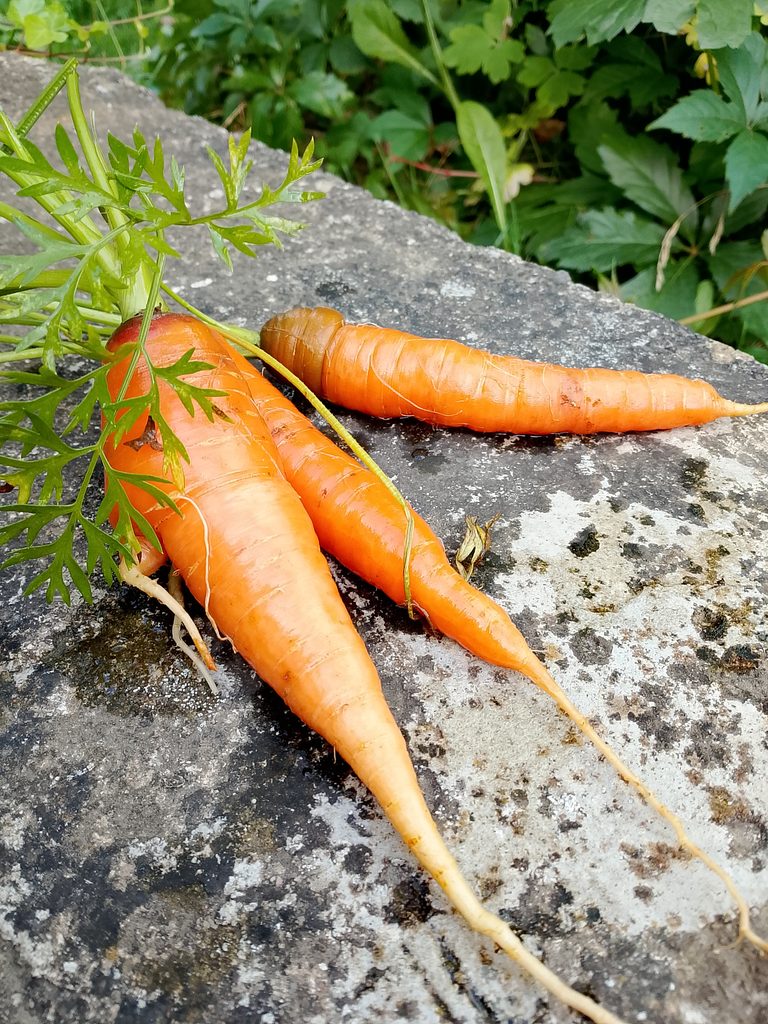
Carrots grow inside it.
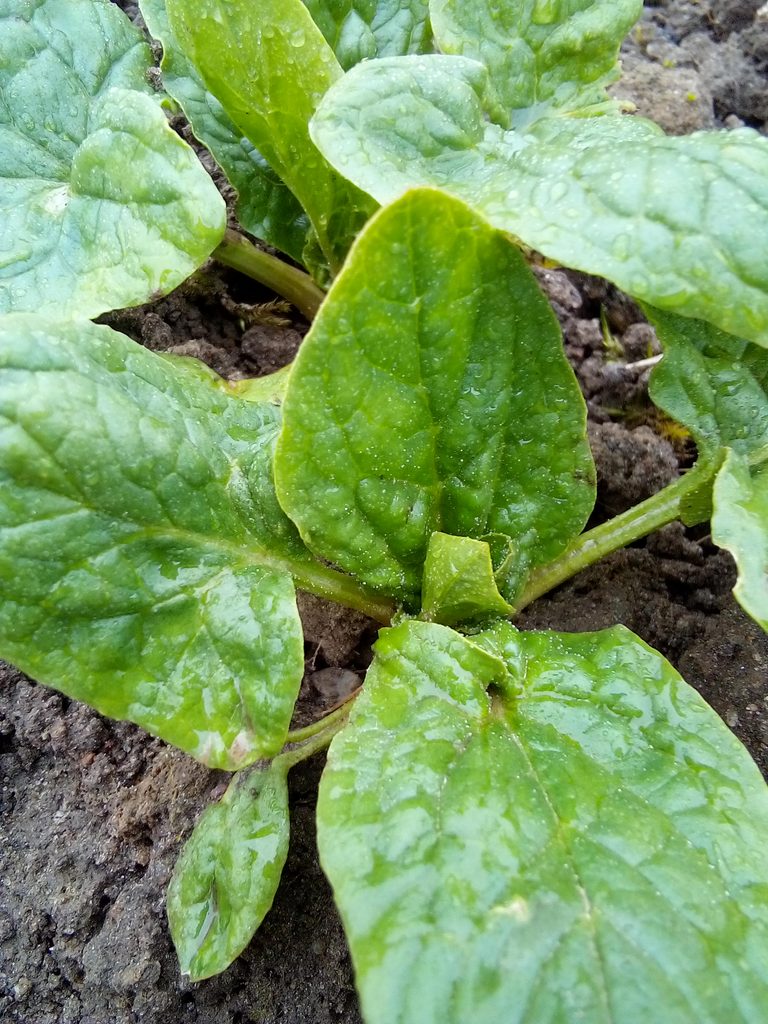
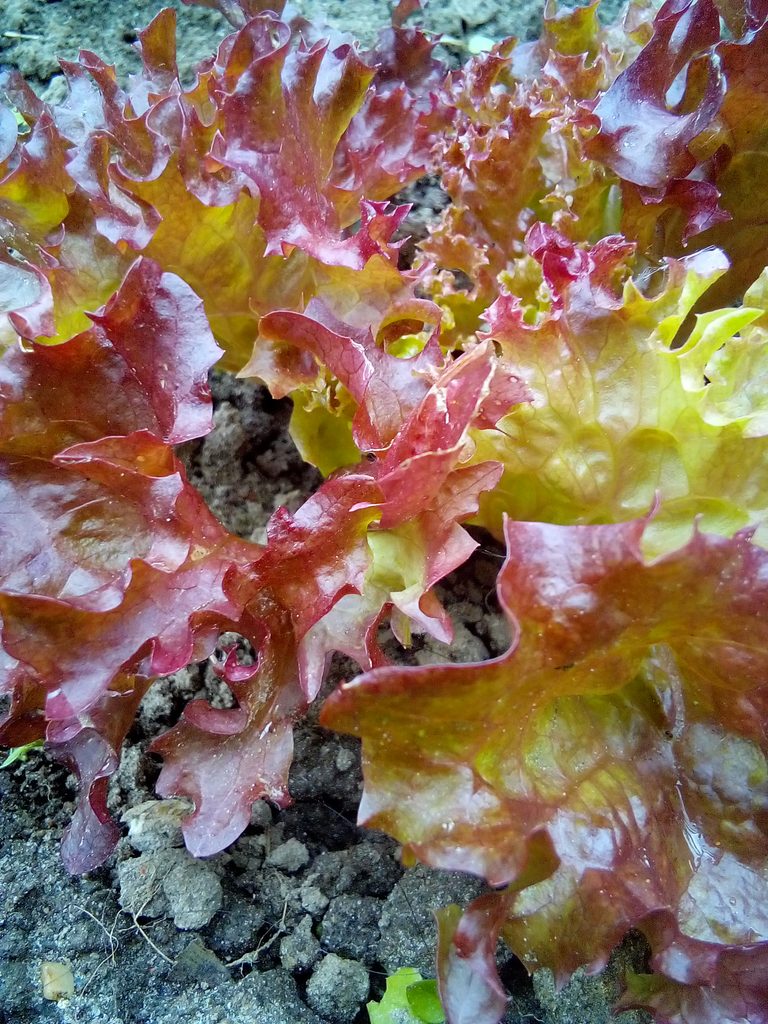
Lettuce forms leaves close to the soil surface.
Herbs may be splashed with irrigation water or rain.
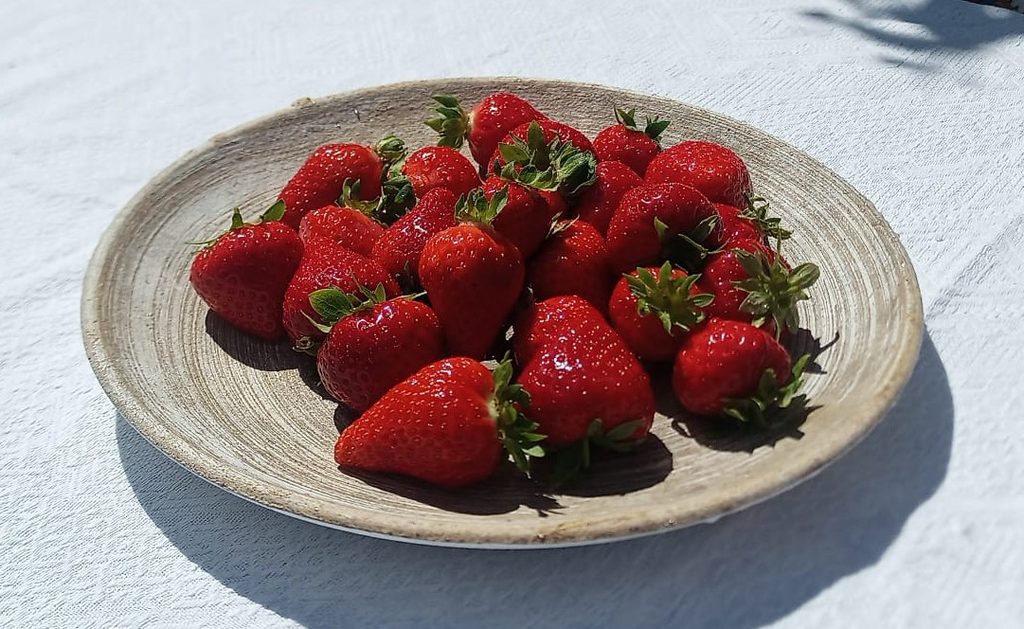
And strawberries sit somewhere between fruit and ground contact.
So I would never treat all garden produce exactly the same.
The research supports this broader view too.
Several studies in the research set examined fresh vegetables rather than apples.[2][4][5][6]
That means we do have evidence showing that raw vegetables can carry complex microbial communities, resistant bacteria and, in some studies, DNA from protozoa and free-living amoebae.
But the practical meaning always depends on how the study was done.
Why Leafy Vegetables Deserve a Little More Attention
Leafy greens have large, irregular surfaces.
Soil particles, water and microorganisms can collect between folds and leaves much easier than on the smooth surface of an apple.
A 2023 study from Spain examined 110 samples of organic fresh produce, mainly leafy green vegetables, together with strawberries.[4]
Researchers detected DNA from several protozoa and free-living amoebae.
For example, Acanthamoeba was detected in 65.5% of samples and Toxoplasma gondii DNA in 37.2%.[4]
These numbers can sound frightening.
But this is exactly where we need to read one step further.
The researchers used molecular methods including qPCR.
Finding DNA does not prove that an organism was alive or infectious.
No human illnesses were measured.[4]
And the samples were retail produce from Spain, not vegetables harvested from a private garden.
So I would not use this paper to tell somebody that home-grown lettuce is dangerous.
I would use it to explain why natural does not automatically mean harmless.
What About Strawberries and Other Berries?
The same study included strawberries.
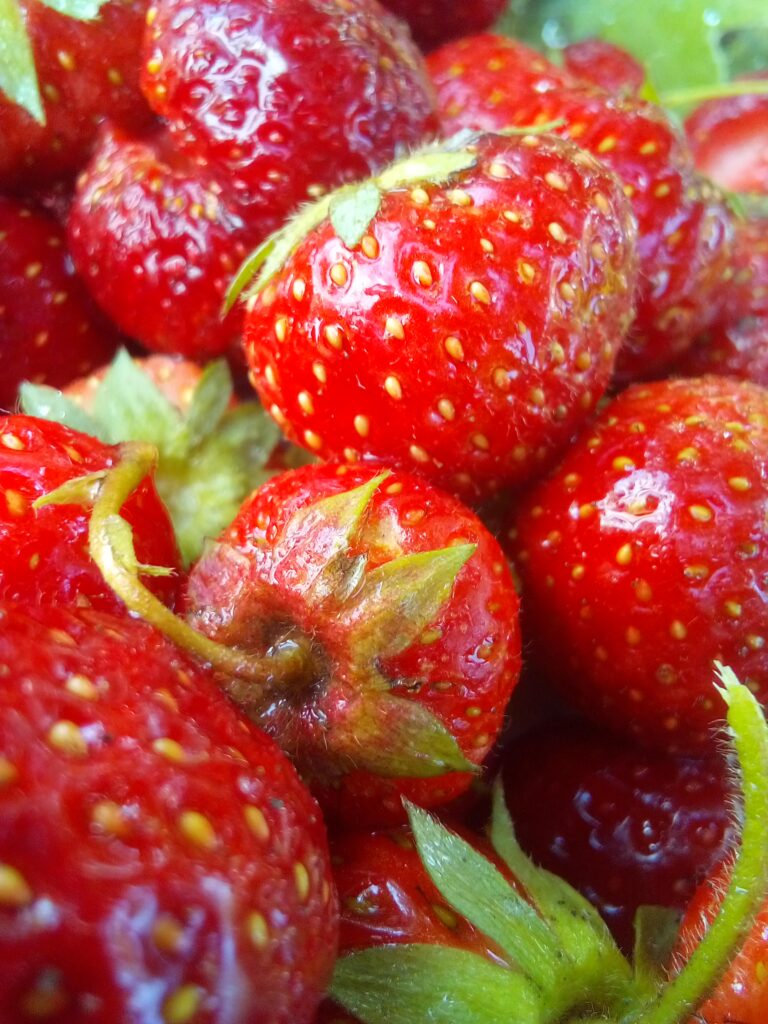
Among 22 strawberry samples, researchers detected Acanthamoeba DNA in 68.2% and T. gondii DNA in 31.8%.[4]
Again:
Detection does not equal infection.
But strawberries have an obvious practical difference compared with apples.
They grow close to the soil and have a textured surface.
Rain or irrigation water can splash soil onto them.
For me, this means a strawberry with visible soil belongs clearly under running water before I eat it.
That is not fear.
It is just practical food hygiene.

Can Fresh Vegetables Carry Antibiotic-Resistant Bacteria?
Yes, researchers have found resistant bacteria on fresh vegetables.
But this topic can be misunderstood very quickly.
A 2023 study examined bacteria isolated from 115 samples of organic fresh produce sold in eastern Spain.[5]
Researchers tested 161 isolates.
Among these selected isolates, 33.5% were multidrug resistant.[5]
But the researchers used selective media containing antibiotics.
This means the experimental setup intentionally favoured bacteria able to grow under antibiotic pressure.
Therefore, the number does not mean:
“33.5% of all bacteria on organic vegetables are multidrug resistant.”
It means 33.5% of the isolates selected and tested in this particular experimental system met the study definition.[5]
And the study did not demonstrate transmission of those bacteria or their resistance genes to people.
This is why a scary number without methodology is sometimes almost useless.
Apples Can Carry Resistance Traits Too
Vegetables are not special in this respect.
Apple microbiomes also contain resistance genes.
A 2022 study detected 132 antibiotic-resistance genes belonging to 19 antibiotic classes in apple-associated microbial communities.[6]
But their relative abundance was very low — at or below approximately 0.03% of the metagenome.[6]
The researchers also observed that the apple microbiome and resistome changed after storage and transport.
That is interesting because it reminds us that the microbial life of food does not stop at harvest.
But again:
Resistance gene detected ≠ resistant infection.
Resistance gene detected ≠ disease.
And resistance gene detected ≠ proven transfer to a human gut bacterium.
The 2026 Apple Study Adds Another Important Piece
A 2026 study examined 516 culturable bacterial isolates from apples collected in four Spanish orchards.[7]
Among these selected isolates, 272 — 52.7% — were resistant to at least one antibiotic tested.[7]
That sounds huge.
But it would be completely wrong to say:
“52.7% of apple bacteria are antibiotic resistant.”
The number refers only to the 516 culturable isolates screened in the study.[7]
Not all bacteria in apples.
The researchers also distinguished between bacteria living on the apple surface and bacteria living internally.
This is relevant for washing.
- Some bacteria were epiphytic — on the outside.
- Others were endophytic — inside apple tissues.[7]
So even here the same message comes back:
Washing can reduce surface exposure, but it cannot remove everything living inside a plant.
And finding a resistance trait inside an apple still does not demonstrate a health risk for the person eating it.
Does Nature Contact Benefit Us?
Now we arrive at the other half of the argument.
Human intervention studies suggest that exposure to biodiverse environments can influence our own microbiota and immune-regulatory processes.
In a Finnish daycare study, children exposed to more biodiverse outdoor environments showed changes in skin and gut microbiota and immune markers after 28 days.[8]
A 2024 controlled indoor-gardening study also found changes in skin microbial diversity and an increase in the immune-regulatory marker IL-10 among participants exposed to microbially richer growing material.[9]
These studies are important.
But neither of them tested whether eating an unwashed vegetable or apple creates a health benefit.
The participants were exposed through a much broader environment:
- soil-like growing material,
- plants,
- gardening,
- harvesting,
- and contact with nature.
This makes me think we sometimes concentrate on the wrong five seconds.
We worry about whether to rinse the tomato just before eating it.
But perhaps the more meaningful microbial exposure already happened during the three months we spent growing it.
Maybe Gardening Is the Better Route for Microbial Exposure
This became my favourite idea from the whole research project.
Imagine one afternoon in the garden.
- I move mulch.
- I touch tomato leaves.
- I pull carrots from soil.
- I pick parsley.
- I carry a bowl of berries into the kitchen.
My hands have already contacted an enormous microbial environment before I eat anything.
Gardening itself may therefore be a much more interesting route for natural microbial exposure than deliberately keeping dirt on our food.
The human intervention studies make this biologically plausible.[8][9]
They do not prove that gardening will prevent illness.
They do show that changing environmental microbial exposure can produce measurable changes in human-associated microbial communities.
For me, that makes a lot more sense than searching for “good bacteria” on a dirty lettuce leaf.
So Should We Wash Home-Grown Vegetables?
I think the research gives us a much better answer than a simple yes or no.
- Look at how the vegetable grows.
- Look at what it touched.
- Look at who will eat it.
A clean tomato hanging above the soil is different from muddy lettuce after heavy rain.
A cucumber resting on the ground is different from a pepper hanging high on the plant.
A carrot literally comes out of soil.
A herb leaf can collect splashes from irrigation water.
The question is not whether one plant is “good” and another “bad.”
The exposure is different.
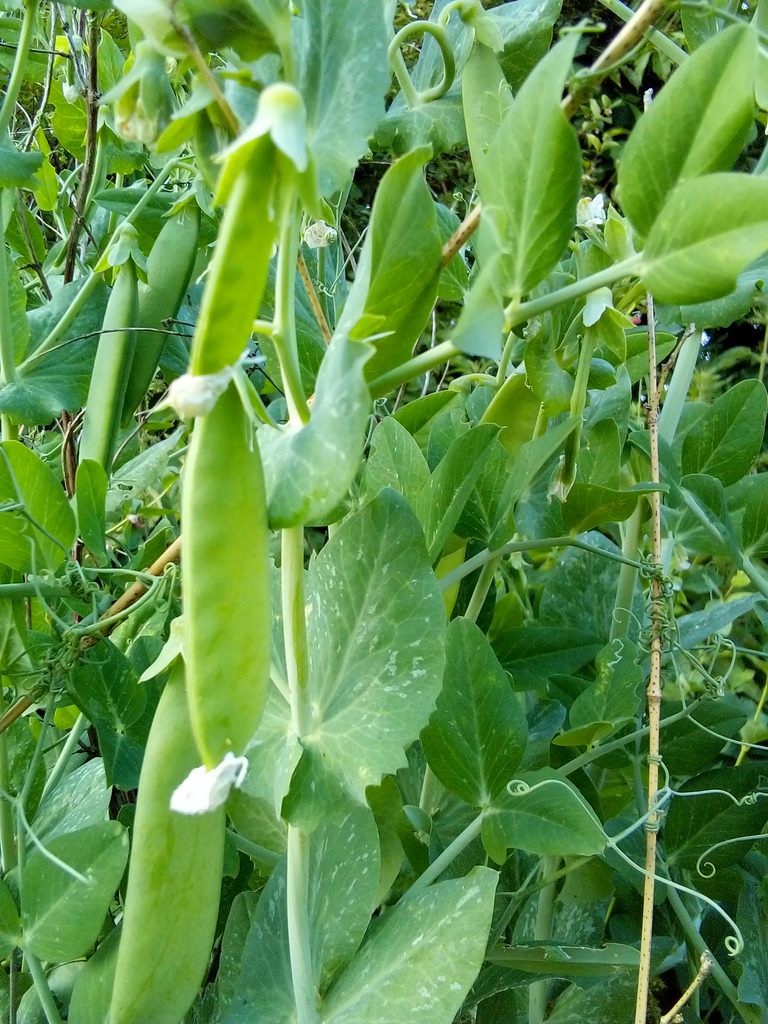
My Practical Garden Produce Guide
Apples and tree fruit
Fruit harvested directly from a clean tree has less soil contact than windfall fruit.
Washing can reduce surface contamination, while the internal apple microbiome remains.[1][3]
Berries
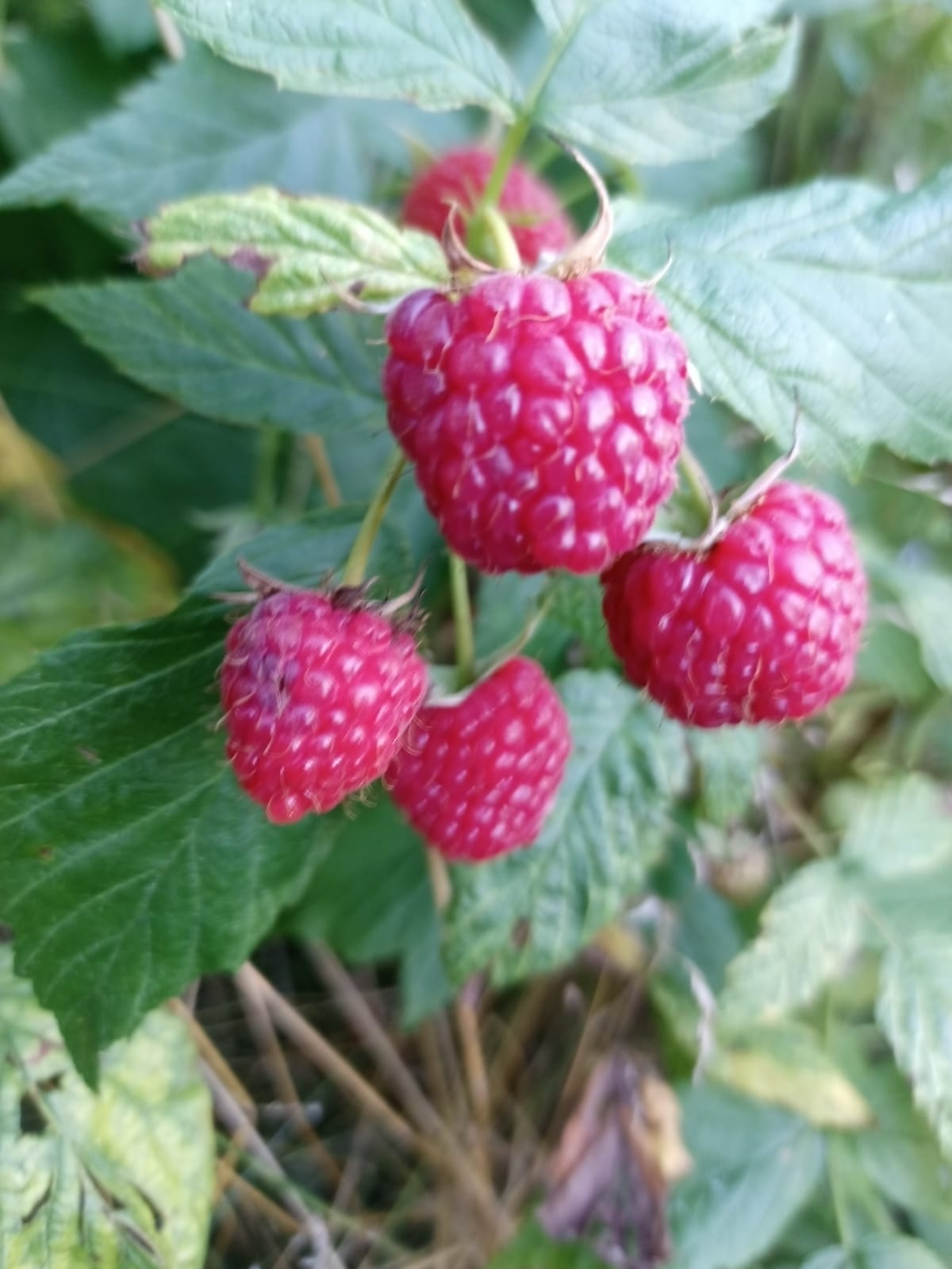
Raspberries, currants and blackberries growing away from soil may have relatively little visible contamination.
Strawberries often sit much closer to soil and can receive soil splashes.
I rinse them.
Tomatoes and peppers
These often grow above the ground.
I still rinse them before preparing them, especially if they have visible dust, soil, bird contact or residues from handling.
Cucumbers and zucchini
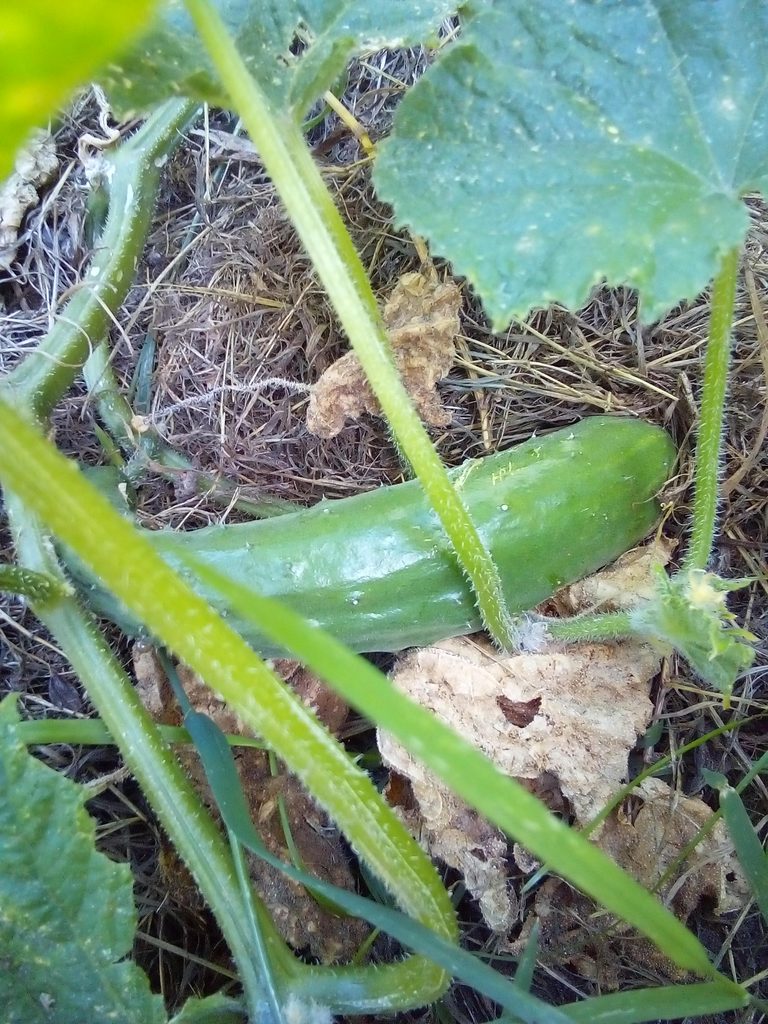
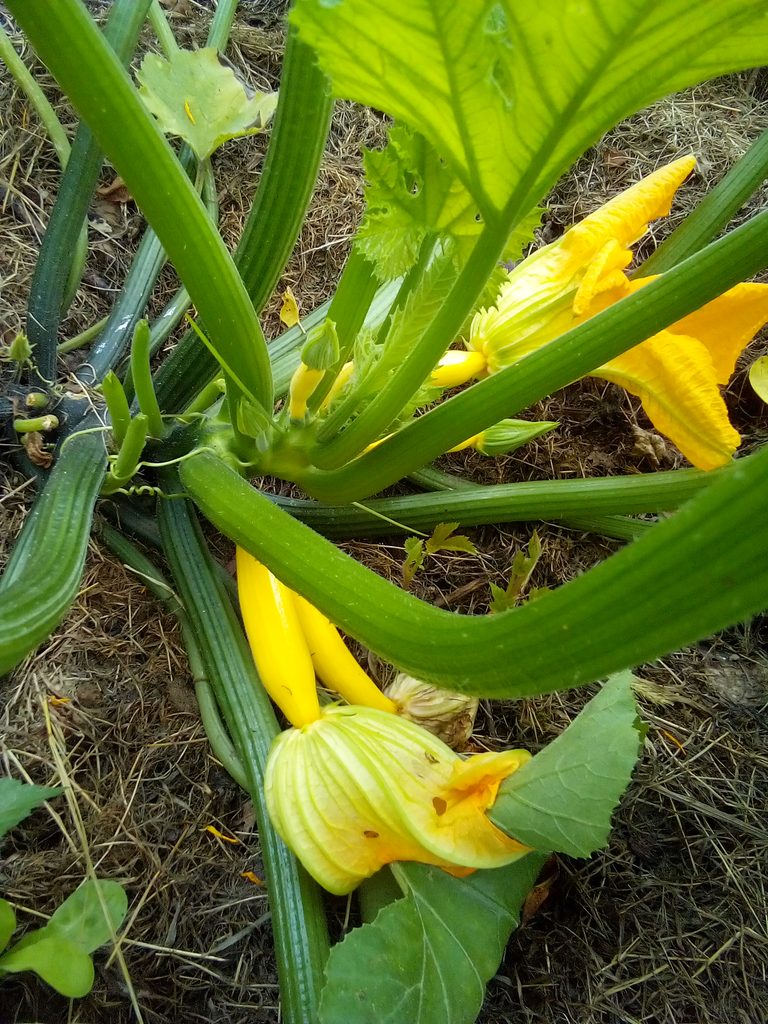
These can rest directly on soil or mulch.
Here washing feels completely logical to me.
Lettuce and leafy greens
Leaves can trap soil, insects and water.
I wash them carefully, including between the leaves.
Root vegetables
Carrots, beetroot and radishes are literally harvested from soil.
There is not much philosophical discussion needed here.
I wash them.
Does Washing Remove All Risk?
No.
Washing reduces surface contamination.
It does not make produce sterile.[3]
It does not remove every organism.
It cannot reach microorganisms living inside plant tissues.
And it cannot repair spoiled or rotten food.
This is why washing is one part of food hygiene, not a magic shield.
Does Not Washing Produce Give Us More Beneficial Microbes?
Possibly more microbes.
But more microbes is not automatically better.
Research on raw plants shows that we encounter microorganisms through food.[2]
Research on gardening and biodiversity suggests that environmental exposure can influence human microbiota.[8][9]
But we still do not have a controlled human study showing:
unwashed garden produce → more beneficial human microbes → better health.
That missing step is really important.
Without it, claiming that unwashed vegetables are healthier would go beyond the evidence.
The Research Gap: Washed vs. Unwashed
After working through all these studies, this is still the biggest gap.
There is no clean human intervention study comparing groups who regularly eat washed versus unwashed home-grown produce and then measuring meaningful health outcomes.
We have:
apple microbiome studies,
raw-plant microbiology,
washing experiments,
food-safety detection studies,
gardening interventions,
and biodiversity studies.
But they answer different questions.
That is why apparently contradictory statements can both be true: Natural microbial exposure may matter.
And: Washing food can reduce undesirable surface contamination.
They are not actually opposites. Read my blog post: Apple Microbiome: What Natural Microbes on Apples May Mean for Us
Washing Garden Produce Does Not Mean Rejecting Nature
This is where the three articles finally come together for me.
I don’t have to choose between microbial biodiversity and food hygiene.
I can garden.
Touch soil.
Grow vegetables.
Eat raw produce.
Harvest berries.
Spend time outside.
And still wash a muddy cucumber.
That does not destroy my connection with nature.
It is simply sensible hygiene in a specific situation.
Maybe our mistake was thinking the choice had to be:
nature OR hygiene.
The research suggests a much more interesting possibility:
nature AND hygiene.
My Final Rule: Follow the Route
I now think less about whether a food is technically “washed” or “unwashed.”
I think about its route.
- Where did it grow?
- Did it touch soil?
- Was it lying on the ground?
- Was it splashed by irrigation water?
- Did animals reach it?
- Has it been handled or stored?
- Is it visibly dirty?
- And who is going to eat it?
This feels more useful than treating every microorganism as either friend or enemy.
Frida probably never used words like microbiome, resistome or microbial exposure.
But she always looked carefully at what she harvested.
Perhaps old garden wisdom and modern microbiology are not so far apart after all. Read more about washing garden fruits and berries: Washing Garden Fruit: What Can Really Be Sitting on Apples and Berries?
Washing Garden Produce FAQs
Is it necessary to wash vegetables from your own garden?
Washing can reduce microorganisms, dirt and other contamination present on the surface of garden produce.[3]
How important it is depends partly on the produce and its exposure. Vegetables that grow in or close to soil, such as lettuce, carrots and cucumbers resting on the ground, have different exposure than a tomato hanging cleanly above the soil.
Does washing vegetables remove their microbiome?
It reduces part of the microbial community on the surface, but it does not necessarily remove all microorganisms.
Research on apples has shown that microbes can also live inside plant tissues.[1][7]
Therefore washing does not make fresh produce sterile.
Are microbes on raw vegetables good for the gut?
Raw vegetables and herbs can carry large microbial populations, including bacterial groups containing species investigated for probiotic properties.[2]
However, this does not prove that these microorganisms colonize the human gut or produce a health benefit.
Is unwashed garden produce healthier?
There is currently no controlled human evidence showing that eating unwashed garden produce produces better health than eating washed produce.
Studies support natural microbial exposure and measurable effects of biodiverse environmental contact, but they do not directly test washed versus unwashed vegetables or fruit.[8][9]
Can washing fresh produce prevent foodborne illness?
Washing can reduce microbial surface contamination and is therefore one useful hygiene measure.[3]
It cannot eliminate every microorganism or guarantee that illness will never occur.
Sources
1. Wassermann, B., Müller, H., & Berg, G. (2019). An apple a day: Which bacteria do we eat with organic and conventional apples? Frontiers in Microbiology, 10, 1629.
https://doi.org/10.3389/fmicb.2019.01629
2. Patz, S., Witzel, K., Scherwinski, A.-C., & Ruppel, S. (2019). Culture dependent and independent analysis of potential probiotic bacterial genera and species present in the phyllosphere of raw eaten produce. International Journal of Molecular Sciences, 20(15), 3661.
https://doi.org/10.3390/ijms20153661
3. Kilonzo-Nthenge, A., Chen, F.-C., & Godwin, S. L. (2006). Efficacy of home washing methods in controlling surface microbial contamination on fresh produce. Journal of Food Protection, 69(2), 330–334.
https://doi.org/10.4315/0362-028X-69.2.330
4. Moreno-Mesonero, L., et al. (2023). Protozoan parasites and free-living amoebae contamination in organic leafy green vegetables and strawberries from Spain. Food and Waterborne Parasitology, 32, e00200.
https://doi.org/10.1016/j.fawpar.2023.e00200
5. Jiménez-Belenguer, A. I., et al. (2023). Prevalence and characterization of beta-lactam and carbapenem-resistant bacteria isolated from organic fresh produce retailed in Eastern Spain. Antibiotics, 12(2), 387.
https://doi.org/10.3390/antibiotics12020387
6. Wassermann, B., et al. (2022). The microbiome and resistome of apple fruits alter in the post-harvest period. Environmental Microbiome, 17(1), 10.
https://doi.org/10.1186/s40793-022-00402-8
7. Kiplimo, D., et al. (2026). Phenotypic resistance profiles and resistome variations between endophytic and epiphytic bacteria in apple fruits. Environmental Microbiome, 21(1), 50.
https://doi.org/10.1186/s40793-026-00880-0
8. Roslund, M. I., et al. (2020). Biodiversity intervention enhances immune regulation and health-associated commensal microbiota among daycare children. Science Advances, 6(42), eaba2578.
https://doi.org/10.1126/sciadv.aba2578
9. Saarenpää, M., et al. (2024). Urban indoor gardening enhances immune regulation and diversifies skin microbiota—A placebo-controlled double-blinded intervention study. Environment International, 187, 108705.
https://doi.org/10.1016/j.envint.2024.108705