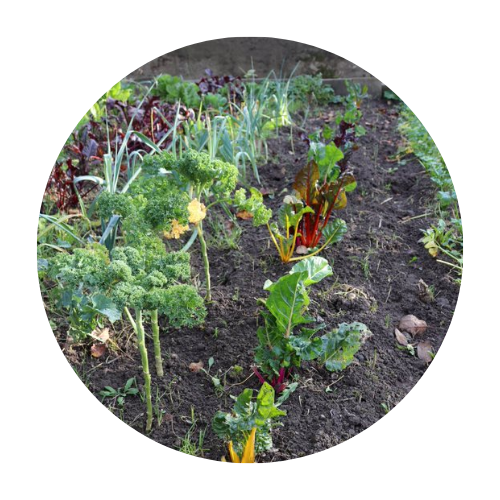
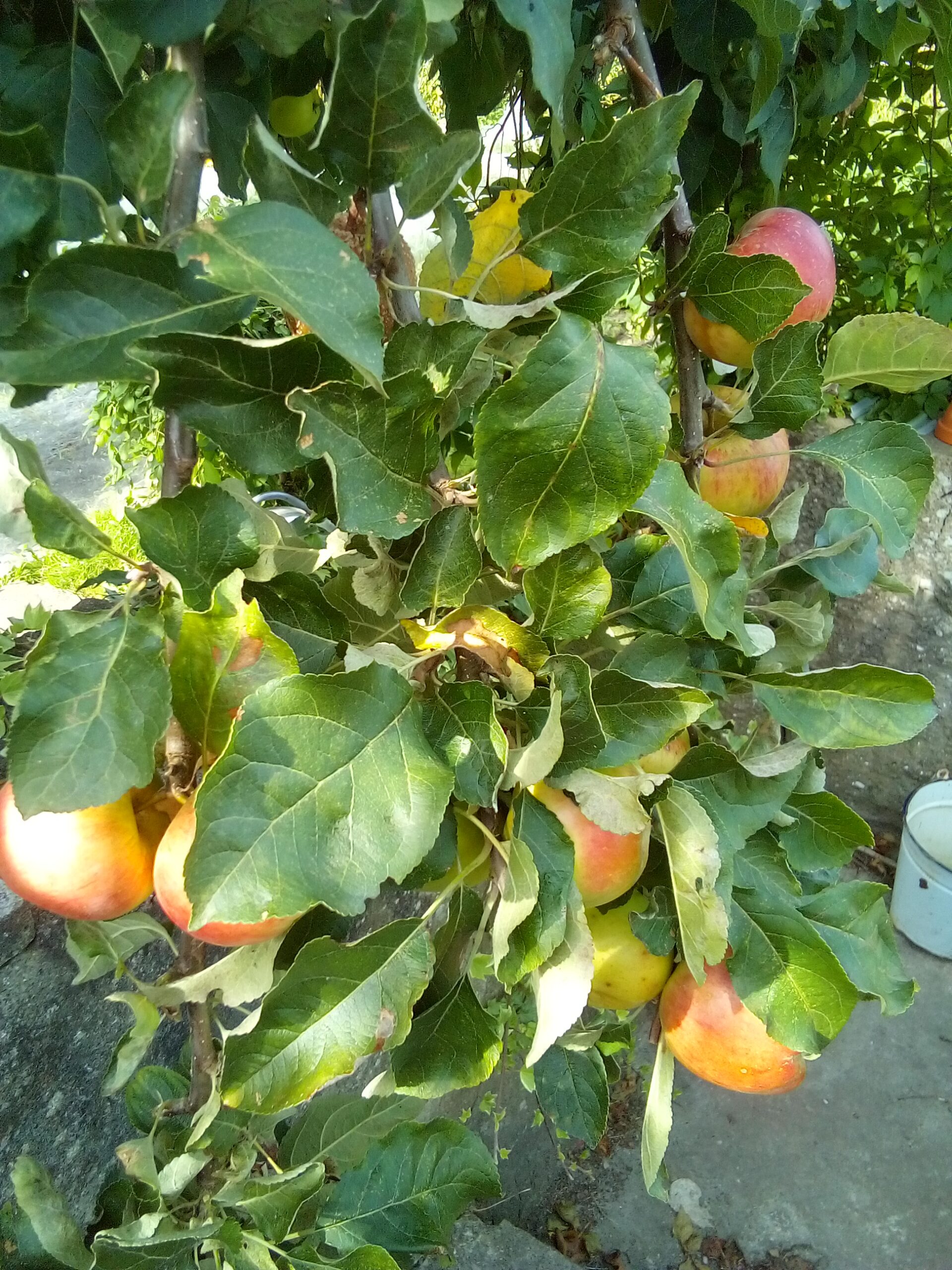
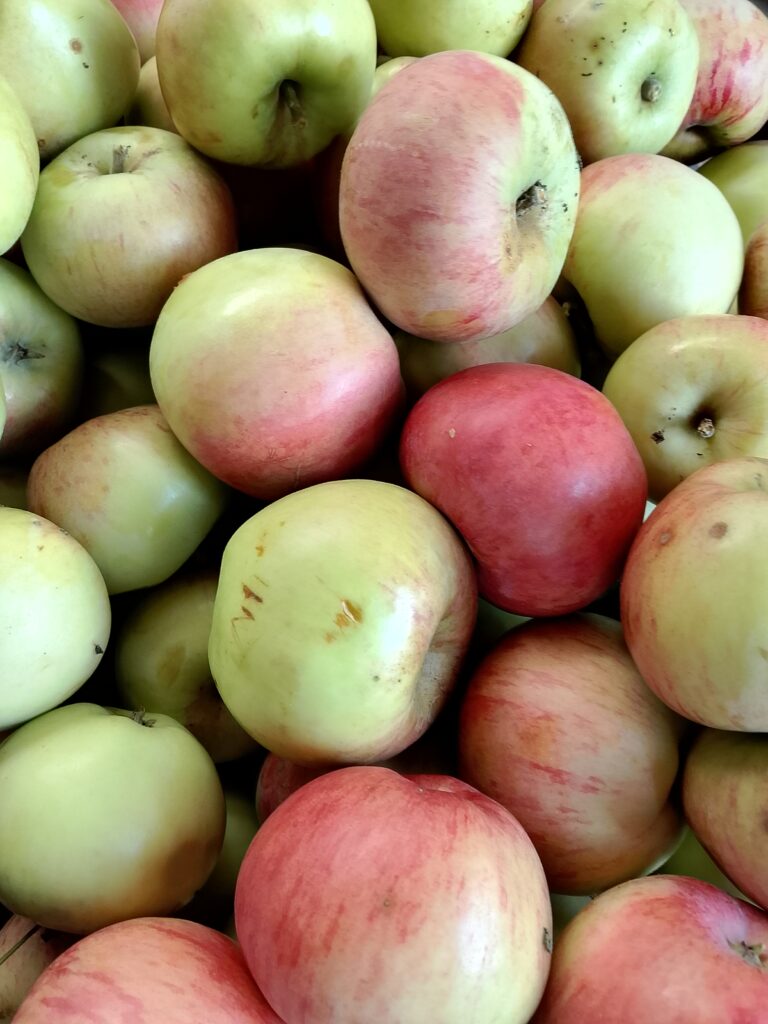
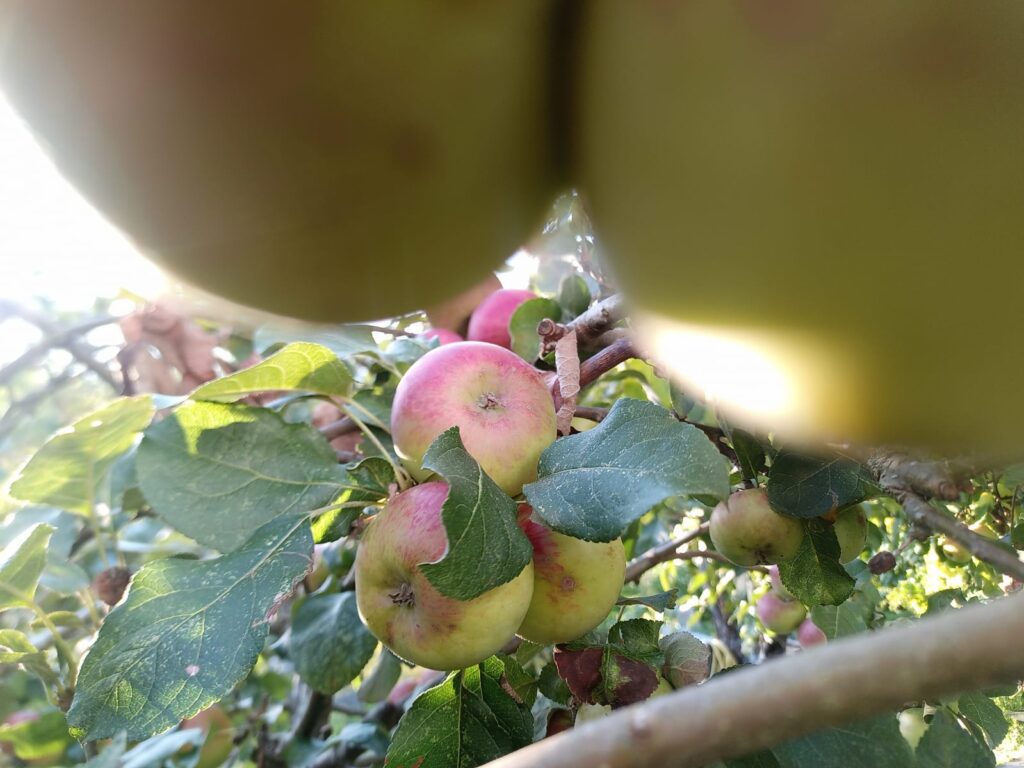
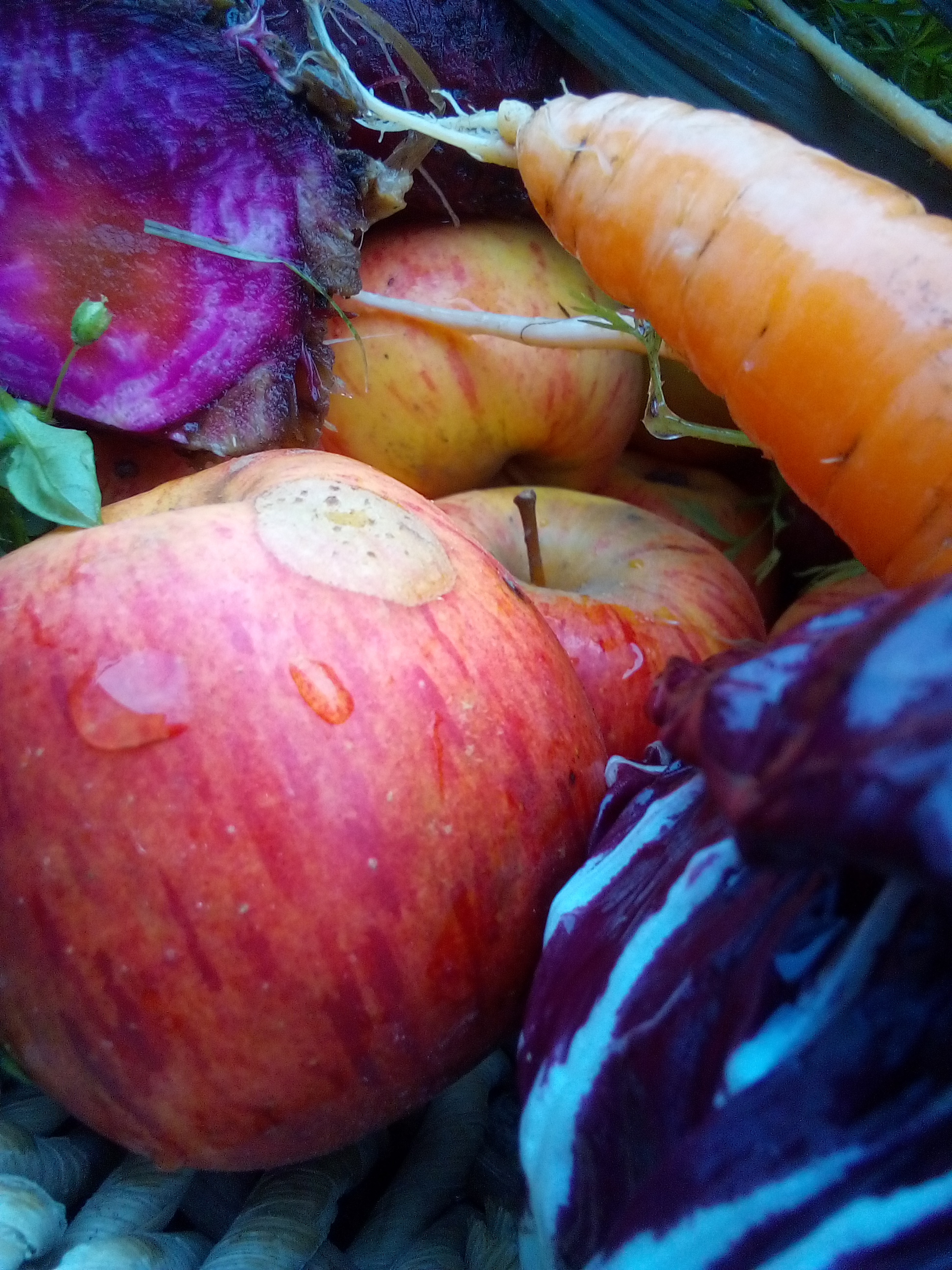
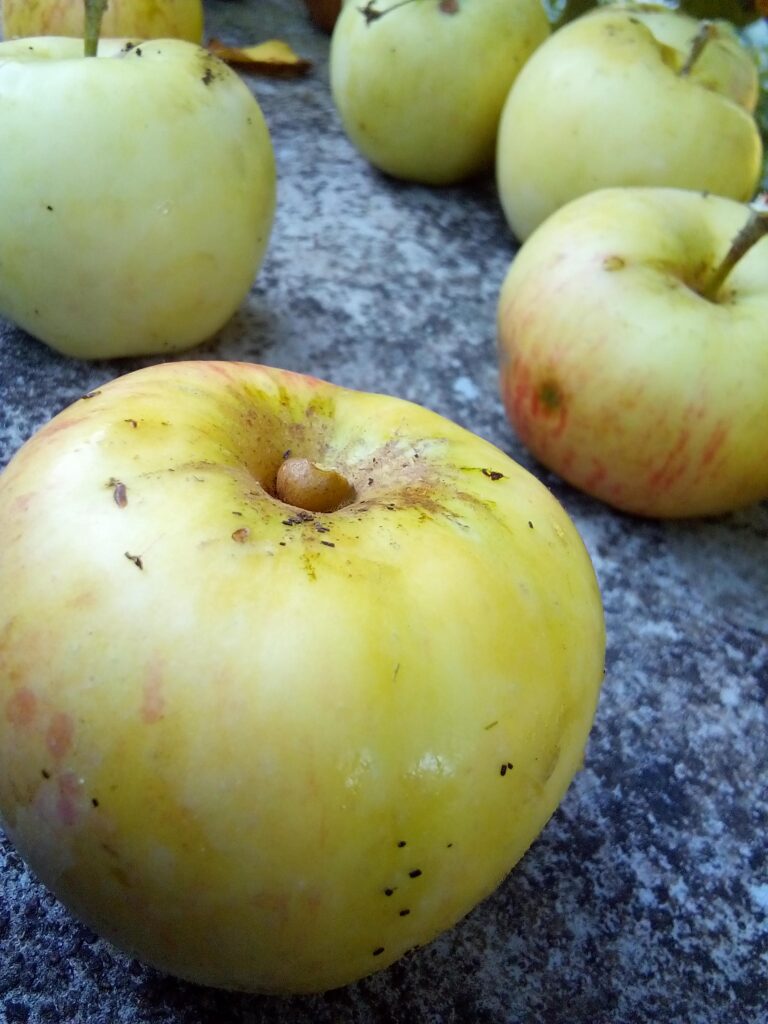
The apple microbiome became interesting to me because of a very simple habit: eating apples straight from my own tree. I wanted to know what microorganisms naturally live on and inside an apple — and whether this everyday microbial exposure could actually matter for our health.
Frida never thought much about it. She picked an apple, wiped it on her apron and ate it.
Today, I have a few more questions.
As a scientist, I wanted to know what research actually tells us. Are apples simply covered with bacteria that we should wash away? Are some of these microbes potentially useful? And could growing and eating our own food connect us with a microbial world that modern life often keeps at distance?
The answer is more nuanced than “washed” or “unwashed.”
And this is exactly what makes the topic interesting.
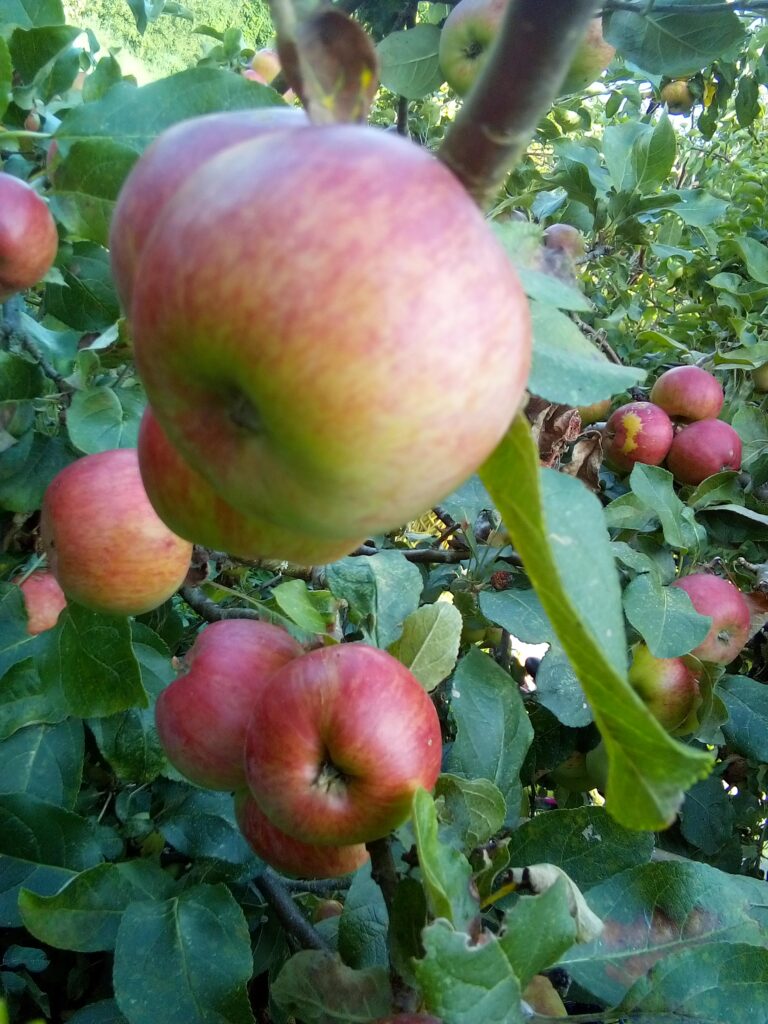
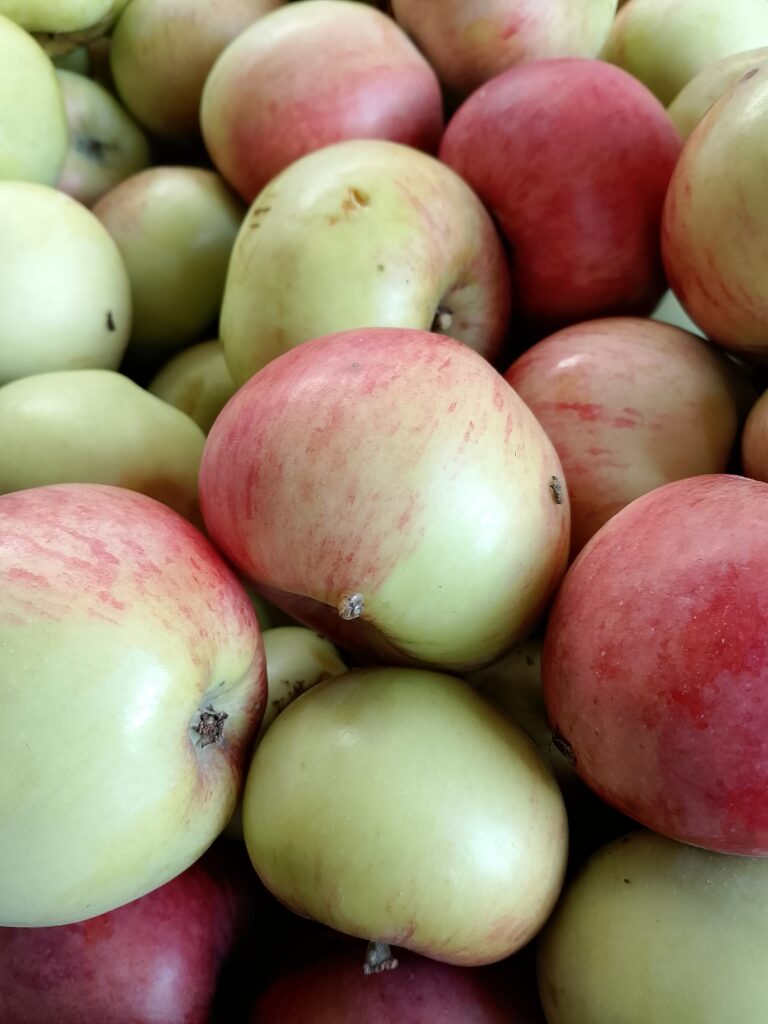
What Is the Apple Microbiome?
Plants are not sterile.
Their roots, leaves, flowers and fruits are colonized by communities of microorganisms. Together, these microorganisms form what scientists call a plant microbiome.
Apples have their own microbiome too.
A 2019 study investigated the bacterial communities of different apple tissues, including the peel, fruit pulp, seeds, stem and calyx. The researchers found distinct microbial communities throughout the fruit.[1]
One number from this study is especially memorable.
The researchers measured approximately 10⁸ bacterial 16S rRNA gene copies per gram of apple material. Based on their measurements across the fruit, they estimated that eating one whole apple may expose us to roughly 100 million bacterial cells.[1]
That sounds enormous.
But there is an important scientific distinction.
It does not mean that every apple contains 100 million living “good bacteria.” The per-gram measurement refers to bacterial 16S rRNA gene copies, while the whole-apple figure is the researchers’ estimate of bacterial cells associated with eating an entire apple.[1]
Neither number proves that those microorganisms benefit our health.
Still, the study gives us a different way to look at the apple in our hand:
An apple is food, but it is also a microbial ecosystem.
Where Does the Apple Microbiome Live?
Before reading the research, I assumed most bacteria on an apple would be sitting on the peel.
That would make the question rather simple: wash the apple and remove most of its microbial world.
But apple-associated microorganisms aren’t limited to the surface.
Wassermann and colleagues examined the stem, peel, fruit pulp, seeds and calyx and found bacterial communities across these different tissues.[1]
The pulp and seeds were particularly important microbial habitats.
This matters when we talk about washing fruit.
Washing affects microorganisms and contamination present on the surface, but it cannot simply remove the entire apple microbiome because part of that microbial community exists inside the fruit itself.
So a washed apple is not a sterile apple.
And it doesn’t need to be.
Raw Plants Bring Microbes to Our Plates
Apples aren’t unique.
Another 2019 study investigated microorganisms associated with plants commonly eaten raw. Researchers used both culture-dependent and DNA-based methods and found substantial microbial populations on the plants they examined.[2]
They detected bacterial groups containing species that have also been studied for probiotic properties. The researchers therefore discussed raw produce as a possible source of bacteria with probiotic potential.[2]
That last word is important: potential.
Finding a bacterium from a particular genus on a plant does not prove that eating the plant improves our gut microbiome.
And detecting bacterial DNA does not necessarily prove that every detected microorganism is alive.
This is where I think we need to be careful with phrases such as “good bacteria.”
The science supports a more modest — but still fascinating — conclusion:
When we eat raw plants, we also encounter microorganisms associated with those plants.
Whether individual microbes survive digestion, temporarily interact with our gut ecosystem or provide a measurable health benefit is another question.
Does Processing Change the Apple Microbiome?
If a fresh apple carries its own microbial community, what happens when we process it?
Researchers explored this question in a 2022 study comparing raw apple pulp with different forms of processed apple.[3]
Raw apple pulp contained approximately 1.8 × 10⁵ bacterial 16S rRNA gene copies per gram and showed greater bacterial diversity than several more heavily processed forms.[3]
The researchers found a general gradient in microbial abundance and diversity across the processing methods:
shredded → boiled → puréed → preserved → dried.[3]
Processing therefore changed both the quantity and composition of detectable apple-associated microorganisms.
Interestingly, some members of the original apple microbiota were still detectable after boiling and air-drying.[3]
That doesn’t prove that raw apples are healthier because they contain more or different microorganisms.
But it does demonstrate something useful:
The way we prepare food changes its microbiome and therefore changes our potential microbial exposure.
For me, this adds another dimension to eating food straight from the garden. A freshly harvested apple is biologically different from a highly processed apple product — not only in texture, freshness and preparation, but also in its associated microbial community.
Is the Apple Microbiome Different in Organic Apples?
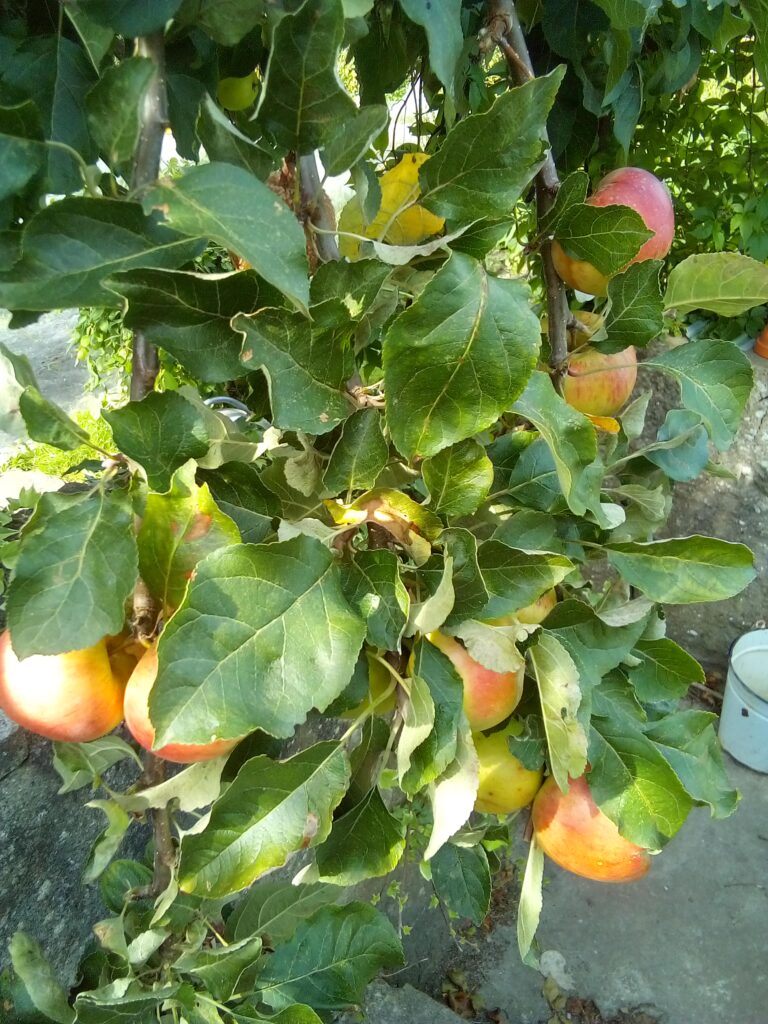
How an apple is grown may also influence its microbial community.
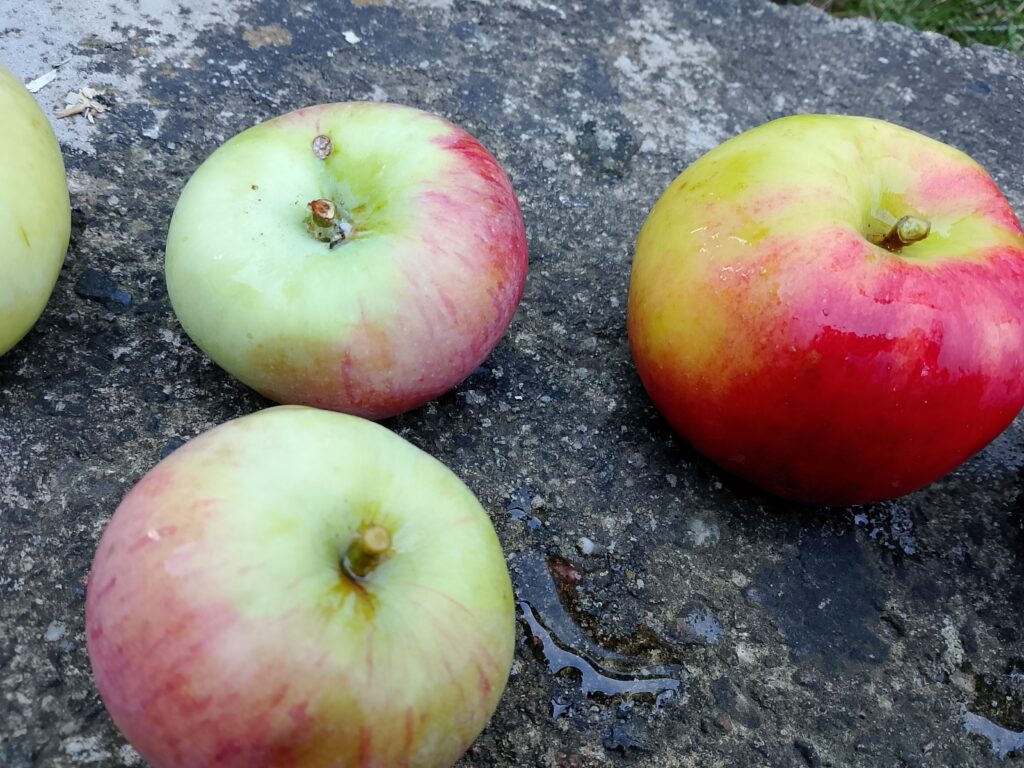
The 2019 apple study compared freshly harvested organic and conventionally managed apples. Although overall bacterial abundance was similar, the composition and diversity of their microbial communities differed.[1]
The organic apples showed significantly greater bacterial diversity and evenness. The researchers also reported that almost 40% of the bacterial genera and orders examined differed in abundance between organic and conventionally managed apples.[1]
That sounds impressive, but it needs careful interpretation.
It does not demonstrate that:
organic microbes = healthy
or that:
conventional microbes = unhealthy.
Microbial diversity alone is not automatically a health benefit.
Different farming systems also involve many variables that can influence microbial communities — including soil conditions, plant management and environmental exposure.
What the study supports is a simpler conclusion:
Growing conditions can help shape the apple microbiome.
For someone growing apples at home, I find that idea particularly interesting. The fruit is not developing independently from its environment. Its microbial community is part of that environment too.
Can Natural Microbes Influence the Human Microbiome?
This is where the apple story becomes much bigger than apples.
If we are constantly exposed to microorganisms through plants, soil and food, could biodiversity in our environment influence our own microbiome?
Human intervention studies suggest that it can.
One particularly interesting study involved 75 children in Finnish daycare centers. Researchers transformed ordinary daycare yards by introducing forest-floor material, sod and opportunities for gardening.[4]
After just 28 days, the researchers observed changes in the children’s skin and gut microbiota together with changes in immune-regulatory markers.[4]
For example, the ratio of the anti-inflammatory cytokine IL-10 to IL-17A increased in the intervention group. Changes in certain skin bacterial communities were also associated with immunological changes, including regulatory T-cell responses.[4]
This is much stronger evidence for the effects of environmental microbial exposure than simply finding bacteria on a piece of fruit.
But it still doesn’t tell us that eating an unwashed apple improves immune health.
The children were exposed to a biodiverse environment, not to unwashed apples.
That distinction is important.
What Gardening Studies Tell Us About Microbial Exposure
A 2024 randomized, placebo-controlled study brought this question even closer to everyday gardening.
Healthy urban adults were asked to grow edible plants indoors. One group used a microbially rich growing medium, while the comparison group used a microbially poor growing medium.[5]
The participants tended the plants, harvested them and consumed the produce.
After one month, researchers found increased diversity in several bacterial groups on the skin of participants exposed to the microbially rich gardening material. Their microbial interaction networks also became more complex, and researchers observed an increase in the anti-inflammatory cytokine IL-10 compared with the placebo group.[5]
For me, this is one of the most relevant findings when thinking about gardening and microbial exposure.
- It involved humans.
- It involved gardening.
And changing the microbial diversity of the growing environment was associated with measurable changes in human skin microbiota and an immune-regulatory marker.[5]
But there is still an important limitation.
The study combined several types of exposure.
Participants touched the growing medium, handled the plants, harvested their food and ate it.
So we cannot say which individual part of that experience produced the observed changes.
- Maybe it was the soil-like growing material.
- Maybe the plants.
- Maybe eating what they grew.
- Maybe all of it together.
For me this is actually more realistic, because gardening is also never only one single exposure.
Does Eating an Unwashed Apple Improve Your Microbiome?
This was my original question.
And based on the research available, the answer is:
We don’t know.
I could not find a controlled human trial demonstrating this sequence:
eat an unwashed apple → apple microbes enter the human microbiome → those microbes produce a measurable health benefit.
That evidence does not currently exist.
What we have instead are several pieces of a much larger puzzle.
- We know that apples contain complex microbial communities.[1]
- We know that microorganisms occur on the surface and inside apple tissues.[1]
- We know that raw edible plants can carry bacterial groups of potential probiotic interest.[2]
- We know that processing changes the apple microbiome.[3]
And human intervention studies show that exposure to biodiverse environments and microbially rich gardening materials can alter human-associated microbiota and immune-regulatory markers.[4][5]
Those findings make natural microbial exposure worth studying.
They do not justify claiming that an unwashed apple is healthier than a washed one.
Maybe the Garden Matters More Than the Apple
This was the part of the research that changed my perspective most.
I started by wondering whether I was washing something beneficial off my apples.
But perhaps that question focuses too much on a single moment.
Think about what happens before an apple reaches your kitchen.
When I work in the garden, my hands touch soil, leaves, compost, herbs, vegetables and fruit.
- I prune.
- I weed.
- I harvest.
- I carry soil inside without meaning to.
And sometimes I eat something while I’m still standing next to the plant.
That creates many opportunities for environmental microbial exposure long before I decide whether to rinse an apple.
The human studies on biodiversity and gardening make this broader interaction particularly interesting.[4][5]
They suggest that contact with microbially diverse environments can influence our own microbial communities and immune-regulatory processes.
That doesn’t mean more dirt is always better.
It doesn’t mean hygiene is bad.
And it certainly doesn’t mean every environmental microorganism is beneficial.
It simply reminds me that humans did not evolve in sterile environments.
What We Actually Know About the Apple Microbiome
After going through the research, I think separating what we know from what we suspect is important.
What the evidence supports
Apples and other raw plants carry complex microbial communities.[1][2]
Microorganisms are found both on the surface and within different apple tissues.[1]
Growing conditions can influence the composition and diversity of the apple microbiome.[1]
Food processing can substantially change microbial abundance and diversity in apples.[3]
Exposure to biodiverse environments can alter human-associated microbiota and immune-regulatory markers.[4]
Controlled gardening interventions suggest that contact with microbially richer growing environments can influence skin microbiota and immune markers.[5]
What the evidence does not yet prove
We do not know that eating an unwashed apple is healthier than eating a washed apple.
We do not know that bacteria associated with an apple permanently colonize the human gut.
Finding microorganisms with potential probiotic characteristics does not demonstrate a probiotic health effect in humans.
Greater microbial diversity on food does not automatically mean that the food is healthier.
And changes in immune markers are not the same thing as demonstrating protection from disease.
For me, those limitations don’t make the research less exciting.
They make it more useful.
My Takeaway from the Apple Microbiome Research
I still eat apples from my garden.
And I still sometimes think about Frida wiping one on her apron before taking the first bite.
But now I see that apple differently.
It isn’t sterile, and it was never supposed to be.
It carries microorganisms shaped by the fruit itself and the environment in which it grew.[1]
At the same time, I don’t think the science gives us a reason to chase bacteria by deliberately eating dirty fruit.
The more interesting lesson is broader.
Gardening puts us back in contact with plants, soil, food and microbial biodiversity. Human intervention studies are beginning to show that these interactions can influence our own microbiota and immune-regulatory processes.[4][5]
Perhaps the apple is only one small part of that relationship.
Frida didn’t call it a microbiome.
She just called it the garden.
Apple Microbiome FAQs
How many bacteria are in an apple?
A 2019 study measured approximately 10⁸ bacterial 16S rRNA gene copies per gram of apple material. Based on measurements across different apple tissues, the researchers estimated that eating one whole apple may expose us to roughly 100 million bacterial cells.[1]
This should not be interpreted as 100 million living probiotic or “good” bacteria. The whole-apple number is an estimate of bacterial cells, while the per-gram measurement refers to bacterial gene copies.
Are the bacteria on apples good for your gut?
We don’t currently know.
Researchers have found bacteria on raw plants belonging to groups that include species studied for potential probiotic properties.[2] However, finding these microorganisms on food does not prove that they survive digestion, colonize the gut or improve human health.
The scientifically safer conclusion is that raw plant foods are one source of microbial exposure.
Does washing an apple remove its microbiome?
Washing can reduce microorganisms present on an apple’s surface, but it cannot remove the entire apple microbiome.
Research has found bacterial communities inside apple tissues, including the fruit pulp and seeds.[1]
A washed apple therefore isn’t a sterile apple.
Do organic apples have a different microbiome?
Yes, differences have been observed.
In one study, freshly harvested organic and conventionally managed apples had similar overall bacterial abundance but differed in microbial diversity and composition. Organic apples showed greater bacterial diversity, and almost 40% of the bacterial genera and orders examined differed in abundance between the two management systems.[1]
However, this does not prove that the microbiome of an organic apple is healthier for humans.
Can gardening affect the human microbiome?
There is promising human evidence that exposure to microbially diverse environments can affect our microbiota.
Intervention studies have reported changes in skin and/or gut microbial communities and immune-regulatory markers after exposure to biodiverse outdoor environments or microbially rich gardening materials.[4][5]
These studies do not prove that gardening prevents disease, but they do show that environmental microbial exposure can produce measurable biological changes.
Sources
1. Wassermann, B., Müller, H., & Berg, G. (2019). An apple a day: Which bacteria do we eat with organic and conventional apples? Frontiers in Microbiology, 10, 1629. https://doi.org/10.3389/fmicb.2019.01629
2. Patz, S., Witzel, K., Scherwinski, A.-C., & Ruppel, S. (2019). Culture dependent and independent analysis of potential probiotic bacterial genera and species present in the phyllosphere of raw eaten produce. International Journal of Molecular Sciences, 20(15), 3661. https://doi.org/10.3390/ijms20153661
3. Wicaksono, W. A., Buko, A., Kusstatscher, P., Sinkkonen, A., Laitinen, O. H., Virtanen, S. M., Hyöty, H., Cernava, T., & Berg, G. (2022). Modulation of the food microbiome by apple fruit processing. Food Microbiology, 108, 104103. https://doi.org/10.1016/j.fm.2022.104103
4. Roslund, M. I., Puhakka, R., Grönroos, M., Nurminen, N., Oikarinen, S., Gazali, A. M., Cinek, O., Kramná, L., Siter, N., Vari, H. K., Soininen, L., Parajuli, A., Rajaniemi, J., Kinnunen, T., Laitinen, O. H., Hyöty, H., & Sinkkonen, A. (2020). Biodiversity intervention enhances immune regulation and health-associated commensal microbiota among daycare children. Science Advances, 6(42), eaba2578. https://doi.org/10.1126/sciadv.aba2578
5. Saarenpää, M., Roslund, M. I., Nurminen, N., Puhakka, R., Kummola, L., Laitinen, O. H., Hyöty, H., & Sinkkonen, A. (2024). Urban indoor gardening enhances immune regulation and diversifies skin microbiota—A placebo-controlled double-blinded intervention study. Environment International, 187, 108705. https://doi.org/10.1016/j.envint.2024.108705